


AI-Designed Enzymes Can Cut Specific Proteins Linked to Neurological Disease
Proteins are chains of amino acids connected by peptide bonds. These bonds are remarkably stable, with an estimated half-life of hundreds of years. Yet most proteins do not persist that long in Earth’s environment because living organisms have evolved specialized enzymes that rapidly break them apart.
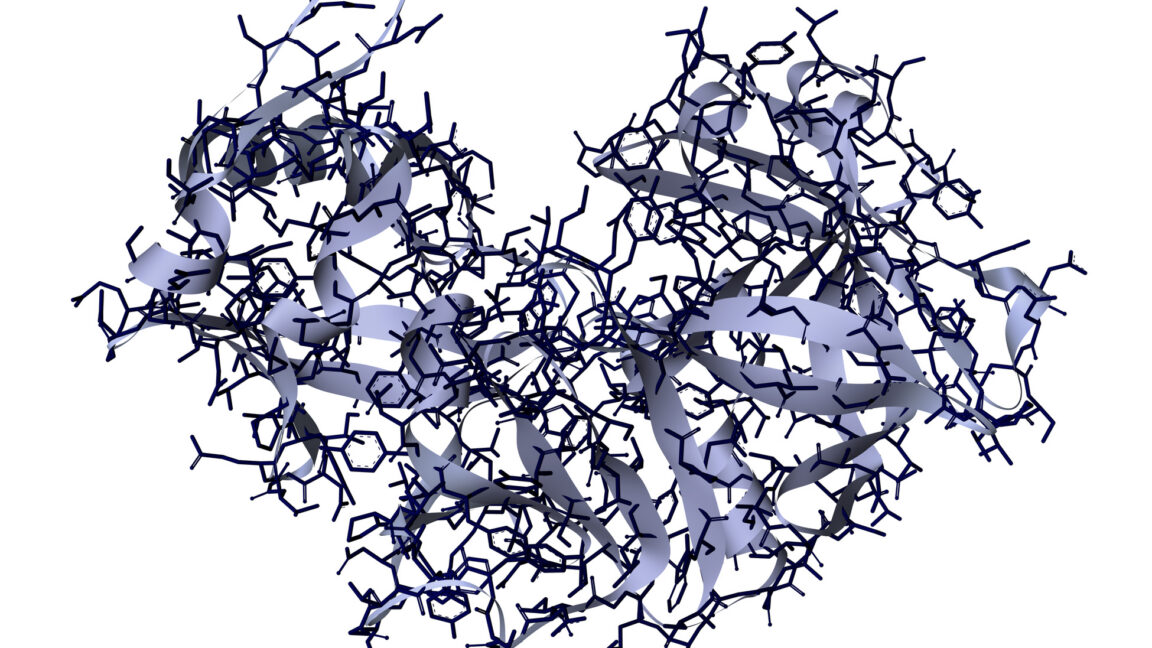
Known as proteases, these protein-digesting enzymes are ubiquitous and quickly process proteins that enter the environment. Now, researchers are using AI-based protein design tools to bypass much of the natural diversification process. By combining the catalytic cores of two proteases and replacing the rest of each protein, they created a customizable enzyme that can cut specific proteins in half.
The researchers demonstrated the enzyme’s effectiveness by targeting proteins associated with neurological diseases.
Why peptide bonds are so stable
Peptide bonds form when an amino group joins with an acidic group, releasing a water molecule in the process. Because amino acids contain both types of chemical groups, they can link together to create the long chains found in proteins. Their side chains also have unique chemical properties that give proteins their diverse structures and functions.
Peptide bonds are formed by removing a water molecule from an amino group and part of an acidic group.
Credit: Wikimedia Commons
How proteases break down proteins
Breaking a peptide bond reverses the original process: water separates the bond and reconnects with the resulting components. Because both the peptide bond and water are chemically stable, this reaction occurs very slowly without an enzyme. In water, a typical peptide bond can remain intact for hundreds of years.
Life has evolved several enzymatic mechanisms to accelerate this reaction. The study described here draws on two different lines of research. One involves a zinc protease, in which the positively charged zinc atom coordinates with the peptide bond and water molecules.
Proteases partially remove protons from water molecules, activating the water so it can attack and cleave peptide bonds. By combining these catalytic features with AI-based protein design, researchers created a new route toward enzymes that can target specific proteins rather than broadly digesting many different protein molecules.
Source: arstechnica.com