


Close Menu
HitechubHitechub
    What's Hot
    Science

    NASA Curiosity Rover’s 5,000 Days on Mars: 10 Stunning Photos of Alien Sunsets, Stone Spider Webs, and Mysterious Doors

    Science

    NASA’s Cassini Reveals a Surprising Twist in Saturn’s Magnetic Shield

    Science

    How Confidential Pharmaceutical Data Enhances AI Protein Models

    Important Pages:
    • About Us
    • Privacy Policy
    • Terms & Conditions
    Facebook X (Twitter) Instagram Pinterest
    Facebook X (Twitter) Instagram
    HitechubHitechub
    Friday, November 27
    • Shop
      • Fashion
        • Mens
        • Womens
        • Accessories
          • Handbags
          • Keychain
          • Masks
          • Money clicps
          • Neck Pillow
          • Rings
          • Towels
          • Wallets
        • Jewelry
        • Watches
        • T-shirts
        • Hawaiian shirts
        • Vests
        • Swim trunks
        • Swimsuits
      • Fun
        • Magic cubes
        • Magnifiers
        • Misc
        • Photo books
        • Puzzles
        • Toys
      • Home
        • Cleaning/Care
        • Mailbox covers
        • Mugs
        • Pot Holders
        • Spoon
      • Office and Electronics
        • Chairs
        • Office Supplies
        • IPad cases
        • Laptop stickers
        • Mouse pads
        • Notebooks
        • Pencil bags
        • Pens
        • Phone cases
      • Personalized
      • Pets
      • Sports
        • Cycling
          • Balaclava Mask
          • Bike Bell
          • Bike Computer
          • Bike Fender
          • Bike Grips
          • Bike Kickstand
          • Bike Light
          • Bike Locks
          • Bike Mitts
          • Bike Pumps
          • Bike Repair Stand
          • Bike Seat
          • Bike Trainer
          • Bike Wheels
          • BIKES
            • Folding Bikes
            • Road Bikes
          • Carbon Fiber Bike Products
          • Cycling Mask
          • Kid’ Bike Helmets
          • Inner Tube
          • Motorcycle Bag
          • Nylon Pedals
          • Adult Helmets
          • Photochromic Sunglasses
          • Soft Coolers
          • Suction Cup Bike Rack
          • Tool accessories
          • Winter Cloth
          • Heart Rate Monitor
        • Outdoors/Camping
          • Outdoor Bags
        • Sweatband
    • Technology
      1. AI
      2. Gadgets
      3. View All

      This is the most popular CEO in the world

      Sectors in which “Chat-GPT” is most often used

      Artificial intelligence has begun to “swallow” professions

      The unusual robot conductor of a concert in Seoul

      Here’s how you can tell if your phone is being tapped

      PlayStation 5 becomes a completely silent console and gets more space

      This is the first phone that can be used to park a car

      Best Gaming Laptops 2023: Powerful Portables for PC Games

      Etsy Clarifies AI Policy and Terms Following Seller Backlash

      Why Is There a Shortage of Elevator and Escalator Mechanics?

      NordVPN Black Friday 2026 Deal: Save 78% on VPN Plans

      OpenAI Warns GPT-6.2 Astra Will Hit Usage Limits 40% Faster After Bug Fix

    • Science
      1. Space
      2. Wheels
      3. View All

      Space Perspective: A Journey to the Edge of Space

      5 Fascinating Facts About Space

      Space Exploration: Unveiling the Wonders of the Universe

      Toyota wants to make a new generation battery with a range of up to 1,200 km

      Meet Toyota’s lunar “baby” that could make exploring the Moon easier

      What does a night drive look like with one of the most beautiful cars in the world: the Rolls-Royce Ghost

      Live Science Readers Reveal the Archaeological Discoveries They Want to Find, Including Attila’s Tomb

      Alpha-Gal Syndrome: Why Tick-Bite Red Meat Allergy Is Puzzling Scientists

      How to Overcome Sadness in Academia and Find Balance

      Stephen Colbert-Named Tiny Spider Has a Genome 50% Larger Than the Human Genome

    HitechubHitechub
    Home » Ancient Human DNA Recovered from Cave Walls: A Breakthrough in Archaeological Science
    Science

    Ancient Human DNA Recovered from Cave Walls: A Breakthrough in Archaeological Science

    Share Facebook Twitter Pinterest WhatsApp
    Share
    Facebook Twitter LinkedIn Pinterest WhatsApp

    For the first time, researchers have successfully extracted ancient human DNA directly from cave walls. While their findings do not definitively link the preservation of ancient DNA to the creation of cave art, they confirm that traces of human DNA can persist on cave walls for thousands of years.


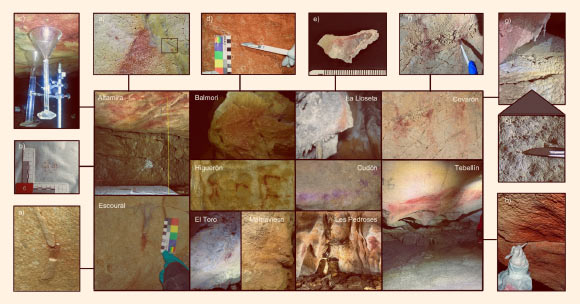
    Representative rock art from 11 sites analyzed by Bossams Mesa et al. Image credit: Bossams Mesa et al., 10.1038/s41467-026-74234-2.

    A significant challenge in human prehistory research is establishing connections between cultural artifacts and the groups that created them.

    Recent advancements in ancient DNA research have begun to address this gap by analyzing DNA extracted from skeletons, sediments, and, more recently, artifacts themselves.

    However, rock art – an essential expression of human culture – poses challenges for paleogenetics due to typically lacking direct contact with excavation site floors.

    Consequently, ancient DNA analysis has yet to contribute to discussions on authorship, including whether Neanderthals, alongside early modern humans, created rock art.

    “We understand that some of the art was applied to cave walls using techniques such as spraying or rubbing pigments onto the surface,” said Dr. Hipolito Collado Giraldo, an archaeologist and rock art expert in Extremadura, Spain.

    “Given the sensitivity of contemporary ancient DNA analysis methods, we aimed to determine if such contact could leave DNA traces in rock art, potentially allowing us to obtain genetic profiles from the artists.”

    Dr. Corrado Giraldo and his team from Germany, Spain, and Portugal investigated the DNA preservation of pigment samples taken from 24 rock art panels across 11 caves in Spain and Portugal.

    The majority of paintings utilized red ocher, featuring simple marks (from nine locations), dots, hand stencils (Cave of Maltraviso, Spain), and figurative images (Cave of Altamira, Spain).

    The researchers also analyzed unpainted sections of cave walls, as well as sediments, animal bones, and bird bone fragments believed to have been used as airbrushes for the pigments.

    Notable results emerged from Escurial Cave in Portugal, where samples collected from colored calcite shells contained human genetic material, with no evidence of animal DNA.

    Similar results were corroborated with uncolored wall samples from the same cave.

    Considering that typical sediments and environmental sources usually hold DNA from multiple animals, the team concluded that the human DNA in Escurial Cave likely derived from direct contact, not surrounding soil or debris.

    Samples from Escoural and three additional unpigmented wall samples from Covalón cave in Asturias, Spain, revealed a mix of human and animal DNA, indicating a less direct contact, perhaps from individuals carrying sediments on their hands and feet through the cave.

    In Cobaron, genetic analysis of two wall samples connected their DNA to Western hunter-gatherer groups who lived in Europe approximately 5,200 to 16,700 years ago, with indications of female origin. One wall sample from Escoural Cave indicated a male source.

    Although the researchers could not definitively date much of the recovered DNA, the patterns of chemical deterioration and the site’s archaeological history suggest the material is at least several thousand years old, particularly in Escoural, where it’s estimated to be at least 4,000 to 5,000 years old.

    Despite extensive sampling, usable ancient human DNA was only retrieved from one of the 24 painted panels, with none derived from the airbrushing of Altamira’s bird bones, indicating that pigmented cave surfaces contain minimal detectable genetic material over such extensive time periods.

    Consequently, the research could not determine precisely who created the art, including whether the DNA found near Escoural pigments originated from the artist or from unrelated human activity within the cave.

    “Although we cannot definitively link the traces of ancient human DNA to rock art creation, this is the first evidence that human DNA can be preserved on cave walls for millennia,” stated Alba Bossams Mesa, a postdoctoral researcher at the Max Planck Institute for Evolutionary Anthropology.

    “It’s exciting to contemplate the possibility of discovering a new means to study prehistoric human existence.”

    “This study fundamentally alters our perception of ancient DNA locations,” remarked paleogeneticist Dr. Matthias Mayer from the Max Planck Institute for Evolutionary Anthropology.

    “We were astonished to find ancient DNA recoverable not just from pigment samples but also from cave walls that lack visible evidence of prior human activity.”

    “The human DNA preserved on cave walls is incredibly diverse,” Bossams-Mesa added.

    “When preserved, it tells a compelling story. While these initial findings are encouraging, our priority is now to refine our methods and comprehend the conditions that may yield higher success rates.”

    “This marks just the beginning. We now recognize cave walls as genetic archives of past human existence,” stated Dr. Meyer.

    “Next, we aim to test numerous additional locations, art styles, and techniques as minimally invasive sampling permits, especially focusing on hand-painted stencils and figurative art in caves where genetic materials are well-preserved.”

    “With further research, we may be able to identify the creators of some cave paintings and potentially unveil the faces or at least genetic identities of the artists behind them.”

    A paper detailing these findings was published in the journal Nature Communications on June 23rd.

    _____

    A. Bossams Mesa et al. 2026. Investigating ancient human DNA left on cave walls and rock paintings. Nat Commune 17, 5561;doi: 10.1038/s41467-026-74234-2

    Source: www.sci.news

    Share. Facebook Twitter Pinterest LinkedIn WhatsApp
    Previous ArticleDiscover the Benefits of Probiotics in Your Underwear: A Must-Try for Optimal Health!
    Next Article June Heatwave in Europe Linked to Estimated 20,000 Deaths: A Closer Look

    Related Posts

    Science

    Live Science Readers Reveal the Archaeological Discoveries They Want to Find, Including Attila’s Tomb

    Science

    Alpha-Gal Syndrome: Why Tick-Bite Red Meat Allergy Is Puzzling Scientists

    Science

    How to Overcome Sadness in Academia and Find Balance

    Science

    Stephen Colbert-Named Tiny Spider Has a Genome 50% Larger Than the Human Genome

    Science

    Oldest Male Killer Whale on Record May Have Been Identified Using Historic Atomic Bomb Test Data

    Science

    345-Million-Year-Old Fossil Fooled Scientists for Decades

    Science

    Has AI Cracked Internet Encryption? Rumored Breakthrough Claim Surprises Scientists

    Science

    Indonesian Wildfires Threaten Orangutans and Their Future

    Add A Comment
    Leave A Reply Cancel Reply

    Stay In Touch
    • Facebook
    • Twitter
    • Instagram
    • Pinterest
    Top Picks
    Technology

    Meta AI Glasses Address Privacy Concerns by Limiting Non-Consensual Recordings

    A class-action lawsuit filed in the United States accuses Meta of misleading consumers about the…

    Fifth Unvaccinated Person Dies From Measles as CDC Death Toll Remains Incomplete

    Women Banned from Underground Research: How to Modernize the System

    Musk Wins Court Order Blocking ‘Twitter’ Name Use but Allowing ‘Tweet’ and Bird Logo

    Record-Early Polar Vortex Weakening Could Bring Snow to the UK

    Most Popular
    Technology

    Doctors Remove Knife From Man’s Eye After It Penetrated His Brain—He’s Now Recovering

    Technology

    Vibrator Gene: Natural Language-Powered Protein and Genome Design Software

    Categories
    • AI (9)
    • Gadgets (6)
    • Science (3,602)
    • Space (3)
    • Technology (3,033)
    • Wheels (3)
    Our Picks
    Technology

    Meta Launches Muse: AI Agent for Sending Emails and Booking Travel

    Science

    Glioblastoma Breakthrough: How Brain Tumor Cells Become More Aggressive

    © 2026 Hitechub.
    • Home
    • About Us
    • Privacy Policy
    • Terms & Conditions

    Type above and press Enter to search. Press Esc to cancel.

    GDPR Cookie Banner

    We are using cookies to give you the best experience on our website.

    You can find out more about which cookies we are using or switch them off in .

    Ad Blocker Enabled!
    Ad Blocker Enabled!
    Our website is made possible by displaying online advertisements to our visitors. Please support us by disabling your Ad Blocker.