


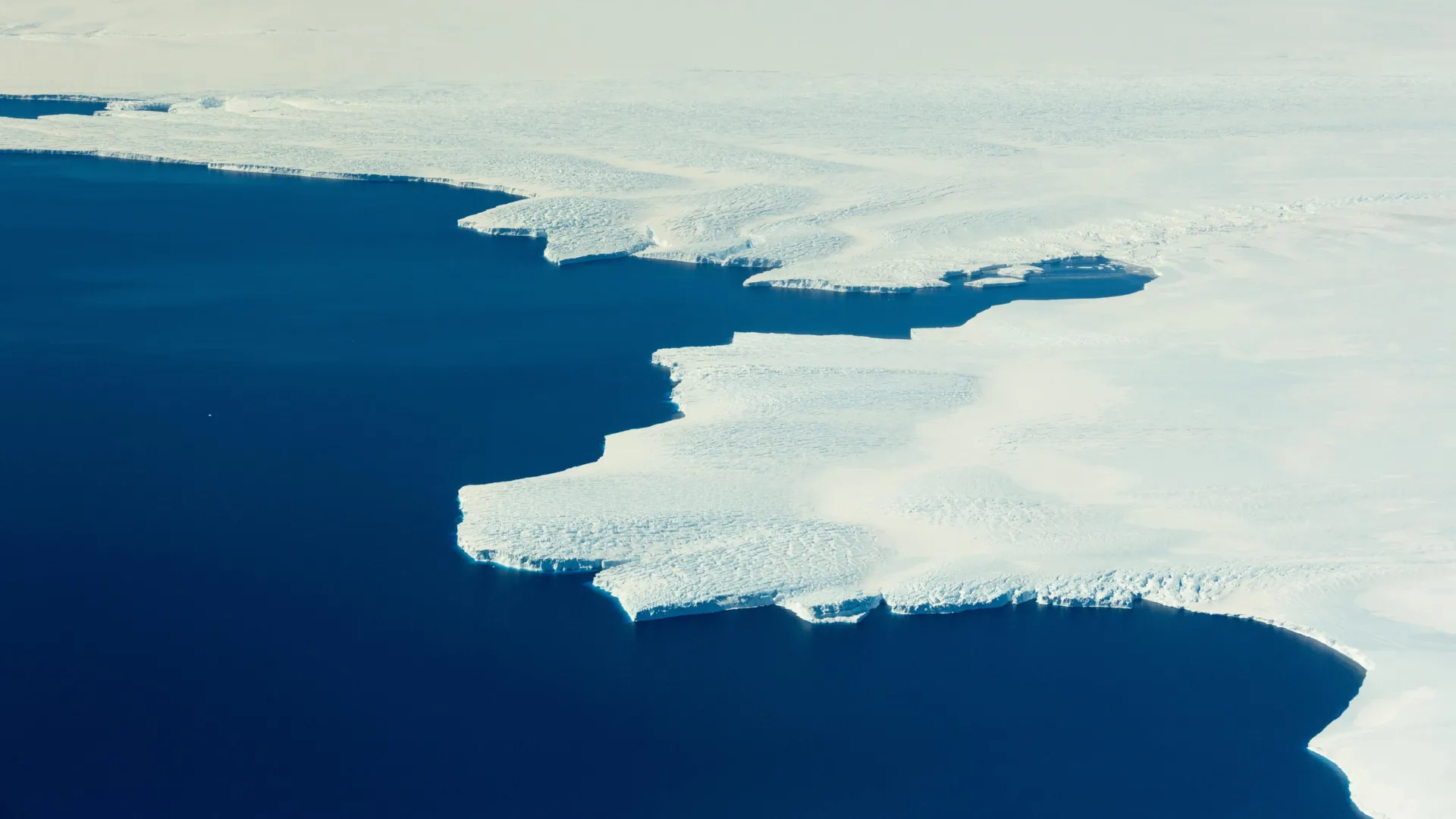
A prolonged period of unusually warm tropical ocean temperatures helped increase snowfall across East Antarctica, temporarily adding approximately 695 billion tons to the Antarctic ice sheet, according to new research published in Nature on August 19.
Researchers found that persistent warming in the tropical warm pool between 2021 and 2023 triggered atmospheric changes that affected Antarctic weather thousands of miles away. The warming produced a continent-spanning Rossby wave train, which helped establish a meridional circulation pattern over East Antarctica. This atmospheric shift redirected moisture toward the continent, increased snowfall and temporarily slowed the Antarctic ice sheet’s mass loss.
Why Antarctica’s unusual ice growth matters
The Antarctic ice sheet remains one of the biggest uncertainties in projections of future global sea-level rise. Over the past two decades, Antarctica has lost an average of approximately 140.5 billion tons of ice each year.
Between 2021 and 2023, however, that long-term trend temporarily reversed. The Antarctic ice sheet gained about 695 billion tons of mass—the largest increase recorded by NASA’s GRACE satellite mission.
To investigate the cause of this unusual ice gain, researchers led by the Institute of Oceanography, Chinese Academy of Sciences (IOCAS), examined multiple sources of evidence. Their analysis included satellite gravity measurements, snowfall records preserved in ice cores and atmospheric circulation simulations. The team sought to determine where the additional moisture originated and how weather systems transported it to East Antarctica.
How tropical ocean warming affected Antarctica
The research team found that the tropical warm pool continued to warm from 2021 through 2023. This region lies where the tropical western Pacific Ocean meets the eastern Indian Ocean and contains some of the warmest seawater on Earth.
The sustained ocean warming generated a Rossby wave train—a large-scale atmospheric wave pattern capable of transmitting changes in weather and circulation across vast distances. The disturbance moved southward toward higher latitudes, reorganizing atmospheric conditions around Antarctica.
Interactions between atmospheric eddies and the broader mean flow strengthened and extended the resulting circulation pattern. This produced a north-south pressure dipole, with an unusually strong low-pressure system south of Australia and a high-pressure system along the eastern Antarctic coast.
These pressure changes altered the movement of moisture through the atmosphere. In particular, they strengthened water vapor transport from the mid-latitude Indian Ocean to East Antarctica through atmospheric rivers.
Atmospheric rivers delivered heavy snowfall
Atmospheric rivers are narrow corridors of concentrated water vapor that transport large quantities of moisture across long distances. When these systems reach extremely cold regions such as Antarctica, the moisture can fall as heavy snow.
Water vapor tracking simulations showed that the pressure dipole moved moist air from the mid-latitude Indian Ocean toward East Antarctica. This allowed more atmospheric rivers to reach the continent and produced substantial snowfall across the Queen Mary Land and Wilkes Land regions, increasing the ice sheet’s mass.
Atmospheric circulation model experiments provided additional evidence that warming in the tropical warm pool directly contributed to the circulation changes and increased Antarctic snowfall.
The researchers also examined how much of the snowfall increase could be linked to human-caused climate change. They found that anthropogenic forcing accounted for only about 9% of the observed snowfall anomaly. This suggests that the general rise in atmospheric humidity associated with global warming was not the primary cause of this specific Antarctic ice gain.
The tropical warm pool acts as a distant climate regulator
Additional observations and climate simulations indicate that similar episodes of sustained warming in tropical warm pools occur approximately once every 10 years.
Because of this recurring pattern, researchers describe the tropical warm pool as a remote “regulator” capable of influencing snowfall and ice mass in East Antarctica for several years. Changes in tropical ocean temperatures can reshape atmospheric circulation and ultimately affect snowfall thousands of miles away.
The findings reveal a powerful long-distance climate connection between tropical ocean warming and Antarctic ice-sheet changes.
Antarctica is still losing ice over the long term
Despite the dramatic gain of approximately 695 billion tons, researchers emphasize that the increase is temporary and does not reverse the Antarctic ice sheet’s long-term decline.
The West Antarctic ice sheet continues to lose mass, while several outlet glaciers in East Antarctica remain vulnerable. Warm seawater can melt ice shelves from below, causing glaciers to flow more quickly toward the ocean.
This study shows how sustained warming in the tropical warm pool can temporarily increase Antarctic ice-sheet mass by changing atmospheric circulation and intensifying snowfall. It also identifies the East Antarctic meridional dipole circulation as an important link between tropical climate conditions and variations in Antarctic ice mass.
Yunhe Wang of IOCAS, the study’s lead author, said: “We have discovered a previously little-recognized remote connection between tropical warm pools and the East Antarctic Ice Sheet.” Wang added: “Our study provides a theoretical basis for understanding changes in Antarctic ice mass and for conducting future research into East Antarctica’s climate.”
Source: www.sciencedaily.com