


10th-Century Wooden Tomb in Russia Reveals Elite Burial With Horse and Dog
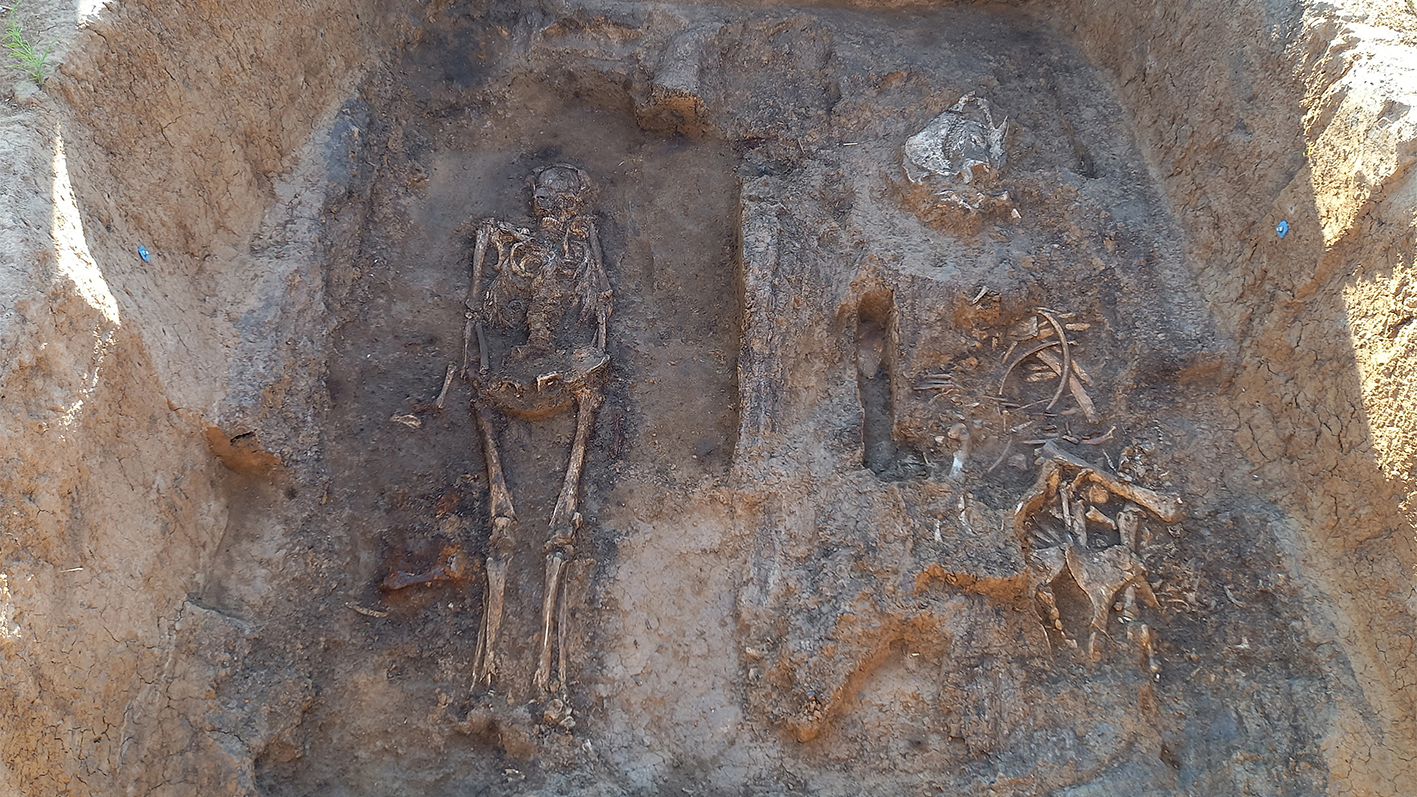
Archaeologists in Russia have discovered a remarkably well-preserved 10th-century wooden chamber tomb containing the remains of an elite man buried alongside his horse and dog. The unusual burial offers new evidence that medieval Rus’ and Scandinavian elites may have shared similar funerary traditions.
The burial was discovered during summer excavations at a medieval cemetery in Gnezdilovo, near Suzdal, approximately 137 miles (220 kilometers) northeast of Moscow. The find was announced in an translated statement from the Institute of Archaeology of the Russian Academy of Sciences.
By the late ninth and 10th centuries, the region that is now western Russia was home to Eastern Slavic, Baltic and Scandinavian communities. During this period, the practice of burying members of the medieval Rus’ elite in underground wooden chambers with valuable grave goods appears to have spread from Scandinavia.
Latest videos fromlive science
Silver brooches were used to fasten the clothing of elite individuals.
(Image source: Institute of Archaeology, Russian Academy of Sciences)
The newly identified chamber tomb is one of only around 80 medieval chamber burials documented in western Russia. Its exceptional preservation makes it an important archaeological discovery and provides rare insight into burial customs among the region’s early medieval elite.
The wooden chamber was located about 3.3 feet (1 meter) below the ground. It measured approximately 10.2 by 8.9 feet (3.1 by 2.7 meters). Although the wooden roof had decayed and collapsed into the burial chamber, the structure and its contents remained unusually well preserved.
Inside, archaeologists found the skeleton of a man who was between 25 and 35 years old when he died. The remains of a horse and a dog were also placed in the tomb, suggesting that the animals may have held an important role in the man’s life or social identity.
The burial also contained iron knives, stirrups and other riding equipment, bone combs and battle axes. The man appears to have been buried in clothing fastened near the neck with a silver horseshoe-shaped brooch. Together, these objects indicate that he held a high social and possibly military position within the community.

Coins and beads were found in another burial at the cemetery.
(Image source: Institute of Archaeology, Russian Academy of Sciences)
Medieval chamber tombs have so far been identified mainly in urban centers associated with Kievan Rus’. Their presence at Gnezdilovo suggests that Suzdal may have been an important political, military and administrative center much earlier than previously recognized.
Get the world’s most fascinating archaeological discoveries delivered straight to your inbox.
Archaeologists excavated 15 burials at the Suzdal site during the summer field season. Most individuals had been placed in simple earthen graves, while others were buried beneath barrows. Female burials included silver rings and necklaces decorated with crystal beads, whereas male burials more commonly contained weapons and riding equipment.
According to the archaeological statement, the discovery shows that Gnezdilovo was already attracting members of the Old Rus’ nobility at the beginning of the 10th century. The site may have served as a center of military and administrative control over the northeastern territories of Rus’, helping to explain the presence of an elaborate elite burial.
How well do you know the human skeleton? Test your knowledge with our human bone quiz!
Source: www.livescience.com