


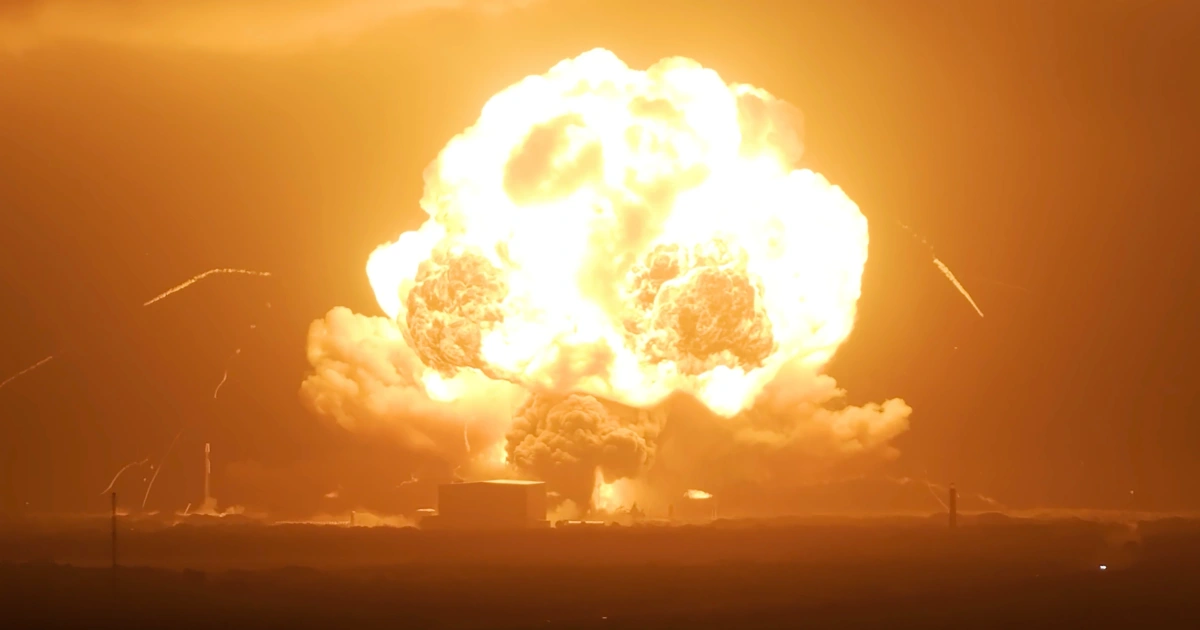
The massive explosion of the Blue Origin rocket on Thursday night represents a significant setback for Jeff Bezos’s space venture and NASA. This incident could delay crucial plans to land astronauts on the moon and establish a lunar base.

The explosion leaves Blue Origin grappling with the loss of one of its few New Glenn rockets, the destruction of the only functional launch pad, and the potential for extensive investigations that may delay operations for months or years.
NASA is also facing uncertainties. Blue Origin was set to play a vital role in the agency’s moon return program, competing against SpaceX for contracts to develop a lunar lander capable of transporting astronauts from Earth to the moon. The Artemis III mission, slated for next year, aimed to test one or both of these commercially developed landers.
Just three days prior, Blue Origin secured a significant contract to deliver two robotic landers to the moon for NASA, with missions expected to launch later this year.
“Overall, this is a major setback for Blue Origin,” stated Kathleen Curley, a research analyst at Georgetown University’s Center for Security and Emerging Technologies.
NASA Administrator Jared Isaacman commented on X Thursday, saying, “Spaceflight is unforgiving, and developing new heavy-lift launch capabilities is extremely challenging.”
In a response to inquiries, Blue Origin directed NBC News to Isaacman’s statement.

The accident occurred around 9 p.m. ET during a static fire engine test at Cape Canaveral Space Force Station in Florida. In this test, the rocket is filled with fuel, and the engines ignite while secured to the launch pad, without liftoff. Space Force officials confirmed that all personnel were accounted for, and there were no injuries.
The explosion resulted in a massive fireball engulfing Blue Origin’s New Glenn rocket, likely destroying much of the launch pad.
The extensive damage to the pad was surprising, as noted by Casey Dreier, director of space policy at the Planetary Society. “While rocket companies do experience explosions, pad incidents are uncommon,” he commented, highlighting the risk of destroying both rockets and the essential infrastructure for launches.
“Certainly rocket companies have had many explosions, but pad explosions like this are rare,” he stated. “They don’t want to do this because it not only destroys the rocket but also the infrastructure needed to get the rocket into space. This situation is particularly troublesome.”
Blue Origin’s New Glenn is currently reliant on the only operational launch pad. Even if the rocket’s issues could be swiftly resolved, the company is left without a launch pad.
“This infrastructure is complex, and rebuilding the launch pad will take time,” Dreier remarked. “There are limits to how quickly operations can resume.”
Blue Origin has initiated preparations for a second launch pad at Cape Canaveral Space Force Station, though the project is still in its infancy.
According to Dreyer, it could take “six months to two years” for Blue Origin’s New Glenn rocket to be ready for launch, pending a comprehensive evaluation. NASA stated that it will collaborate with Blue Origin to investigate the situation and determine its effects on future missions.
Jeff Bezos mentioned on Thursday on X that “it is too early to determine the root cause, but we are already focused on finding it.”
“Today is challenging, but we are committed to rebuilding all that is necessary and resuming flight operations. It is worth it,” Bezos stated.
Source: www.nbcnews.com