


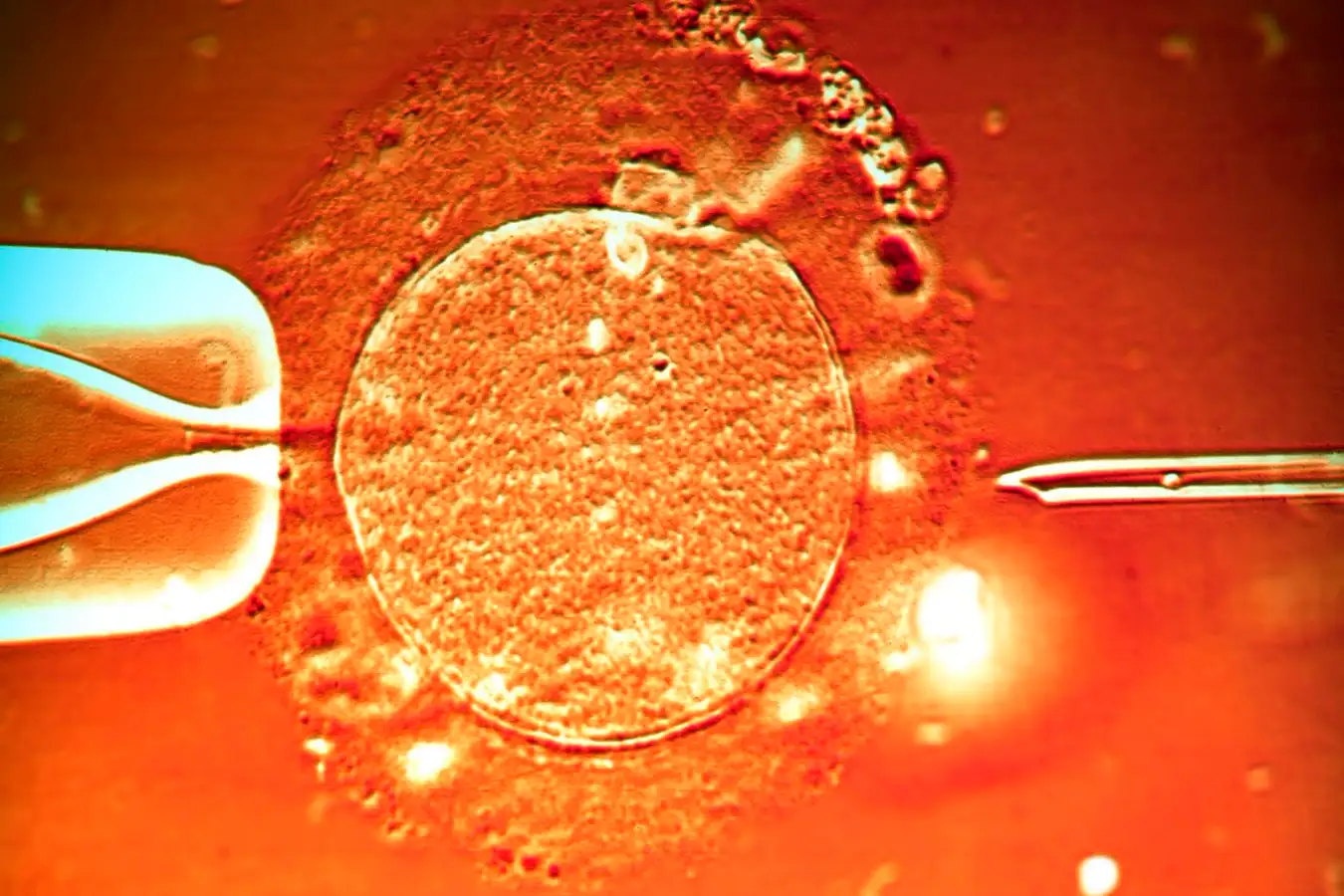
IVF has the potential to be enhanced by performing more of the process internally.
Zephyr/Science Photo Library
Recent advancements in IVF technology have enabled the creation of embryos from magnetized spermatozoa, allowing them to be guided to eggs more efficiently. This innovative approach could make in vitro fertilization (IVF) less invasive, leading to potentially higher success rates.
“Our ultimate aim is to utilize the body as a natural incubator and conduct assisted reproduction in vivo,” explains Mariana Medina Sanchez, a researcher at CIC nanoGUNE, a leading nanoscience institute in Spain.
Challenges such as low sperm count or motility often hinder natural conception. In vitro fertilization (IVF) procedures typically involve placing sperm with an egg in a dish or injecting them directly. The traditional IVF process can be invasive, including hormone injections, egg retrieval, and embryo transfer, which may lead to side effects and low success rates due to artificial environments.
To tackle these challenges, Medina Sánchez and her team sought to develop a technique for moving sperm through the female reproductive tract using a weak external magnetic field. This method aims to enable fertilization in a more natural setting. “We aimed to create a sperm preparation process that integrates seamlessly into existing IVF practices,” states Medina Sánchez.
In their experiments, the team incubated cow sperm with tiny magnetic beads made from iron oxide and polystyrene. Approximately 30 beads were attached to the sperm’s head, allowing the tail to move freely. Testing confirmed that the magnetic beads did not affect sperm motility or overall health.
When magnetic cow sperm were incubated with eggs, healthy embryos formed at rates comparable to those using non-magnetic sperm. As the sperm entered the egg, the magnetic beads detached without impacting early embryo development.
The researchers successfully demonstrated that an external magnetic field could guide the magnetic sperm towards the eggs in a controlled laboratory environment.
“This is a notable breakthrough and a promising proof of concept,” remarks Kylie Dunning from the University of Adelaide, Australia. “However, several challenges remain before this method can be implemented clinically.” She notes the necessity of proving that magnetic sperm can navigate into fallopian tubes and fertilize eggs outside laboratory settings while also ensuring viable embryos can implant successfully.
The magnetic beads produced visible results on ultrasound, making it straightforward to track sperm groups in the body, according to Medina Sánchez. Encouragingly, her team has already successfully guided whole embryos embedded in small magnetic structures into the fallopian tubes of mice using external magnets.
After detaching from the sperm, the magnetic beads are expected to be naturally expelled by the body’s waste management system. If necessary, they can also be removed using a magnet attached to a catheter, Medina-Sanchez explains. “We believe this approach holds great promise,” she adds.
topics:
Source: www.newscientist.com