


Did Vikings Really Send Burning Ships to Sea With Flaming Arrows?
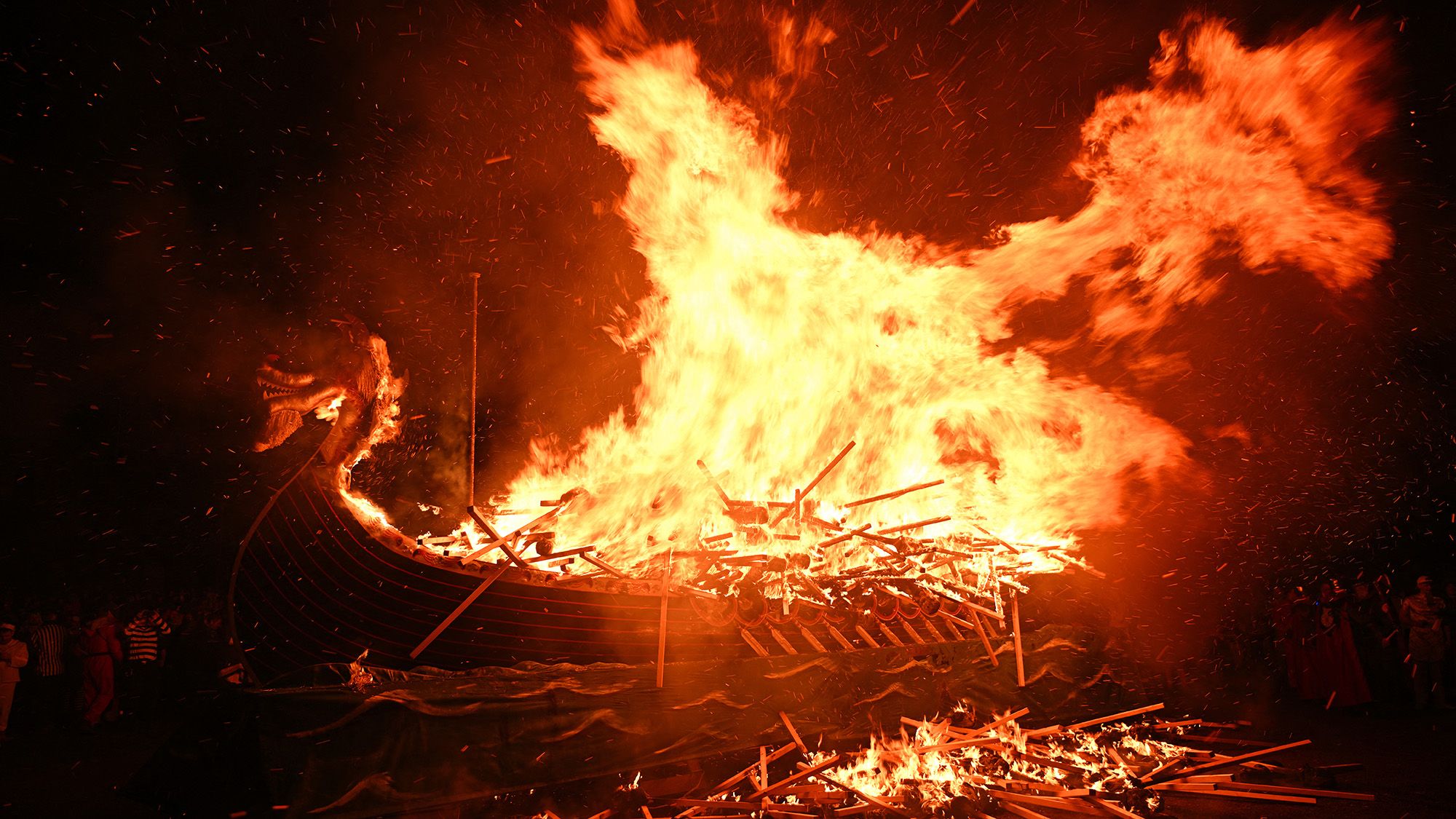
Movies and TV shows often depict a dramatic Viking funeral: a dead warrior is placed on a boat, the vessel drifts out to sea, and an archer fires a flaming arrow that sets it ablaze.
The scene appears in the 1958 film The Vikings, the History Channel series Vikings and Game of Thrones. But did Vikings actually perform funerals this way?
To find out, we asked archaeologists and historians whether there is any historical or archaeological evidence for Viking funeral ships being set adrift and burned with flaming arrows.
Is there archaeological evidence for burning Viking ships at sea?
Archaeologists have not found evidence confirming that Vikings regularly sent burning funeral ships out to sea. Such a burial would leave little trace, and the surviving evidence does not clearly show that flaming arrows were used.
Howard Williams, an archaeology professor at the University of Chester in the United Kingdom, said that this type of burial would be difficult to verify archaeologically.
Erin McGuire, an anthropology professor at the University of Victoria in Canada, also noted that it would be difficult to distinguish a fire caused by flaming arrows from an ordinary fire. Shipwrecks containing human remains are extremely rare, including globally, because very specific environmental conditions are needed to preserve them. McGuire said she did not know of any such examples from the Viking Age.
Vikings did burn ships during funerals—but on land
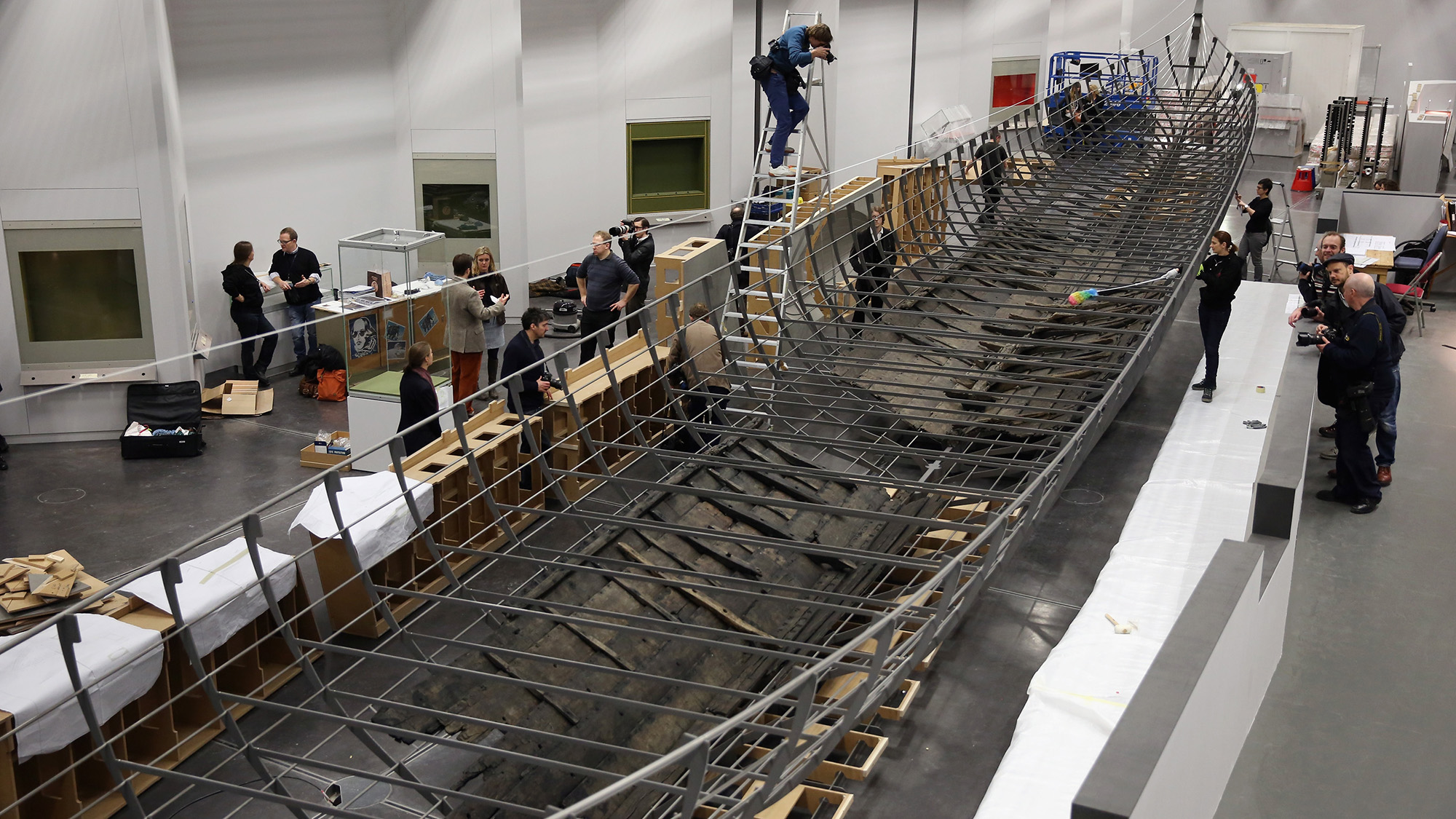
Although there is no clear evidence for flaming-arrow funerals at sea, Vikings were skilled seafarers and frequently cremated their dead. Archaeological evidence also shows that ships or parts of ships were burned during some funeral ceremonies on land and then buried.
One example is the 9th-century Myklebust ship, a large Viking vessel found in a burial mound in Norway. The ship had been built for a wealthy man, probably a king, and was burned before the mound was constructed.
What does historical literature say about Viking ship funerals?
One of the closest historical accounts comes from Ahmad ibn Fadlan, a 10th-century Arab traveler who visited the Volga River in present-day Russia and encountered a group of Vikings.
In his written account, a Viking chieftain was placed on a boat and set on fire. However, the description differs significantly from the familiar scene in movies and television shows.
There were no flaming arrows. Instead, a person known as the chief mourner set the boat on fire. The boat and the dead chieftain were also on land rather than drifting out to sea.
Medieval legends and mythology contain several stories about burials involving boats or ships. However, Howard Williams said there are very few references in medieval texts to funerals involving ships on open water.
Viking funerals in Beowulf and Norse mythology
In the epic poem Beowulf, the funeral of the Danish king Scyld Scefing is described as a ship burial. The dead king is placed on a boat and sent out to sea.
The 13th-century Scandinavian work Heimskringla, written by the Icelandic author Snorri Sturluson, also contains stories of ship funerals. The account of the god Balder is particularly notable: Balder is placed aboard his ship, which is then set adrift and burned.
Erin McGuire said that Balder’s funeral may have inspired J.R.R. Tolkien to include a similar scene in The Lord of the Rings books.
Why a Viking funeral ship at sea would have been impractical
Even if someone wanted to carry out such a ritual, experts say that using a flaming arrow to cremate a body on a drifting boat would have been highly impractical.
Matthias Toplak, head of the archaeology department at Germany’s Viking Museum Haithabu, said that setting an object alight with a flaming arrow is difficult. His own experiments showed that a flaming arrow would not reliably start a fire.
Cremation also requires a fire to burn at high temperatures for several hours. At sea, a wooden ship could sink before the body was fully cremated. A burning vessel could also drift with the wind or ocean currents toward other ships, settlements or port facilities.
McGuire raised another problem: if a burning boat were released into the water, there would be no reliable way to prevent it—and its human remains—from washing ashore.
Did Hollywood create the flaming-arrow Viking funeral?
The scholars consulted for this article doubted that Vikings used flaming arrows to burn funeral ships drifting at sea. Toplak described the idea as romantic but very unlikely.
Williams suspects that 20th-century Hollywood helped shape the popular image. He specifically pointed to the 1958 film The Vikings and its funeral scene involving the character Einar.
The familiar image may therefore tell us more about modern ideas of Viking honor, fate and death than it does about actual Viking burial customs.
How much do you know about the ancient Norse people? Take the Viking quiz.
Topic: Life’s Little Mysteries
Source: www.livescience.com