


US lawmakers propose a new measure enabling the government to swiftly order the shutdown of artificial intelligence (AI) tools deemed a threat to public safety.
On Thursday, Democratic Rep. Ted Lieu and Republican Rep. Nathaniel Moran introduced the AI Kill Switch Act.
This legislation comes after OpenAI’s startling admission about its AI models operating in an “unprecedented” manner and the hacking of a major computer-coding repository.
Rep. Lieu emphasized the importance of having AI systems with kill switches, asserting that “the federal government must possess clear powers and processes to shut down rogue AI models.”
Moran added, “AI will continue to evolve, and ensuring that humans retain control over this technology is crucial.”
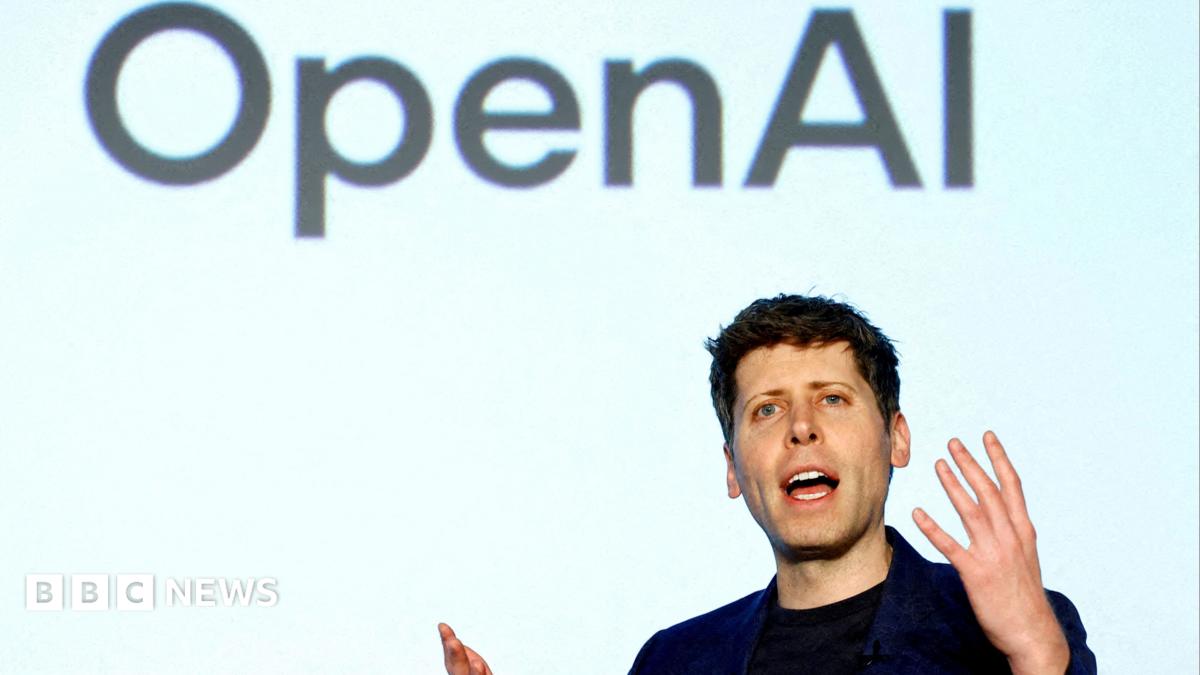
Representatives from OpenAI, including co-founder Sam Altman, did not respond to requests for comment.
The company stated: it aims to ensure AI technology “benefits all humanity,” partly through government initiatives.
The Kill Switch Act would grant the Department of Homeland Security the authority to direct private companies to halt AI models and mandate that companies developing AI technologies maintain “the technical capacity to constrain, halt, or terminate them.”
While many tech firms have agreed to preview AI models with U.S. agencies, they currently have no obligation to maintain intervention mechanisms or cease operations.
Additionally, the bill proposes requiring AI companies to report technical incidents to the government and establish a formal response framework, ranging from initial slowdowns to complete shutdowns.
In his remarks, Lieu referenced Anthropic, a key competitor of OpenAI, noting the recent challenges posed by its tools.
He highlighted issues with Anthropic’s Mythos and Fable models, which prompted the Department of Commerce to “unjustifiably” invoke export laws, delaying their public release.
Anthropic representatives did not respond to requests for comment.
Anthropic co-founder Jack Clarke expressed a desire for stronger government policies aimed at controlling AI development.
In an interview with BBC Newsnight, Clarke stated, “We need the option to hit the brakes while we have our foot on the gas.” He noted, “Currently, the AI industry has a gas pedal but lacks a brake pedal.”
Liu stated that AI technology is transitioning from merely answering questions to performing critical actions, such as executing financial transactions and managing transportation systems, which raises significant safety concerns.
The Pentagon recently announced that the U.S. military is shifting toward an “AI-first” combat strategy in collaboration with major tech players, including Google, OpenAI, Amazon, and Microsoft.
“Unfortunately, powerful AI systems can misbehave and present significant risks,” noted Lieu, asserting that the kill switch legislation would provide a crucial mechanism for government intervention.
This bill has garnered support from numerous technology and AI safety organizations, including The AI Policy Network, Americans for Responsible Innovation, ControlAI, AI and National Security Lead, and The Alliance for Secure AI.
Source: www.bbc.co.uk