


What Is the Vernal Equinox? 2026 Dates, Meaning and Seasonal Changes
In some regions, the equinox signals longer nights and darker weather, while in others it marks the arrival of warmer temperatures and more sunlight. Observing and predicting the equinoxes was one of humanity’s earliest astronomical skills. Ancient observatories around the world tracked the vernal equinox along with the more pronounced summer solstice.
Today, you do not need your own observatory to know when an equinox occurs. These events appear on calendars twice a year. The term equinox comes from Latin and means “equal night.” But what exactly is the vernal equinox, and why does it matter?
What is the vernal equinox?
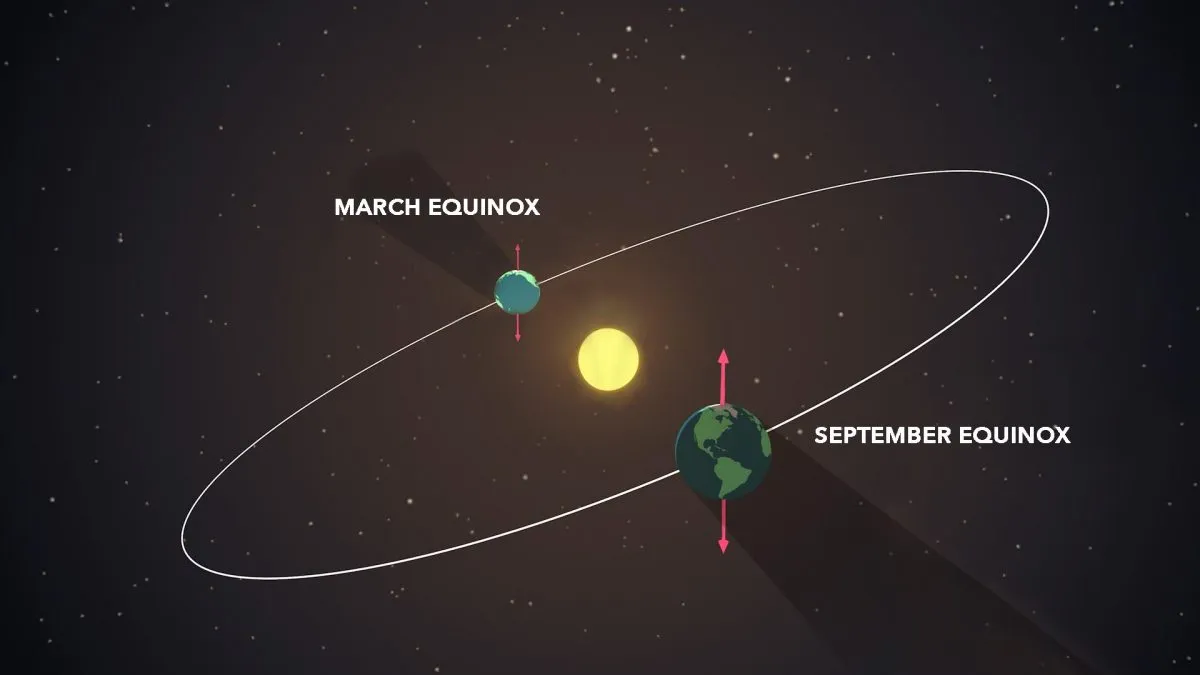
An equinox occurs twice each year, in March and September. The March equinox is known as the vernal equinox in the Northern Hemisphere, while the September equinox is known as the autumnal equinox there.
In 2026, the March equinox will occur on March 20 at 14:46 UTC. The September equinox will occur on September 23 at 00:05 UTC, which is September 22 in some North American time zones.
An equinox marks the exact moment when the center of the Sun crosses Earth’s equatorial plane. During an equinox, an observer at the equator will see the Sun directly overhead at noon.
After the March equinox, observers around the world see the Sun move farther north each day until the June solstice. It then begins moving south. The Sun crosses the equator again during the September equinox and continues south until the December solstice, when it begins moving north once more.
This apparent movement is why the March equinox is associated with the arrival of spring in the Northern Hemisphere. In the Southern Hemisphere, the March equinox marks the beginning of autumn.
Are day and night exactly equal during an equinox?
During an equinox, sunlight is distributed nearly equally between the Northern and Southern Hemispheres. It is also the only time of year when Earth’s North and South Poles are illuminated by sunlight at the same time.
However, the length of day and night is not exactly the same on the equinox. The date when day and night are closest to equal varies by latitude and may occur several days before or after the equinox itself.
The main reasons are the Sun and Earth’s atmosphere. The Sun is a sphere rather than a point of light, and its edges are refracted by the atmosphere as the Sun rises and sets. This adds several minutes of daylight each day.
As a result, the Sun does not appear to rise and set as cleanly as a light bulb switching on and off. There is no perfect separation between day and night during an equinox, although the two are very close in length.
How the equinox changes the seasons
The equinoxes are associated with seasonal change. In March, observers in the Northern Hemisphere welcome longer and warmer days as spring begins. At the same time, observers in the Southern Hemisphere experience shorter days, longer nights and cooler temperatures as autumn begins.
In September, the seasonal pattern reverses: autumn begins in the Northern Hemisphere, while spring begins in the Southern Hemisphere.
Original poster: Dave Prosper, February 2022
Last updated by Kat Troche, March 2026
Source: science.nasa.gov