


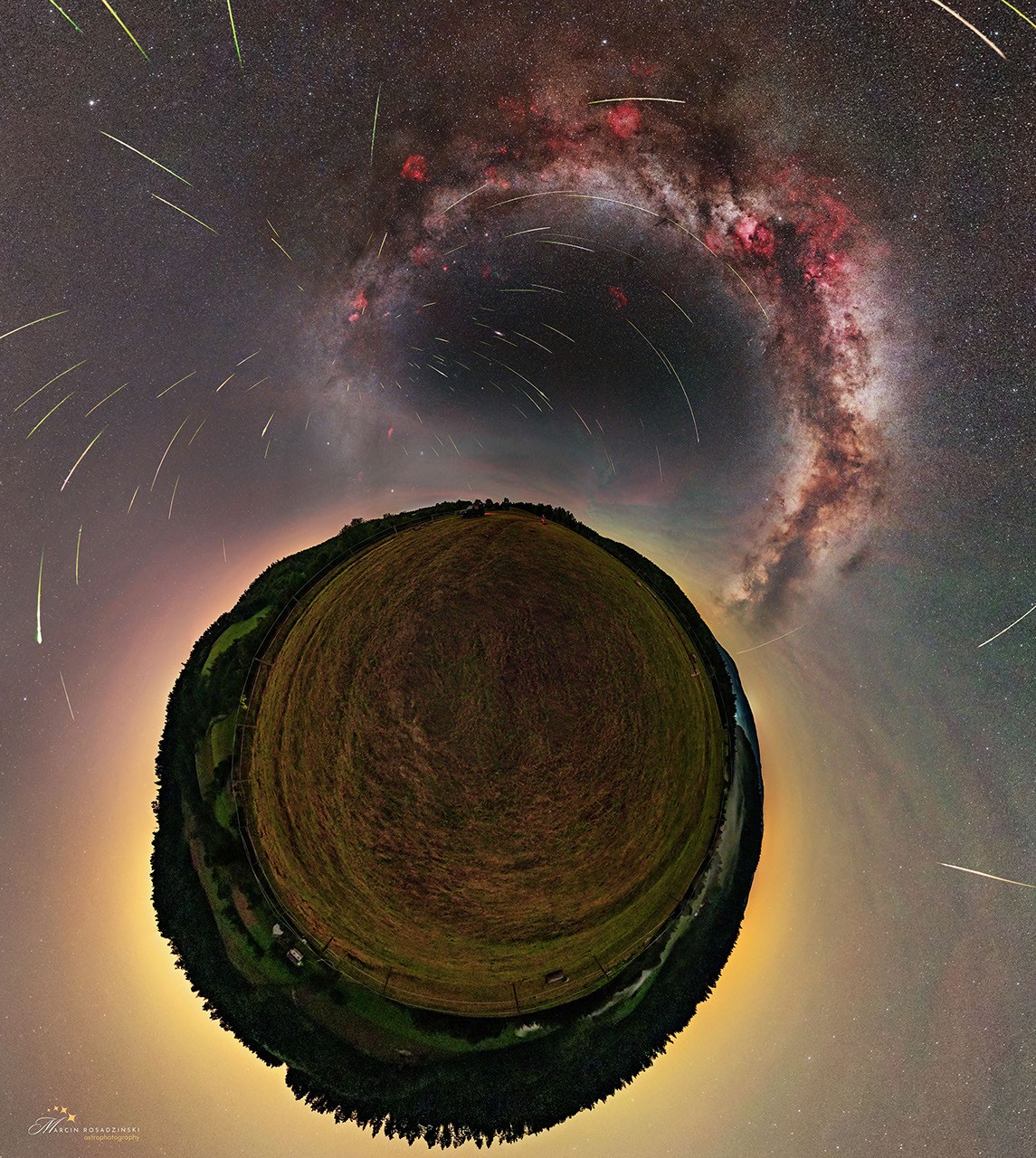
Explanation: This stunning little planet projection looks like a view from The Little Prince. The featured image, shared here, is a throwback to the 2024 Perseid meteor shower above the Bieszczady Mountains in Poland.
Visible across the night sky are the Milky Way, several red nebulae, and more than 100 meteors appearing to radiate from the Perseid meteor shower’s radiant. The Perseids are one of the most popular annual meteor showers in the Northern Hemisphere, especially during the summer months when observing conditions are generally more comfortable than in winter.
The 2026 Perseid meteor shower peak coincides with a new moon, creating darker skies and potentially better viewing conditions. The Perseids can produce 50–100 meteors per hour when Earth passes through debris left behind by Comet Swift–Tuttle. The best time to watch is typically between midnight and dawn. No binoculars are required—just find a dark, open location, bring a lawn chair, and enjoy the show. A meteor-watching guide can help you plan your viewing session.
NASA stream: Total solar eclipse on August 12.
Tomorrow’s photos: Pixels in Space
Source: science.nasa.gov