


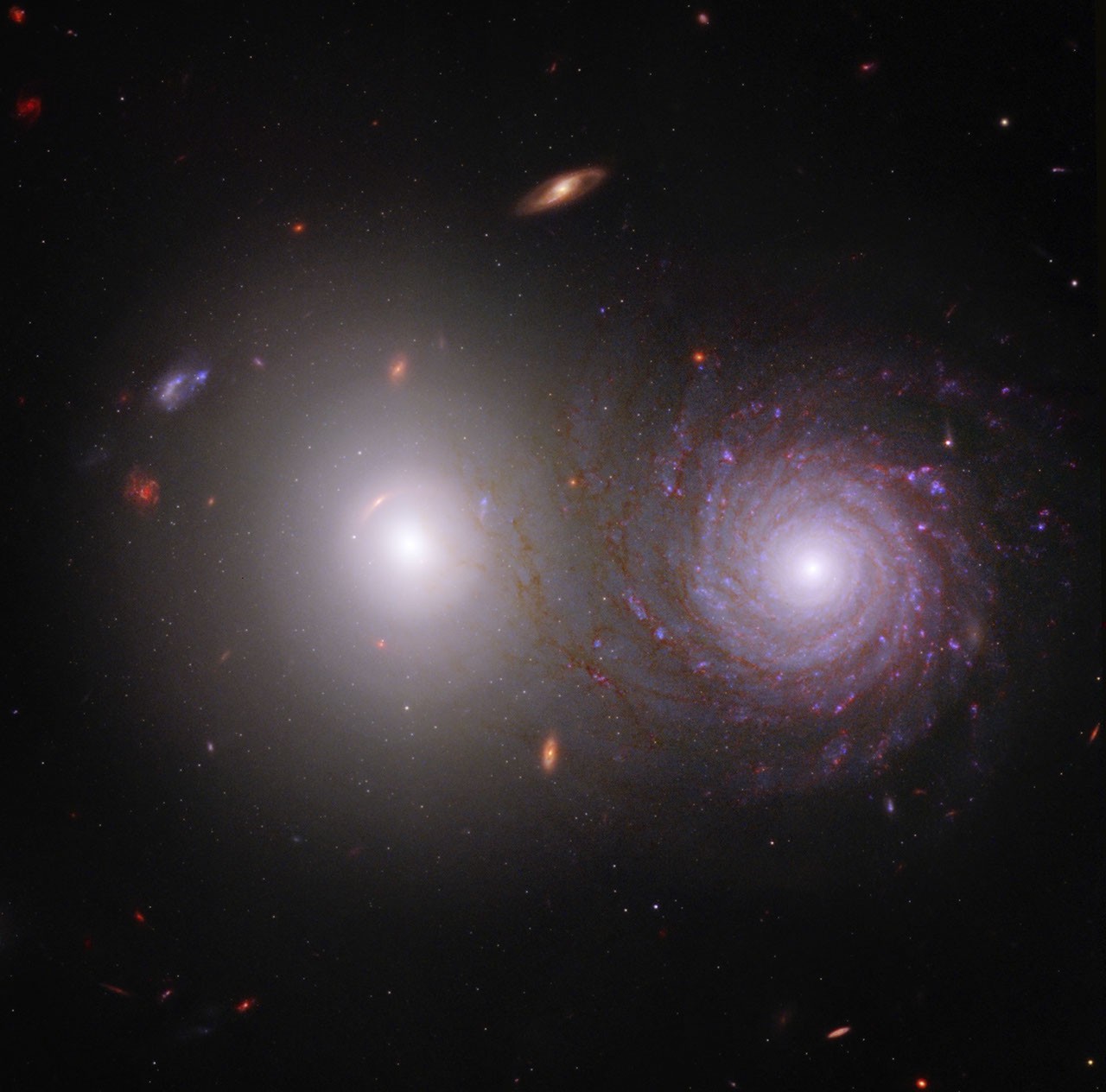
NASA’s Overlap Zoo Lets You Discover Hidden Dust Between Overlapping Galaxies
Galaxies are vast collections of billions of stars, gas, and dust held together by gravity and scattered throughout the universe. Occasionally, two galaxies appear side by side or overlap in the sky when viewed from Earth or by a space telescope. These rare overlapping galaxies give astronomers a valuable way to study something that is usually difficult to see: dust inside distant cosmic objects.
That is the focus of NASA’s new Overlap Zoo project, which invites volunteers to help find and classify overlapping galaxy pairs.
How Overlapping Galaxies Reveal Cosmic Dust
In an overlapping galaxy pair, the more distant galaxy can act like a cosmic flashlight shining through the nearer galaxy. Dust in the foreground galaxy creates a dark, shadow-like silhouette against the background galaxy’s light.
By studying these silhouettes, astronomers can map how dust is distributed throughout galaxies and learn how it blocks, scatters, and dims starlight as it travels through space. Measuring how dust affects light may also help researchers estimate distances to distant objects more accurately.
Help Find Galaxy Pairs With Overlap Zoo
Before astronomers can study the dust in these galaxy pairs, they need to find them. Overlap Zoo is asking the public to help search through images and identify potential overlaps.
“As observations of newer and better galaxies continue to emerge, it becomes extremely difficult for astronomers to classify all potential galaxy pairs,” said Overlap Zoo project leader and graduate student Trevor Butram. “Your help will be invaluable as we create the largest and cleanest catalog of overlapping galaxy pairs for further analysis.”
What Overlap Zoo Volunteers Do
As an Overlap Zoo volunteer, you will examine images that Galaxy Zoo volunteers have identified as potentially containing overlapping galaxies. You will learn how to:
- Confirm whether galaxy pairs are present
- Classify the main features of each galaxy
- Mark the outline of each galaxy
You can classify as many images as you like. Your contributions will help create the first large-scale catalog of galaxy pairs suitable for dust studies and could significantly improve the accuracy of astronomical estimates.
Join the Search for Overlapping Galaxies
Visit Overlap Zoo and start classifying galaxies today. No prior experience is required—just curiosity and a few minutes of your time. Your observations could help astronomers uncover the secrets hidden in these unusual cosmic alignments.
Source: science.nasa.gov