


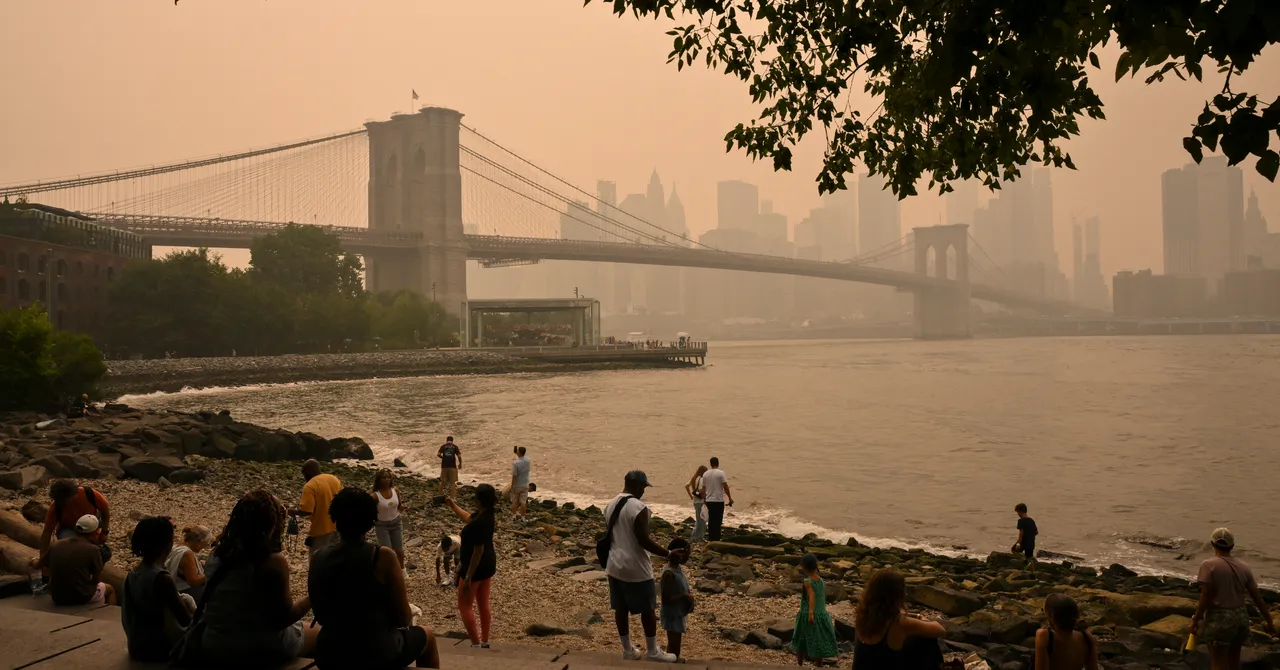
Summer traditions like hot dogs, beach days, and iced tea on the balcony are being overshadowed by a growing concern: the choking smoke from devastating wildfires spurred by global warming.
Recently, widespread air quality warnings have blanketed the Midwest, Northeast, and parts of Canada, as thick smoke ominously transformed the sky into a haunting shade of orange. The fires raging in Minnesota and western Ontario are among the culprits.
Currently, Canada is grappling with 119 uncontrolled wildfires. The intensity of these blazes is sending smoke high into the atmosphere, carried eastward by the jet stream. As a result, cities like Chicago and Detroit ranked as having the worst air quality in the world on Friday, with New York and Washington, D.C., also making the top 10.
Unhealthy air conditions have prompted officials to advise residents to remain indoors as they seek ways to minimize exposure to hazardous wildfire smoke. Although fresh air is anticipated in some regions this weekend, the fires show no inclination to diminish, potentially leading to more smoke outbreaks as summer progresses.
The burning of fossil fuels heightens the risk of destructive wildfires, leading to an uptick in smoke production. This week’s orange skies on the East Coast serve as a stark reminder of 2023, when smoke from Canadian wildfires marked it as the worst wildfire season in the nation’s history. Similar scenes emerged across Europe this summer, with fires ravaging Spain, and orange skies becoming a recurring theme in far-flung locations like Australia and California.
If fossil fuel consumption remains unchecked, experts warn of an escalating situation. A study published last year in Nature Learning projects that wildfire smoke could lead to an additional 71,420 deaths annually in the United States by mid-century—a staggering 73% increase compared to the 2010s. Up to 1.9 million Americans may succumb to health issues linked to smoke exposure during this timeframe.
Looking ahead, here’s what the smoke intrusion forecast looks like for the week. As temperatures continue to rise, we are likely facing an even graver situation ahead.
Toronto, Ontario
Source: www.wired.com