


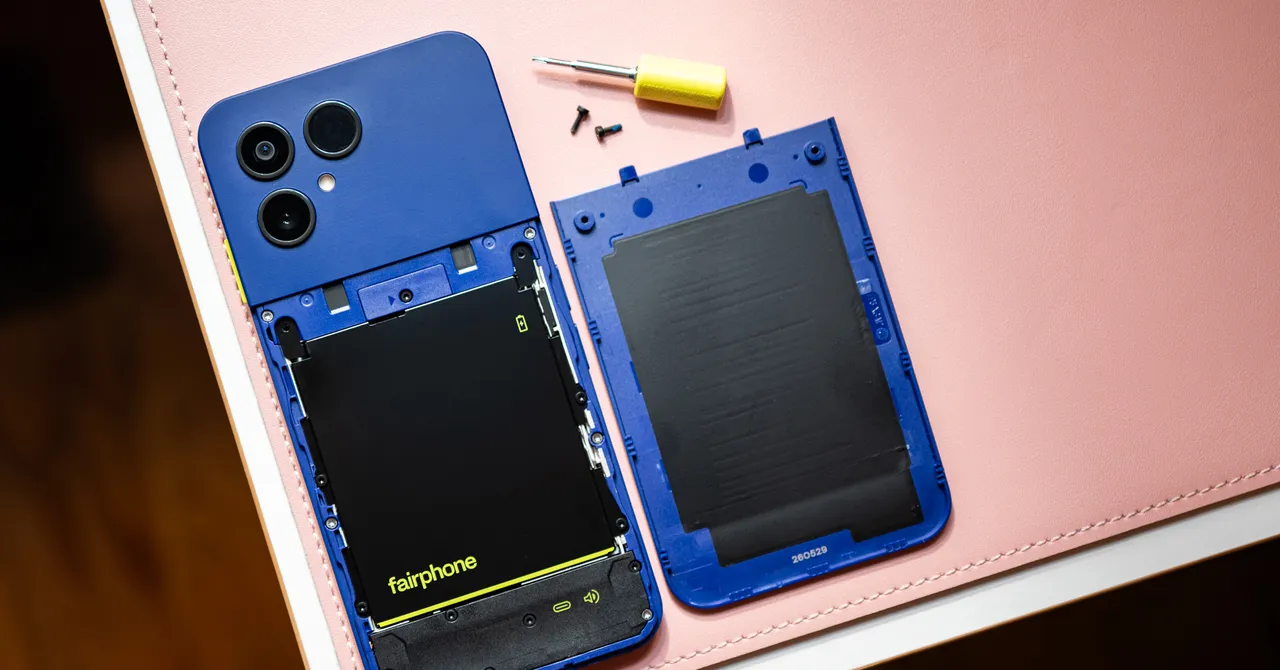
Fairphone CEO Raymond Van Eck told WIRED that the company’s repairable, sustainable smartphones could offer consumers a compelling alternative during a challenging economy. “If you look at the U.S. market, it’s completely duopoly, with very few real consumer choices,” Van Eck said. “Americans are tired of planned obsolescence, closed ecosystems, and expensive annual upgrades.”
The U.S. smartphone market is dominated by Apple and Samsung, making it difficult for alternative brands to gain a foothold. The challenge is even greater for manufacturers that do not sell phones through U.S. carriers, where most Americans purchase new devices, according to a 2025 International Data Corporation report. As a result, several smartphone makers have left the market. OnePlus recently announced plans to exit North America, following other manufacturers in recent years, including HMD Global, Sony, and LG Mobile. To challenge that trend, Van Eck said Fairphone is already in discussions with major carriers and mobile virtual network operators (MVNOs) about selling its phones in physical stores.
Fairphone smartphones run on Google’s Android operating system, although consumers can purchase a $699 version with Murena’s de-Googled /e/OS. The company’s devices also offer features that are uncommon among mainstream smartphones. On the Fairphone Gen 6 and newer models, users can activate a physical switch to enable Fairphone Moments, a minimalist interface designed to reduce digital distractions. Van Eck believes the performance improvements introduced with the sixth generation will support more advanced software, including AI features that require additional memory. He acknowledged that Fairphone is also affected by the global memory shortage but said the company’s “deep relationships” with suppliers have helped it secure essential components.
“We don’t see co-dependence on American technology as a compromise or a downside, but rather as a powerful synergy,” Van Eck said. “We can say we are taking the best of American innovation that drives industry performance and wrapping it with European care for the planet and people. This creates a product that is stronger than either of us could build on our own.”
Fairphone is also beginning to expand beyond its traditional ethical-tech audience. The company’s latest marketing strategy places greater emphasis on smartphone quality alongside its commitment to sustainability and fair labor. Fairphone has recorded year-over-year growth for four consecutive quarters, while mobile phone shipments increased 74% year over year during the first half of 2026. Van Eck said that 80% of Fairphone Gen 6 buyers were new to the brand.
“We’re really expanding to a more mainstream audience now,” he said. “It helps us a lot and also gives us a lot of confidence that we are really on the right path.”
Although the sixth-generation Fairphone and subsequent models are arriving on a relatively short release cycle, Van Eck said the company still plans to launch a new smartphone generation approximately every two years. That schedule contrasts with major smartphone manufacturers, which typically release new flagship devices annually.
Source: www.wired.com