


New Jurassic Bird Had Killer Claws and a Pheasant-Like Build—But Couldn’t Fly
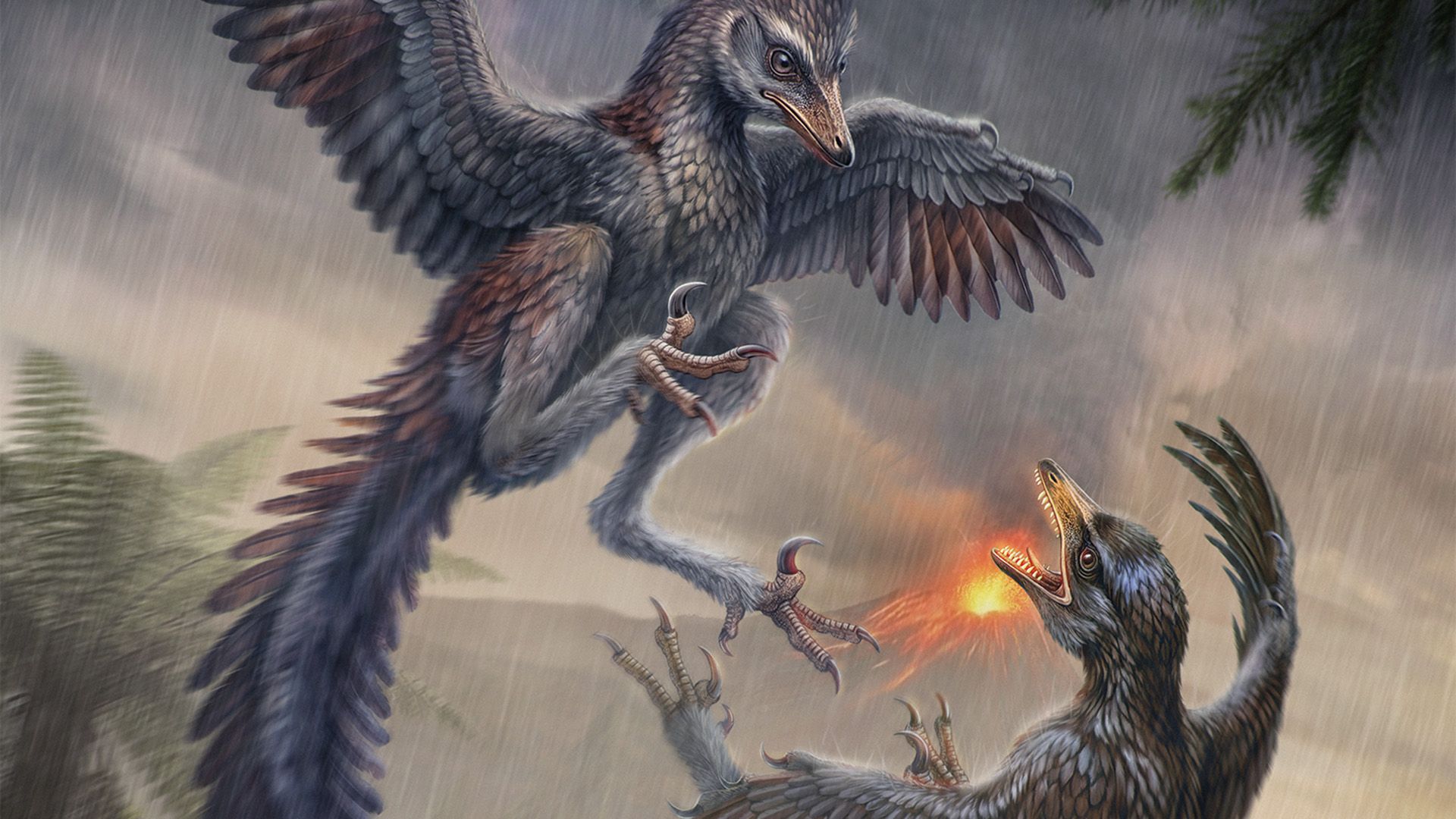
Illustration of the flightless Jurassic bird Yujuornis yangyuanensis, which had characteristics of both birds and dinosaurs.
Image provided by Chung-Tat Cheung
Chinese paleontologists have discovered a small Jurassic bird that was likely a terrestrial predator—a carnivorous, pheasant-like animal equipped with powerful claws. The fossil combines characteristics of modern birds with features more commonly associated with predatory dinosaurs, suggesting that early birds occupied a wider range of ecological niches than previously recognized.
Jurassic birds first appeared between 150 million and 148 million years ago. Because their fossils are rare, scientists are still working to understand how these early birds diversified and how flight evolved.
A newly identified Jurassic bird from China
The newly identified species, Yujuornis yangyuanensis, was discovered in 2024 in the Late Jurassic Zhenghe fauna, a fossil assemblage in southeastern China. The research team published its findings in Nature on Wednesday, October 14.
Analysis of the fossilized skeleton suggests that the animal was small, weighing about 1.8 pounds (0.8 kilograms)—roughly the size of a crow. “It was probably about the size of a crow,” Wang Ming, a researcher at the Chinese Academy of Sciences, told Live Science via email.
Bird-like body, dinosaur-like claws
Y. yangyuanensis had a combination of traits seen in birds and predatory deinonychosaurid dinosaurs, including Velociraptor, which is known for its sickle-shaped toe claws. The newly discovered bird had highly extensible toes, while its front legs were about one-third shorter than its hind legs.
That body plan is unusual because modern birds and many other Jurassic paravians—a group that includes bird-like dinosaurs, the ancestors of birds and modern birds themselves—typically had longer forelimbs. Long forelimbs are associated with producing lift during takeoff.
The fossil’s skull elements were thin, and its teeth were sparsely spaced. Along with its curved, claw-like toes, these features suggest that Y. yangyuanensis ate meat and used its feet to secure prey.
“Its key anatomical features combine those of dinosaurs and birds,” Wang said. Its teeth, pectoral girdle and especially its extensible “sickle-claw” second toe were similar to those of dinosaurs, while its slender skull and bird-like pelvis resembled those of early birds.
A flightless bird built for running
The combination of features suggests that the morphological gap between birds and dinosaurs was much smaller than scientists once thought. Comparisons with 377 living bird species showed that the proportions of Y. yangyuanensis limbs most closely resembled those of land birds.
Wang suggested that Y. yangyuanensis was a flightless bird that was not specialized for living in trees or walking through wetlands. Instead, it appears to have been a small carnivore with a pheasant-like build that was well adapted for running.
“I don’t think there is a direct equivalent to modern birds,” Wang said.
What the fossil reveals about the evolution of flight
The mosaic of anatomical features suggests that early birds may have occupied ecological niches that were rarely used by other animals. Their evolution may not have followed a single, systematic path toward increasingly efficient flight.
Despite being unable to fly, Wang and his colleagues placed Y. yangyuanensis close to modern birds on the evolutionary tree and near Archaeopteryx, one of the world’s earliest primitive birds. Archaeopteryx lived about 150 million years ago and is thought to have been capable of flight.
The discovery adds to evidence that flight evolved multiple times among different groups of carnivorous dinosaurs closely related to birds. Paleontologist Fernando Novas, who was not involved in the study, highlighted the ecological and anatomical diversity that emerged near the origin of birds.
Examples of unusual early flight experiments include scansoriopterygid dinosaurs, which had four wings with membranous folds resembling bat wings, and Microraptor. Y. yangyuanensis appears to have followed a different evolutionary route, remaining flightless while adapting to life as a small terrestrial predator.
“This highlights the astonishing extent of ecological and morphological diversification that has occurred close to the origin of birds,” Wang said.
Source: www.livescience.com