


NASA image-processing technology is helping archaeologists reveal faded paintings, ancient rock art, and hidden historical details.
High in the central tower of Cambodia’s ancient Angkor Wat temple, a faded painting shows horseback riders alongside a traditional musical ensemble. Although thousands of visitors pass through the temple each day, the artwork has become so faint that it is nearly invisible to the naked eye.
Archaeologists discovered these images, along with approximately 200 other paintings throughout the Angkor Wat complex, between 2010 and 2012. Their breakthrough came through the use of a digital imaging technique originally developed for NASA satellite imagery.
Known as decorrelation stretching, the method enhances color contrast in digital photographs, making difficult-to-see details much easier to identify. The technology has become especially valuable in archaeological research, including the study of ancient rock art.
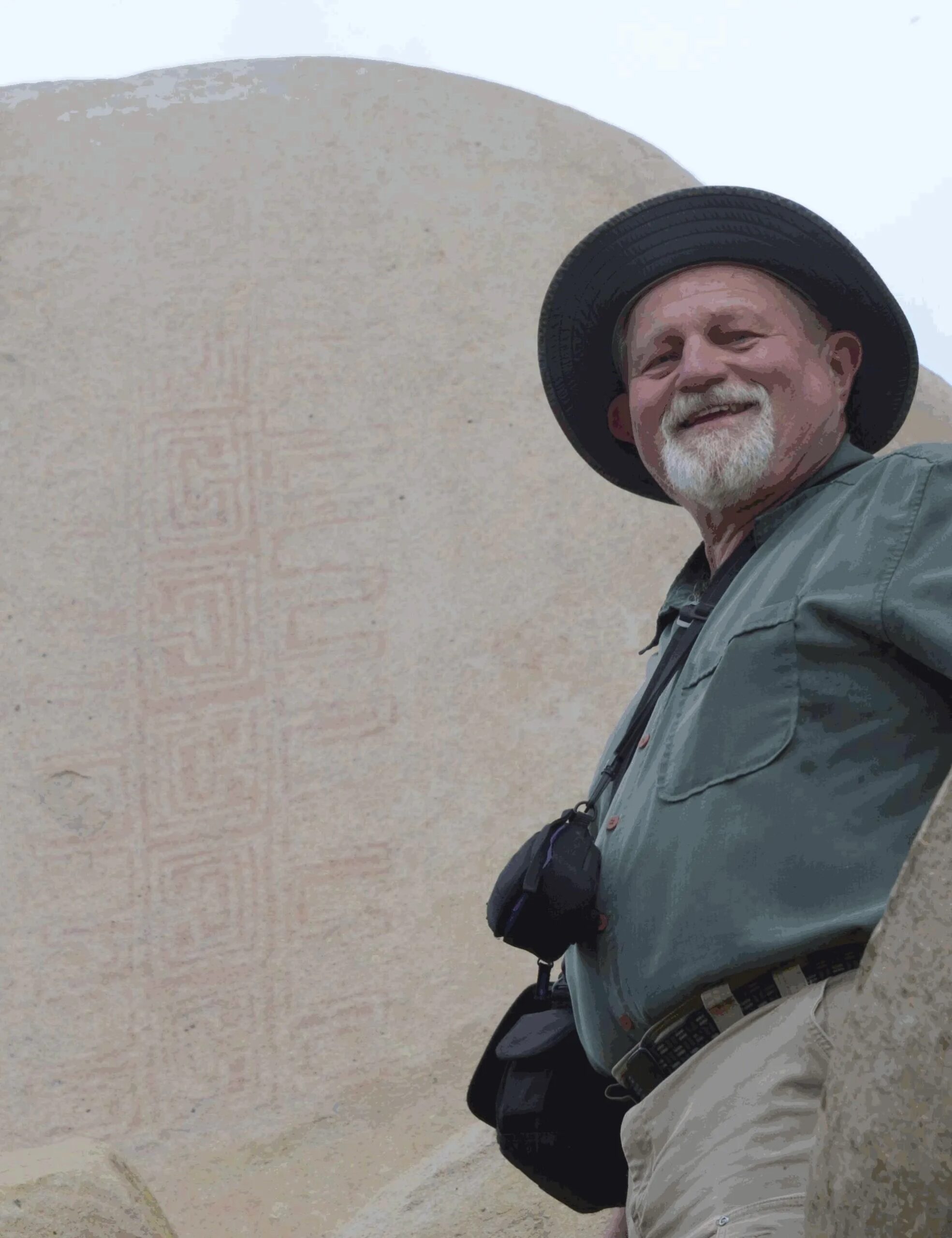
Around 2005, rock art enthusiast John Harman saw NASA images of Mars processed with and without decorrelation stretching. The enhanced images revealed details that were almost impossible to see in the original photographs. Harman, now retired and living in Pacifica, California, immediately recognized the technique’s potential for studying faded historical artwork.
Harman also had professional experience in medical imaging. “I Googled it and found a paper from NASA that explained how to run the algorithm,” he said. “From my background in medical imaging, I knew I could do it, so I did it.”
The NASA paper was published in 1996 by Ronald Alley, a Jet Propulsion Laboratory researcher working on applications for the Advanced Spaceborne Thermal Emission and Reflection Radiometer (ASTER). The Japanese instrument is mounted aboard NASA’s Terra satellite and is designed to capture detailed images of Earth’s surface. One of Alley’s former JPL supervisors had developed decorrelation stretching, and Alley recognized its potential for analyzing satellite imagery.
Harman later created the DStretch plugin for ImageJ, an open-source image-processing program developed by the National Institutes of Health. DStretch allows researchers to apply decorrelation stretching to photographs of archaeological sites, rock art, and other historical materials.
Harman says he receives about 200 requests each year related to DStretch. Around 2010, he also developed a smartphone application that uses simplified tools to reproduce the effects of decorrelation stretching. The app has been downloaded thousands of times, and researchers have published studies demonstrating the software’s value in archaeology.
DStretch has helped researchers locate and clarify ancient images in cliff shelters in Norway, Egyptian tombs, Canadian parks, and archaeological sites around the world. Beyond rock art, the technology has helped reveal buried remains of ancient Greek buildings and enhance the visibility of tattoos on mummified human remains.
Harman said he was not surprised that DStretch became popular among rock art researchers. “But I’m surprised at how many different applications people are finding. It’s great.”
Source: www.nasa.gov