


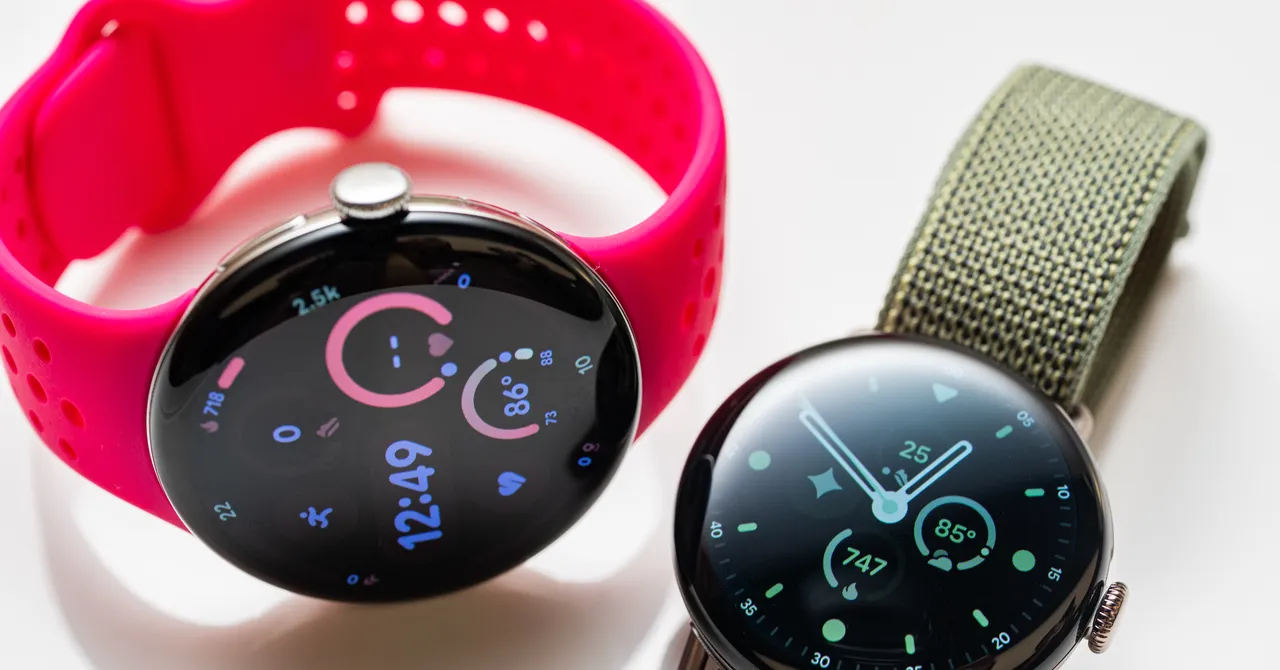
Google’s first Pixel Watch launched just four years ago, but the company has quickly made heart rate accuracy a central focus of its smartwatch strategy. Although Google entered the wearables market after competitors such as Apple and Samsung, its investment in advanced heart rate monitoring is now enabling health and safety features not yet widely available on competing smartwatches.
On Wednesday, Google introduced its next-generation smartwatch, the Pixel Watch 5, alongside the Pixel 11 smartphone lineup. One of the biggest new health features is emergency breathing detection. Similar to the pulse loss detection feature introduced with the Pixel Watch 3, the technology can respond to potentially life-threatening situations, including drug toxicity, accidents, severe pneumonia, and suffocation.
Francis Ho, a product manager on Google’s Pixel Watch team, said the feature combines data from advanced sensors, including photoplethysmography (PPG), accelerometers, and barometers. An on-device artificial intelligence algorithm analyzes the information to detect a sustained decrease in oxygen saturation, contact emergency services, and share the user’s location.
Google’s emergency breathing detection feature has not been approved by the U.S. Food and Drug Administration and is not currently available for purchase in the United States. The company said it is working with regulators to expand access. The feature will initially launch in select European Union markets. Google also cautioned that it is not designed for people with pre-existing respiratory conditions and should not be used to diagnose or treat medical conditions.
Provided by Google
Owners do not need to purchase a new Pixel Watch 5 to use the feature. Google is also bringing emergency breathing detection to the Pixel Watch 4. The older smartwatch will receive two additional health features: blood pressure trends and insulin resistance trends. These tools will be added to the Google Health app later this fall for users with a Fitbit Air, Pixel Watch 3, Pixel Watch 4, or Pixel Watch 5.
“At the time, it might have seemed strange why there was so much fuss about heart rate accuracy,” Sandeep Warraich, Google’s senior director of wearables, told WIRED. “We continued to invest in it, and now it’s gotten much better, because all of these large sensor models can detect these signs, trends in insulin resistance, and blood pressure. But underlying that, you need a really capable raw signal.”
Google is grouping these health and safety tools under a new category called Health Guardian. The section includes existing Pixel Watch features such as irregular heart rhythm notifications, high and low heart rate alerts, pulse loss detection, and sleep breathing quality monitoring. Like the Personal Safety app on Pixel smartphones, Health Guardian is designed to give users one central location to review and manage safety features, including emergency alerts and health notifications.
Source: www.wired.com