


How Robots, Nuclear Power and Lunar Water Could Build a Moon Base
Autonomy is built into NASA’s plans from the beginning. NASA’s new lunar terrain vehicle can be driven by astronauts onboard, but it can also be operated remotely from Earth or from elsewhere on the moon.
Future versions could include modular robotic arms, towing vehicles and cargo transport systems, although these concepts remain in the early planning stages. Over the next few decades, however, lunar exploration may require entire fleets of robots capable of carrying out construction and mining tasks with limited human supervision.
Robots Could Build the Infrastructure for a Lunar Base
Excavators could dig through moon rock to produce materials for concrete or bricks. Other robots could level the surface, dig trenches, prepare building foundations, pave landing pads and construct berms to deflect dust. These structures could help prevent rocket launches and landings from blowing sand away from a lunar base.
Solar panels and even electrical wiring could potentially be made from moon rock, as explored by spaceflight company Blue Origin through its Blue Alchemist work. In 2023, the company’s Earth-based laboratory used a geological simulant designed to match the composition of lunar regolith.
Why a Moon Base May Need Nuclear Power
Powering a lunar robot army will require enormous amounts of energy. Because the moon experiences roughly two weeks of darkness at a time, solar power alone may be impractical. In addition to large-capacity batteries designed to withstand extreme temperatures, nuclear power may be the only viable option for continuous energy production.
A small nuclear reactor about the size of a car can contain only handfuls of uranium yet provide enough energy to power a small village for 10 years without refueling. However, no nuclear reactor has yet been tested on the moon.
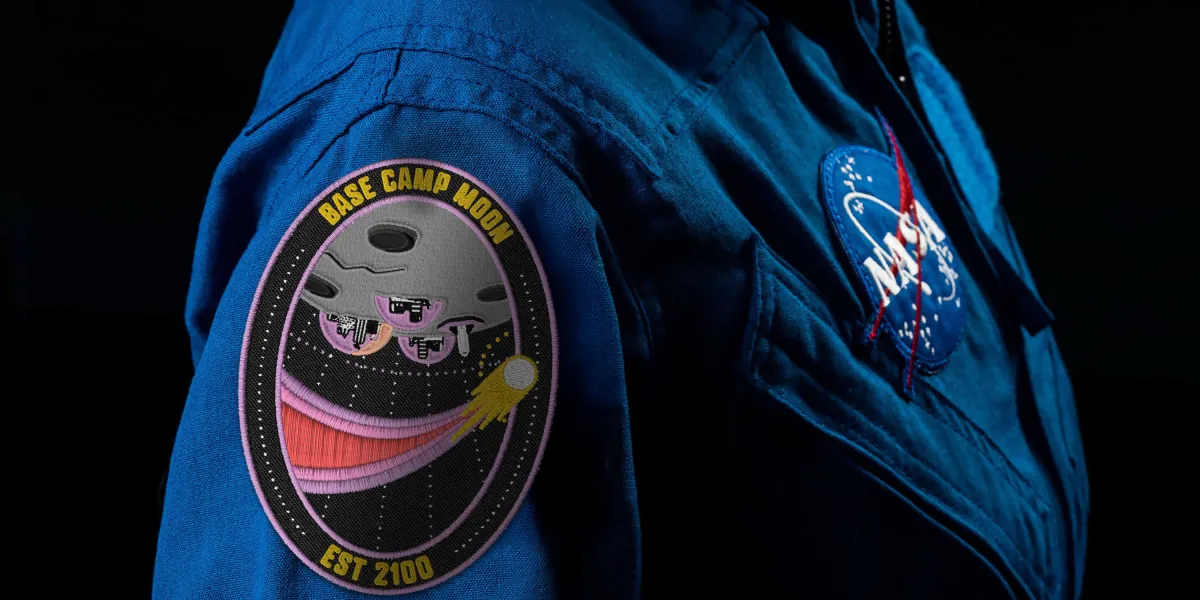
NASA and the U.S. Department of Energy are working toward a practical design, potentially drawing on technology similar to that used aboard nuclear submarines. By 2100, a lunar base could have multiple small nuclear reactors operated autonomously or remotely. Robots expanding the base would then be able to connect to the reactors for charging.
Lunar Water Is the Biggest Unanswered Question
The greatest uncertainty surrounding a permanent moon base may be water. Planners need water to support astronauts and to produce fuel for launching spacecraft from the lunar surface.
Through electrolysis, electricity can split water molecules into oxygen and hydrogen. Both elements could be used to make rocket fuel, potentially making lunar missions far less expensive than transporting all the required fuel from Earth. The process would also provide a source of breathable oxygen.
Orbital data indicates that water is stored in a region near the moon’s south pole. Yet scientists still know little about how much water exists, what form it takes or how easily it can be extracted. The deposits could consist of solid slabs of ice that are relatively straightforward to drill. Alternatively, ice crystals could be mixed between rock particles, requiring more complex extraction techniques.
Robots Must Work in the Moon’s Harshest Environment
Much of the moon’s water is thought to be hidden in deep, permanently dark craters near the south pole. These extreme environments could cause robots to freeze, tip over or lose contact with their base.
“For me, that’s the biggest hurdle,” said Paul Van Susante, principal investigator at Michigan Technological University’s Planetary Surface Technology Development Laboratory.
Van Susante’s laboratory has tested construction robots inside a lunar-like vacuum chamber filled with lunar-like rocks. His team also participated in NASA’s Break the Ice Challenge, which invited engineers to develop robots capable of testing different methods for excavating lunar materials.
Some teams used electric jackhammers and shovels, while others tested scrapers designed to peel away layers of the ground. Researchers simulated the moon’s weak gravity by using a crane to lift the robots and offset their weight.
Progress is accelerating. “I’m not saying it’s solved, but there are a lot of pieces to the puzzle,” Van Susante said.
Source: www.technologyreview.com