



Discovering Unusual Compounds Beneath Earth’s Surface
Klaus Renau/Science Photo Library
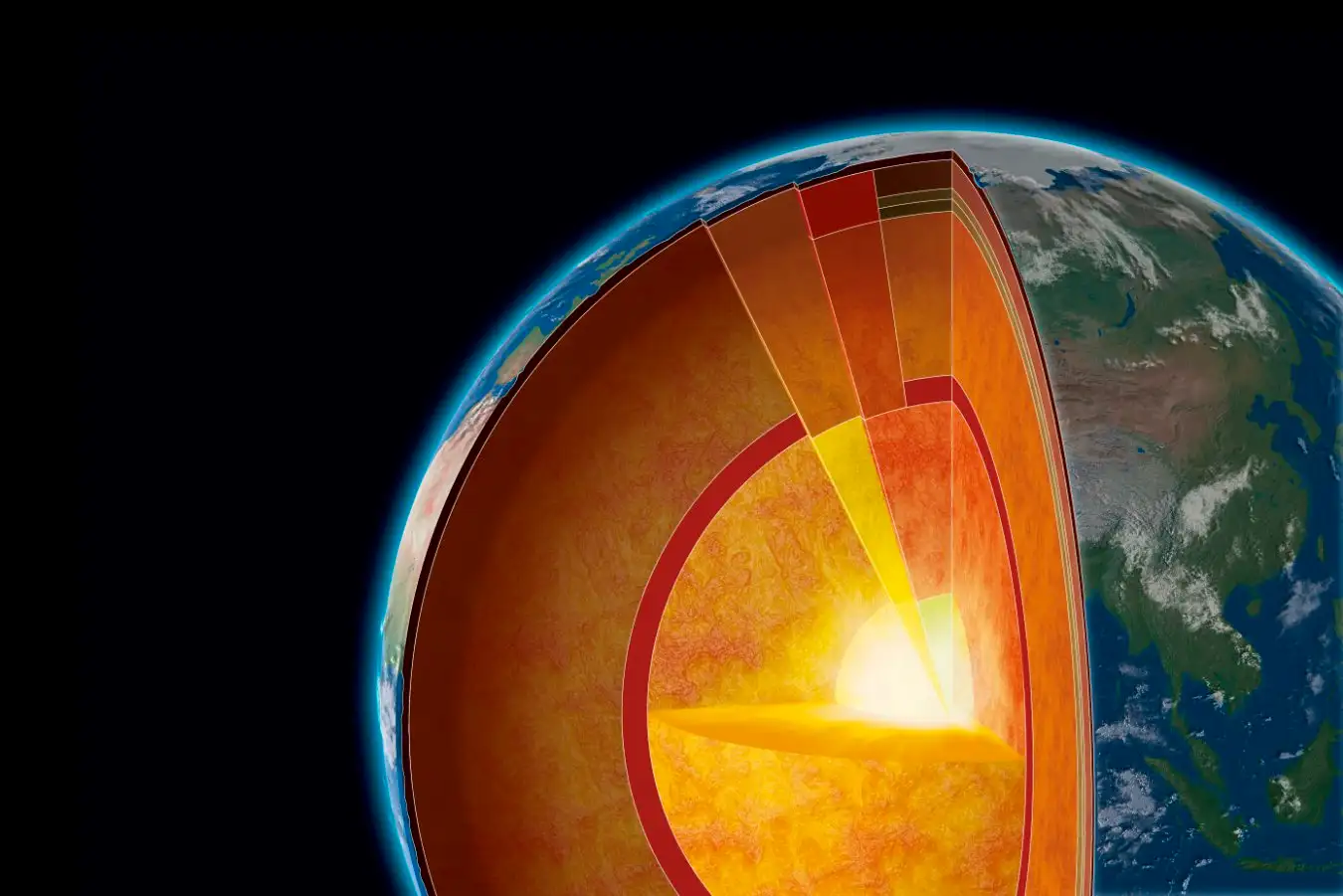
Deep beneath our feet, scientists suggest that manganese may exist in an unprecedented form. This subterranean source of manganese could have significantly influenced the history of Earth’s oxygen levels.
Prior to approximately 2 billion years ago, Earth’s atmosphere was nearly devoid of oxygen. The Great Oxygenation Event (GOE) marked the emergence of oxygen generated by microbial photosynthesis, paving the way for the evolution of diverse life forms and transforming the planet.
Manganese is believed to have played a crucial role in early photosynthesis long before the advent of today’s common oxygen-generating pathways. In the Earth’s crust, manganese is typically found in oxygen-rich ores, which began to accumulate around the time of the GOE.
Research from Shi Jinmin of Jiangsu Normal University in China indicates that some of these ores may originate from unknown manganese compounds buried deep within the Earth’s mantle.
While several manganese oxides are stable under standard pressure, Shi and his team investigated which manganese oxides remain stable under the extreme pressures and temperatures found deep within the Earth. They utilized computer simulations to analyze numerous arrangements of manganese and oxygen atoms at pressures reaching 1.5 million times that of the atmosphere, mimicking conditions found approximately 2,900 kilometers below the Earth’s surface.
This research yielded several novel compounds, including one exceptionally rich in metals, containing four manganese atoms for every oxygen atom. “We didn’t expect such a manganese-rich oxide to be stable across such a wide pressure range. This was our most surprising discovery,” Shi stated.
Despite the lack of direct evidence for the new compound’s existence in the Earth’s mantle, its characteristics may partly explain the slow travel of seismic waves in areas where the mantle and core intersect. This suggests that there could be manganese-rich regions within the Earth’s interior that previous studies overlooked, according to Shi.
The newly discovered manganese compounds likely migrated from the Earth’s interior to the ancient ocean floor, offering insights into why manganese ores became prevalent during the GOE, according to Timothy Lyons of the University of California, Riverside. “[It’s] a potentially significant part of the manganese cycle, impacting everything from early life evolution to current steel and battery production, and even human health,” he explains.
“This study is intriguing because high pressures can stabilize compounds that typically do not exist near the Earth’s surface. Under extreme conditions, atoms may bond differently, leading to unique crystal structures and oxidation states,” adds Caroline Peacock from the University of Leeds, UK.
However, she emphasizes that more evidence is necessary to draw definitive conclusions regarding manganese oxides within the Earth. Although the correlations made by the team with seismic data, metal movement within the mantle, and the GOE are captivating, they remain highly speculative.
Consequently, Shi and his team plan to conduct further studies on the new manganese oxide, using experiments that replicate the extreme conditions found deep within the Earth, involving high pressures created by specialized diamond apparatus.
Topic:
Source: www.newscientist.com