


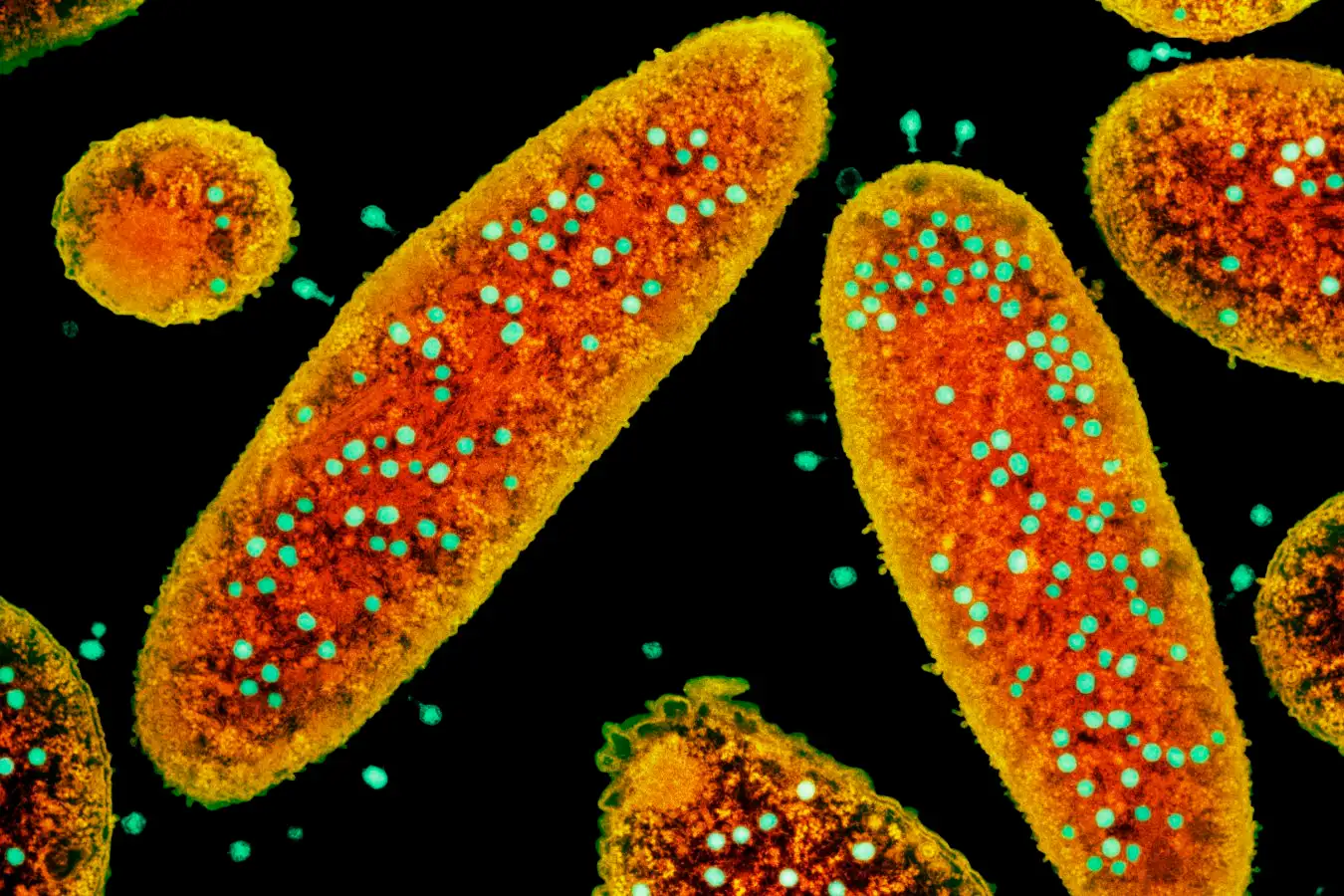
Transmission Electron Micrograph of E. coli Cells Infected with Phages (Green Dots)
M. Mader / Department of Microbiology, Biozentrum / Science Photo Library
The bacteriophage, a virus that targets bacteria, successfully eliminated cancer cells in mice by harnessing the immune response triggered by vaccination. Vaccinating mice against malaria, followed by a harmless phage injection, reoriented their immune system to attack cancer tumors, resulting in tumor disappearance in nearly 44% of the mice.
Immunotherapy, which utilizes the body’s immune system to combat cancer, represents a significant advancement in treatment strategies. However, many patients do not benefit due to challenges in directing the immune system to recognize and target tumors effectively.
Researchers, led by Amin Hajitou at Imperial College London, investigated phages that typically infect Escherichia coli. Upon attaching to the bacteria and injecting their genetic material, these phages commandeer the bacterial mechanisms to generate numerous new phages that subsequently destroy the bacteria.
The research team genetically customized the phages to detect and attach to proteins known as αvβ3 and αvβ5 integrins, which are prevalent in many tumor cells but rare in healthy cells. Additionally, they modified the genetic cargo of the phages to produce malaria-specific antigens that prompt the immune system to recognize them as foreign invaders. “Phages act like a targeted delivery vehicle,” asserts Hajitou.
The experimental approach involved 60 mice with subcutaneous tumors. Fifteen were administered a malaria vaccine, followed two weeks later by a phage injection into their tails, receiving a total of six injections over the subsequent two weeks. The remaining mice were divided into control groups: 15 received no treatment, another 15 were given the malaria vaccine only, and the final group received only the engineered phage.
In the conclusion of the study, tumors vanished in 44% of treated mice, and there was no recurrence a year post-experiment. Furthermore, while the treated mice exhibited longer lifespans compared to the control group, no significant survival advantage was noted.
“When these engineered viruses are administered systemically to mice, they can specifically seek and infect tumor cells,” stated David Withers from Oxford University. “This represents a significant enhancement over current tumor manipulation techniques, such as oncolytic viruses, which require direct injection into tumors and face limitations in addressing metastatic disease.”
Adjustments to the phage’s antigen-producing capabilities may also ensure this method is effective for individuals vaccinated against other infectious diseases like seasonal influenza and COVID-19. “More potent vaccines than malaria should yield even better results,” Hajitou adds. “The strategy leverages existing immune memory, proving it’s not exclusive to malaria.”
The researchers are engaging with the UK’s Medicines and Healthcare products Regulatory Agency (MHRA) to evaluate their findings for early-stage human trials, anticipated to commence next year.
topics:
Source: www.newscientist.com