


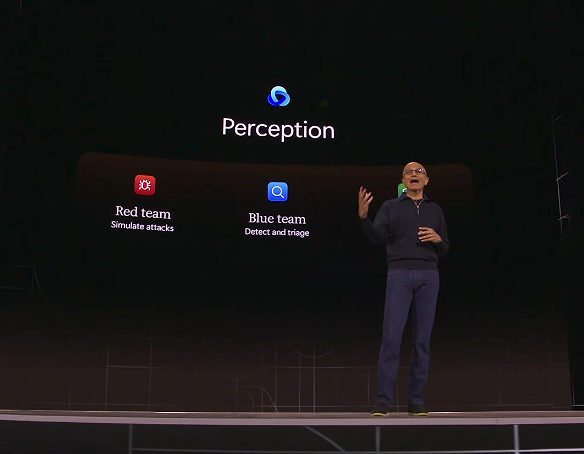
Microsoft is expanding Copilot Workspaces, a collaborative environment available through its Frontier early access program, with plans to bring personal Autopilot agents into Workspaces. The company says the platform will let people and AI agents work from shared context, while a governance system controls what those agents can access and do. Microsoft is also backing an industry initiative focused on transparency, governance, and security standards for AI models and agents.
Copilot Workspaces brings people and agents together
Copilot Workspaces is designed as a collaborative environment where people and AI agents can work toward the same objective. During his keynote, Microsoft CEO Satya Nadella said, “Traditionally, AI interactions have been primarily single-player. Workspaces enables true multiplayer experiences, where people and agents use a shared context to move towards a common goal.”
The service is currently available through Microsoft’s Frontier early access program. Microsoft says personal Autopilot agents will soon be able to operate within Workspaces, extending the platform beyond individual interactions with AI.
Governance over trust
Trust was a recurring theme in Nadella’s presentation, but he framed it as a governance challenge rather than an assumption that AI systems can simply be trusted. “We are in a difficult situation to adjust. Understanding the mechanics of these models is elusive. The question is how can we trust this powerful technology? Reality, by definition, cannot be trusted,” he said.
Moving away from the idea that “AI is magic,” Nadella acknowledged that the internal workings of AI models remain difficult to understand. He also said that, regardless of whether a model’s answers are accurate, he cannot trust the models to govern themselves.
Nadella described Microsoft’s proposed solution as an “architectural imperative to separate the provision of information and the privileges granted to it.” According to Microsoft, each Autopilot agent receives a unique ID. Administrators can limit an agent’s permissions or block it entirely, while all agent activity is logged for human review. Autopilot can also request human approval before carrying out certain actions.
Microsoft’s emphasis on agent controls and its acknowledgment that AI systems cannot always be trusted address a central concern about autonomous software. However, the approach asks businesses and users to trust Microsoft’s safeguards, whose effectiveness against mistakes, fraud, and data leaks has yet to be proven.
From Microsoft’s perspective, the answer to untrusted intelligence is not necessarily to make AI agents trustworthy, but to control the behaviors they are permitted to perform. That places responsibility on companies to decide how much autonomy they are willing to delegate to agents.
Microsoft launches an AI transparency initiative
Alongside its proposed guardrails, Microsoft announced the AI Transparency Initiative. The initiative brings together more than 40 leading companies, including Adobe and Mastercard, to develop open, industry-wide standards for AI governance and security.
Nadella described the effort as a way for the industry to “help establish open standards that make AI more secure, transparent, and accessible.”
Source: arstechnica.com