


Testing innovative aerospace concepts in flight is essential for NASA to enhance knowledge and mitigate risks effectively.
The Dale Reed Subscale Flight Research Laboratory at NASA Armstrong Flight Research Center in Edwards, California, plays a crucial role in this mission by utilizing remotely piloted autonomous small aircraft as cost-effective platforms to develop novel ideas, accelerate learning, and ensure a seamless transition to full-scale flight.
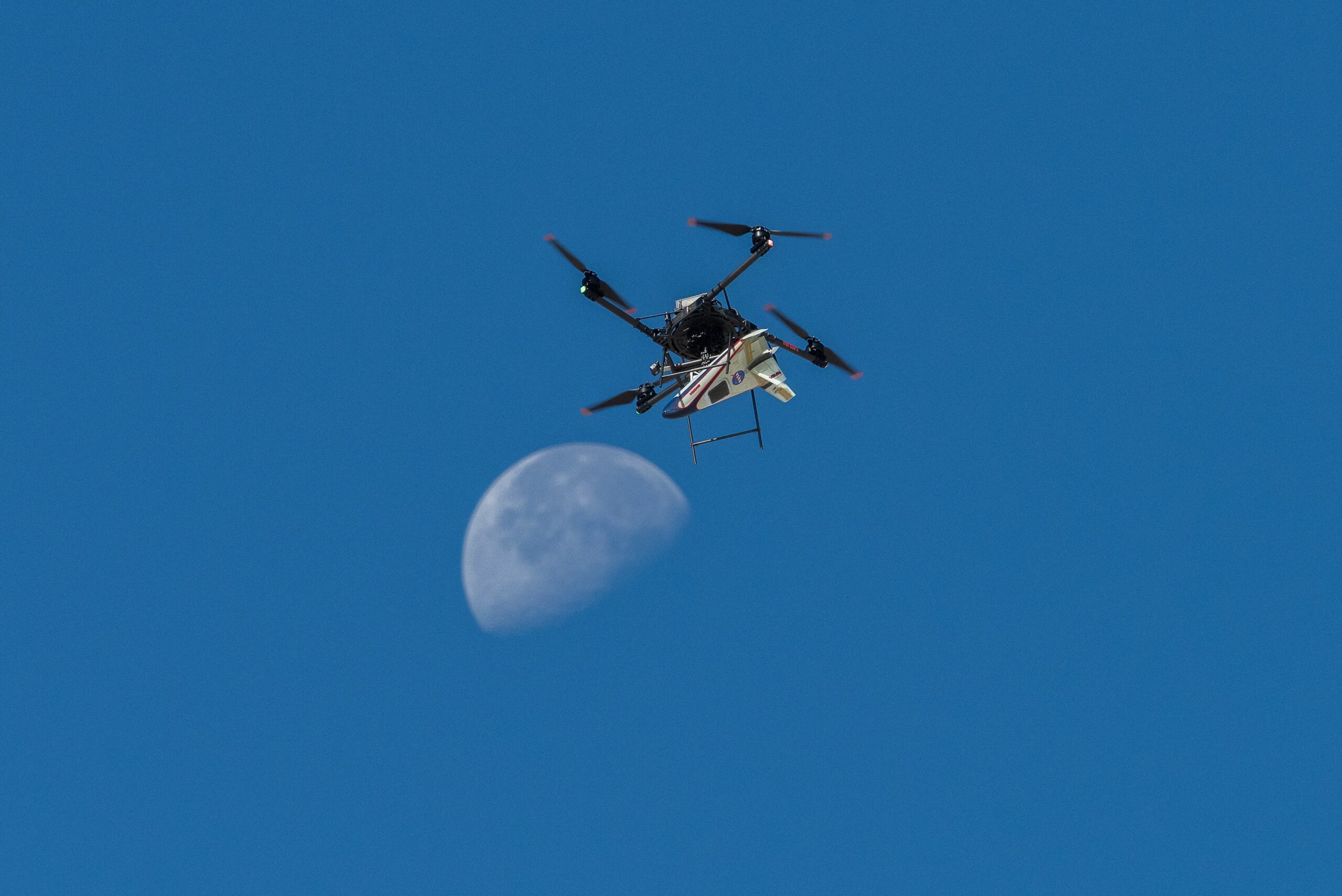
For those in need of a flying platform for experiments, NASA offers several remotely piloted aircraft. The Dryden Remotely Operated Integrated Drone (DROID) features a 10-foot wingspan, while the Multi-Use Cub boasts a 14-foot span and expandable payload capacity for various flight experiments. Additionally, the HQ-90 quadcopter provides options for electric vertical takeoff and landing tests.
Once the aircraft and experiments are cleared for operation, laboratory pilots support missions involving both ground operations and flight activities.
Each team member is an experienced and certified subscale aircraft pilot, capable of flying unique proprietary or modified commercial aircraft tailored to mission requirements.
NASA’s FireSense project conducted flights in the Geneva State Forest, approximately 160 miles south of Montgomery, Alabama. NASA Armstrong staff integrated equipment onto the Alta-X drone and conducted tests prior to deployment. Team members transported the drone and sensors into the forest, prepared the vehicle for flight, and operated it during the mission. The sensors collected localized weather data influencing smoke movement and fire behavior, providing crucial information to improve decision-making and resource allocation for wildfires.
Other projects are ongoing at NASA Armstrong, including the Enhanced Parachute with Canopy Instrumentation (EPIC) project. EPIC involved air-launching a capsule equipped with a parachute and flexible sensors from the Alta-X. The Institute staff piloted the flight, supporting operations while collaborating with the EPIC team to design the parachute descent mechanism and safety systems.
These tests demonstrated how flexible sensors enhance research on supersonic parachutes, which will fill gaps in computer models and ultimately improve the safety and reliability of supersonic parachutes for delivering scientific payloads to Mars.
Dale Reed Subscale Flight Research Laboratory employs rapid design and testing methods to propel small aircraft innovations. These concepts are essential for future breakthroughs that will support NASA’s missions across aeronautics, science, and exploration.
NASA and its partners have been advancing autonomous collision avoidance technology for decades. Recent studies demonstrated that autopilots can effectively detect and recover from potential ground collisions, a feature currently saving lives in high-performance U.S. military jets. NASA Armstrong has played a vital role in this development, creating a simplified version known as the Automatic Ground Collision Avoidance System and testing it on the DROID.
The system showcased on the DROID is designed to assist general aviation pilots and remotely piloted autonomous aircraft, exhibiting excellent performance and leading to further research for alert and maneuver cue versions. NASA’s Armstrong Technology Transfer Office is actively working to license this technology to a U.S. company for commercial development.
The Prandtl-D (Preliminary Research Aerodynamic Design to Reduce Drag) flying wing glider was also designed, built, and flown at NASA Armstrong. Researchers discovered that its innovative twisted wing design reduces drag and generates thrust at the wingtips, which could enhance fuel efficiency in future aircraft. The original Prandtl-D is now housed in the Smithsonian National Air and Space Museum, while the Prandtl-D3 can be seen at the California Science Center in Los Angeles. Ongoing developments are focused on next-generation designs within the lab.
The laboratory’s extensive capabilities are instrumental in transforming promising concepts into flight-ready test structures. This includes rapid prototyping utilizing both traditional and advanced 3D manufacturing techniques, alongside composite and traditional manufacturing processes. Our team of engineers and technicians also offers custom component design and specialty manufacturing to meet unique research requirements.
The laboratory supports essential electrical and mechanical design, hardware and software integration, as well as safety and flight readiness processes required for mission success. Additional technology facilities, such as NASA Armstrong’s Experimental Manufacturing Division and Environmental Laboratory, enhance these capabilities, collectively supporting development, testing, and validation activities that advance NASA’s aeronautics and exploration objectives.
Source: www.nasa.gov