


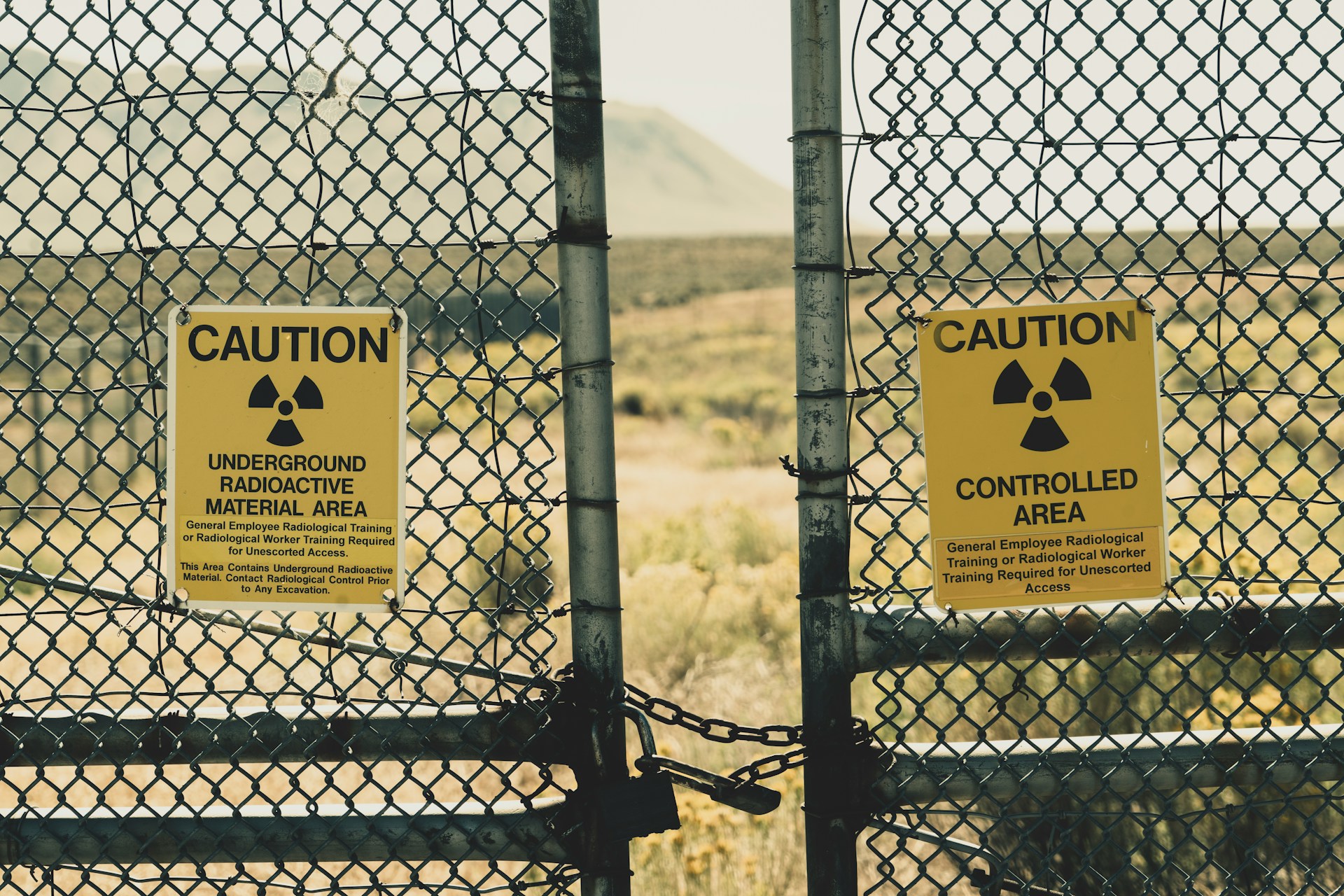
Could Deep Underground Storage Safely Contain Nuclear Waste for 1 Million Years?
More than 90,000 tons of radioactive waste is stored at nuclear power plants, awaiting permanent disposal. Nuclear waste contains unstable forms of uranium and other elements called radionuclides. Because long-term exposure to radionuclides can cause cancer, environmental safety regulations require nuclear waste to remain inaccessible for at least one million years.
Deep Geological Repositories Could Store Nuclear Waste Underground
One proposal is to store nuclear waste in rock formations thousands of feet underground. This approach, known as deep geological storage (DGS), is designed to contain radionuclides permanently.
Scientists cannot see into the future, so they look to the past to determine how well deep geological repositories will perform. A team of Canadian researchers recently analyzed uranium deposits that have existed for millions of years as a natural example of how nuclear waste may behave deep underground.
Ancient Uranium Deposits Offer a Natural Test Case
Previous research has found that uranium deposits in ideal deep geological storage conditions can remain contained for more than a billion years if their protective casing remains intact. However, these conditions require a stable geological environment.
The Canadian team instead focused on uranium deposits in less-than-ideal conditions. They studied Canada’s Kigavik uranium deposit, which is located in cracked rock about 500 meters (1,600 feet) below the surface. The researchers argued that these conditions resemble a deep geological repository with a damaged protective casing.
Previous studies showed that most of the uranium minerals in the Kigavik deposit are more than 274 million years old, while approximately 10% are less than one million years old. The researchers found that these younger uranium minerals occur within open cracks alongside clay minerals surrounding older uranium minerals.
Because of their proximity, the researchers interpreted the older uranium as the source of the younger minerals. They concluded that water had seeped into the deposit, interacted with the older minerals, carried uranium through the cracks and formed new, younger uranium minerals.
Glacial Meltwater Reached the Uranium Deposit
To determine the source of the water, the researchers compared the chemistry of clay minerals formed alongside young uranium in the Kigavik region with that of modern snow. They examined hydrogen isotopes, which are different forms of the same element that contain different numbers of neutrons.
The clay minerals contained heavy isotope values that matched those found in freshwater. These results indicated that the water came from snow or glacial meltwater rather than underlying bedrock or seawater.
The researchers used uranium-thorium dating to determine when water infiltrated the area during the past million years and when radionuclides were mobilized. This method indicates when uranium was removed from the original mineral by measuring how much its concentration was reduced by water entering the deposit.
The results showed that radionuclide mobilization occurred during five separate water-seepage events between 36,000 and 470,000 years ago.
Glaciers Can Push Water Deep Underground
When the researchers compared these dates with existing climate records, they found that the water-infiltration events coincided with periods when glaciers covered the Earth’s surface.
Normally, water cannot travel thousands of feet underground. However, a glacier can act like a hydraulic press, forcing water beneath it downward. When the water encounters cracks in the ground, pressure can inject it into deep uranium deposits.
Radionuclides Moved Extremely Slowly
The researchers next measured how quickly radionuclides could escape from the deposit. They calculated the maximum distance between new and old uranium minerals and used the age of the most recent water-seepage event to estimate the fastest possible migration rate.
They determined that the maximum rate was 0.0014 millimeters (0.000055 inches) per year. At that rate, uranium radionuclides would take approximately 360 million years to travel 500 meters to the surface from a deep geological repository located at the same depth as the Kigavik deposit.
This timescale is far longer than the one million years required to contain nuclear waste.
Study Supports the Long-Term Safety of Deep Geological Storage
The researchers concluded that if a glacier returned to the Kigavik region, the uranium deposits would not experience significant radionuclide transfer, even if they came into contact with glacial meltwater.
Similarly, if the protective casing of a deep geological repository were damaged, radionuclides would move too slowly to reach the surface, even if water entered the repository. The researchers suggested that their findings could help expand the number of viable deep geological repository sites and support the long-term safe storage of nuclear waste.
Post views: twenty five
Source: sciworthy.com