


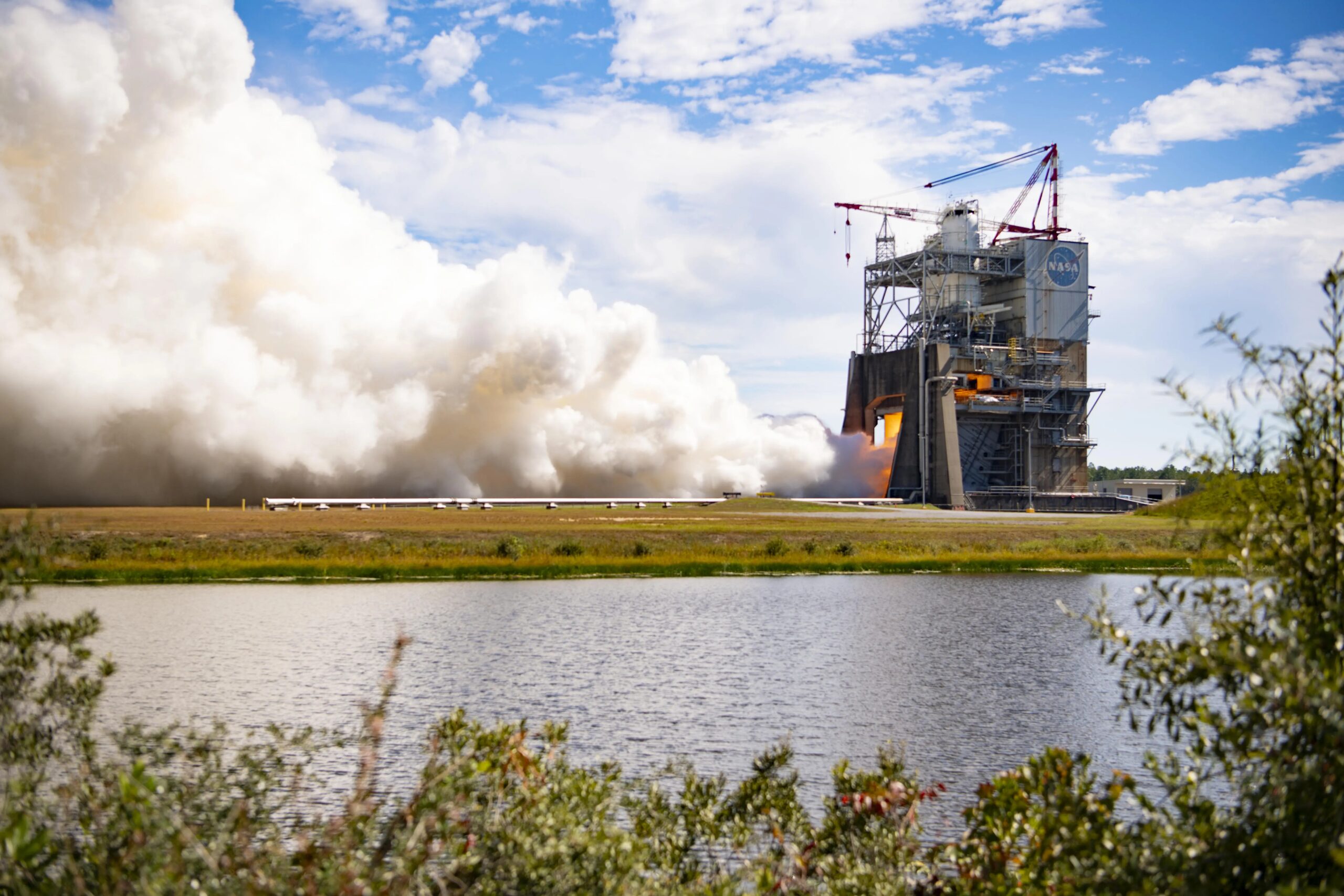
NASA Tests RS-25 Engine for Future Artemis SLS Missions
NASA tested RS-25 engine No. 10001 on October 21 at the Fred Hayes Test Stand at NASA’s Stennis Space Center near Bay St. Louis, Mississippi.
RS-25 Engine Completes 500-Second Test
The test team fired the development engine for nearly eight and a half minutes, or 500 seconds—the same length of time an RS-25 engine operates during the launch of NASA’s Space Launch System (SLS) rocket.
Operators also ran the engine at power levels of up to 111%. This level matches the thrust required from the new production RS-25 engines to launch the SLS rocket and send the Orion spacecraft into orbit.
Testing a New RS-25 Thermal Protection System
The primary purpose of the test was to acceptance-test RS-25 flight components for future Artemis missions and validate a new thermal protection system. The system is designed to protect the RS-25 engine nozzle from the thermal environment surrounding the SLS during launch.
Although the development engine will not be used in flight, the high-temperature combustion test will allow NASA and NASA’s prime contractor, L3Harris Technologies, to collect critical data for improving engine performance and reliability.
Four RS-25 Engines Power Each SLS Launch
The four RS-25 engines produce a combined total of up to 2 million pounds of thrust to support each Artemis mission launch of the SLS rocket.
NASA Stennis tests and certifies every RS-25 engine as flight-ready before it is used. The test was conducted by operators from NASA, L3Harris, and Nova Space Solutions.
Source: www.nasa.gov