


NASA Space Apps Challenge 2026 Registration Is Now Open
Registration is open for the 2026 NASA Space Apps Challenge, a two-day global hackathon taking place on Saturday, November 14, and Sunday, November 15. Participants will use NASA’s free, open data to create solutions inspired by the agency’s most ambitious space exploration goals.
Often described as a global hackathon, the NASA Space Apps Challenge brings teams together to solve real-world problems created by NASA subject matter experts. Participants do not need to be programmers. Students, scientists, engineers, designers, storytellers, technologists, and space enthusiasts of all ages and experience levels are invited to participate.
This year’s NASA Space Apps Challenge focuses on three major areas: returning humans to the Moon, preparing for missions deep into the solar system, and expanding humanity’s understanding of space.
“At NASA, science is for everyone, and through the NASA Space Apps Challenge, we’re inviting the next generation to help tackle some of humanity’s most important challenges in space,” said Nikki Fox, associate administrator for the Science Mission Directorate at NASA Headquarters in Washington.
“Everything in NASA science is interconnected, and this year students around the world will be able to use NASA’s powerful datasets to build the ultimate interplanetary survival guide. It will support the science that enables astronauts to thrive on the Moon and, ultimately, Mars, while also inspiring ideas that improve everyday life on Earth and in space for the benefit of everyone.”
Support lunar exploration through the Artemis program
NASA continues to advance plans for a sustained human presence on the Moon through the Artemis program and its lunar base efforts. Several 2026 Space Apps challenges address analytical tools, operational planning, and human-systems needs related to lunar missions.
Topics include ground-based activities at the lunar south pole, managing environmental constraints such as sunlight and communication windows, and assessing the logistical and scientific demands of long-term stays on the Moon. Other system-level modeling challenges will explore outpost operations as well as astronaut health and safety, reflecting the complexity of planning future human activities on the lunar surface.
Prepare for missions to Mars and deep space
NASA’s exploration strategy includes continuing robotic exploration of the outer solar system while preparing for future human missions to Mars. Some challenges focus on operational concepts for activities on the Martian surface, integrating data from multiple Mars missions, and evaluating the mission-design trade-offs involved in deep-space exploration.
Other challenges address the long-term demands of space travel, including monitoring physiological and behavioral health indicators and examining how engineering and scientific decisions affect mission performance far from Earth.
Several challenges also align with NASA’s broader exploration portfolio, including future missions to destinations such as Jupiter’s moon Europa and Saturn’s moon Titan. By simulating mission-design decisions and evaluating environmental analogs on Earth, these challenges offer a framework for preparing for complex operations across the solar system.
Make astrophysics data more accessible
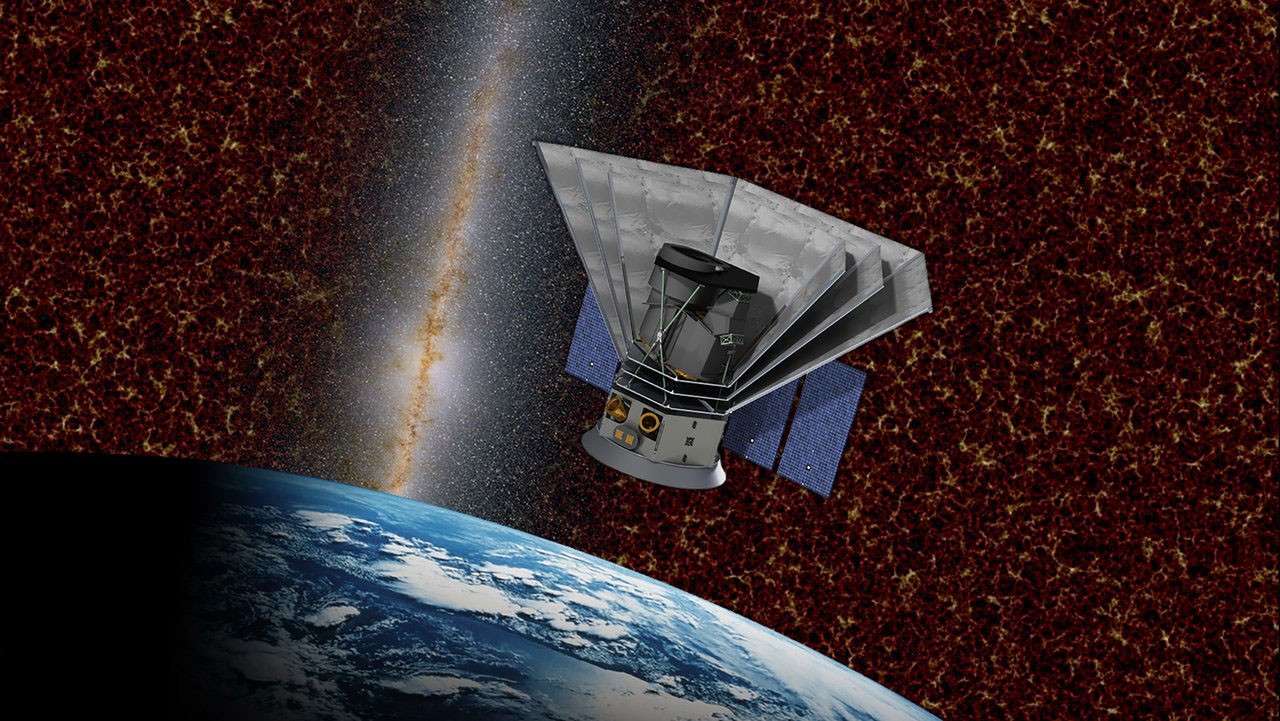
NASA’s astrophysics missions help scientists investigate the structure and history of the universe. In 2026, the challenge includes work connected to active missions such as SPHEREx, which conducts spectral surveys of the entire sky, as well as the continued development and deployment of observatories designed to study the evolution of the universe and the population of exoplanets beyond our solar system.
These challenges focus on improving public access to mission data, creating tools that help users visualize changes in the sky over time, and supporting broader engagement with NASA’s scientific products.
NASA Space Apps Challenge offers global opportunities
Together, the 2026 challenges demonstrate how NASA’s open-data ecosystem can support advanced scientific work by making a broad range of information and research freely available. Space Apps events also give participants around the world the opportunity to respond to real-world needs identified by government agencies.
Registration is available through the NASA Space Apps Challenge website. Attendees can choose from more than 500 local events, join a team, and select the challenge they want to tackle during the November hackathon.
Source: science.nasa.gov