


EU Plans Social Media Restrictions for Children Under 16
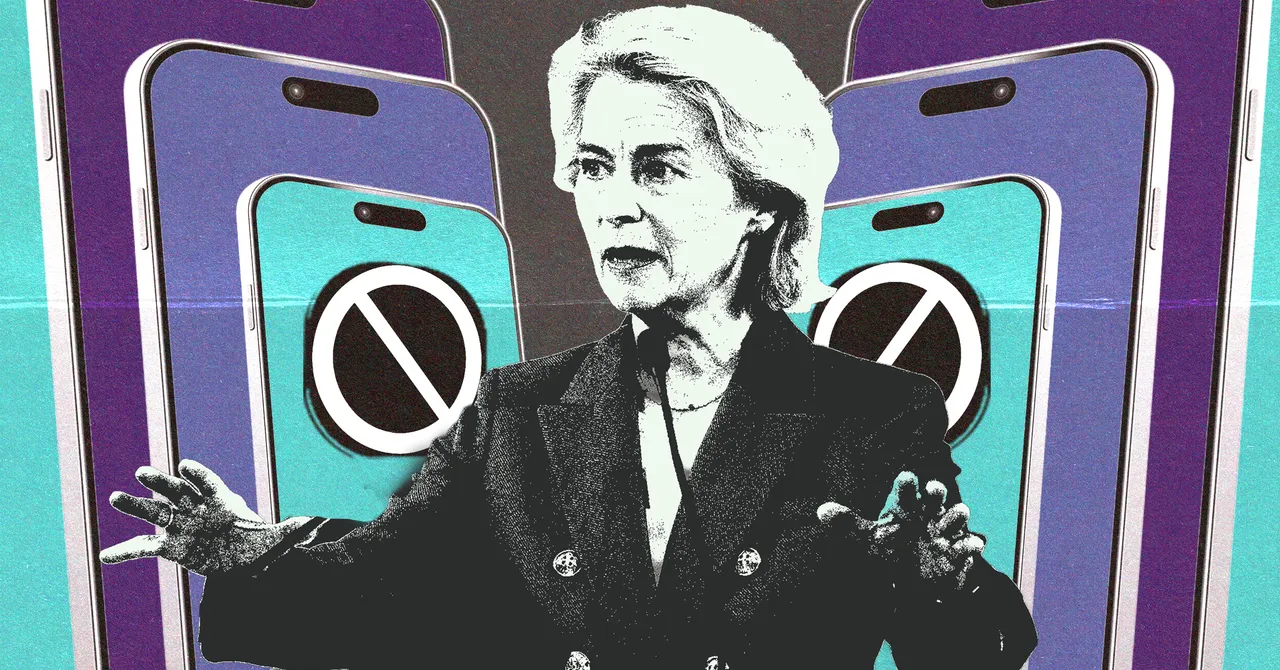
European Union officials have announced plans to restrict children’s access to social media across the bloc, in an effort to protect them from what Commission President Ursula von der Leyen described as “captivity” to platforms that evaluate and exploit their attention, focus and spirit.
EU proposes social media ban for children under 13
The proposal for a total ban on social media accounts for children under 13 was announced during Wednesday’s State of the Union address, where von der Leyen outlined her priorities for the year.
The plan is part of the EU Children’s Act, which the European Commission is expected to publish in full on Thursday. Children aged 13 to 15 would also be prohibited from having personal social media accounts. However, they could access social media for up to one hour a day through limited-functionality mini-accounts created and supervised by parents or guardians.
Social media platforms would also be required to design their services safely for users up to age 18. The coalition plans to address addictive design in greater detail through the Digital Fairness Act, which is expected to be enacted in the fall.
Von der Leyen targets addictive social media features
“I know that many people realize that the power of Big Tech is overwhelming and impossible to reverse. I don’t think so,” von der Leyen told the European Parliament.
“We don’t have to accept addictive features. We don’t have to accept that children will be drawn into ever more extreme content. We don’t have to accept that our girls’ photos will be used in AI-generated sexual images,” she added. “Europe has the power to act. We, not Big Tech, set the rules.”
EU countries already pursuing online age restrictions
It was widely expected that the EU would follow other countries in restricting children’s access to social media. Von der Leyen said social media was contributing to sleep deprivation, anxiety, self-harm and even deaths among European children.
Seventeen of the bloc’s 27 member states have already negotiated or prepared legislation to protect minors online, including measures that set minimum ages for accessing certain services. France is among them, although its Supreme Court last month struck down a social media ban for people under 15, ruling that it violated freedom of expression.
EU-wide rules could take years to implement
“It will probably take until 2029 to clean up this mess, get everyone on the same page, and then move forward with the EU legislative process,” said Arnav Joshi, a technology lawyer at Ashurst Perkins Coie.
Joshi said businesses could welcome the clarity and simplicity of a single set of rules across the EU. The step-by-step approach is intended to reduce the risk of judicial objections by emphasizing proportionality.
“This is a rare example of EU law being perhaps a little bit more permissive than other laws by not introducing a blanket ban,” he told WIRED, referring to blanket social media bans in the UK and Australia.
Privacy concerns over parental monitoring and age checks
The proposed measures could still require extensive monitoring by parents and social media platforms, creating risks of privacy violations. Joshi, who advises global technology companies on children’s online safety, said parental monitoring could be “problematic.”
“Something with an out-and-out god-mode type of parental access could have a bit of a chilling effect on how children actually use the service, and could cause problems from a privacy rights perspective,” he warned.
The EU will also face the same challenges as other countries in enforcing age restrictions effectively. In Australia, social media access is prohibited for people under 16. Australian children have been able to broadly avoid the restriction.
“The key question is how to implement age checks, and that’s not easy,” Joanna Conway, a digital regulation partner at Norton Rose Fulbright, told WIRED. She said it would be difficult to make age checks accurate without violating privacy rights or compromising the user experience.
Earlier this year, the EU introduced an app that allows people to prove they are over 18 to access adult websites. The bloc says the technology could also be adapted for other age groups.
Source: www.wired.com