


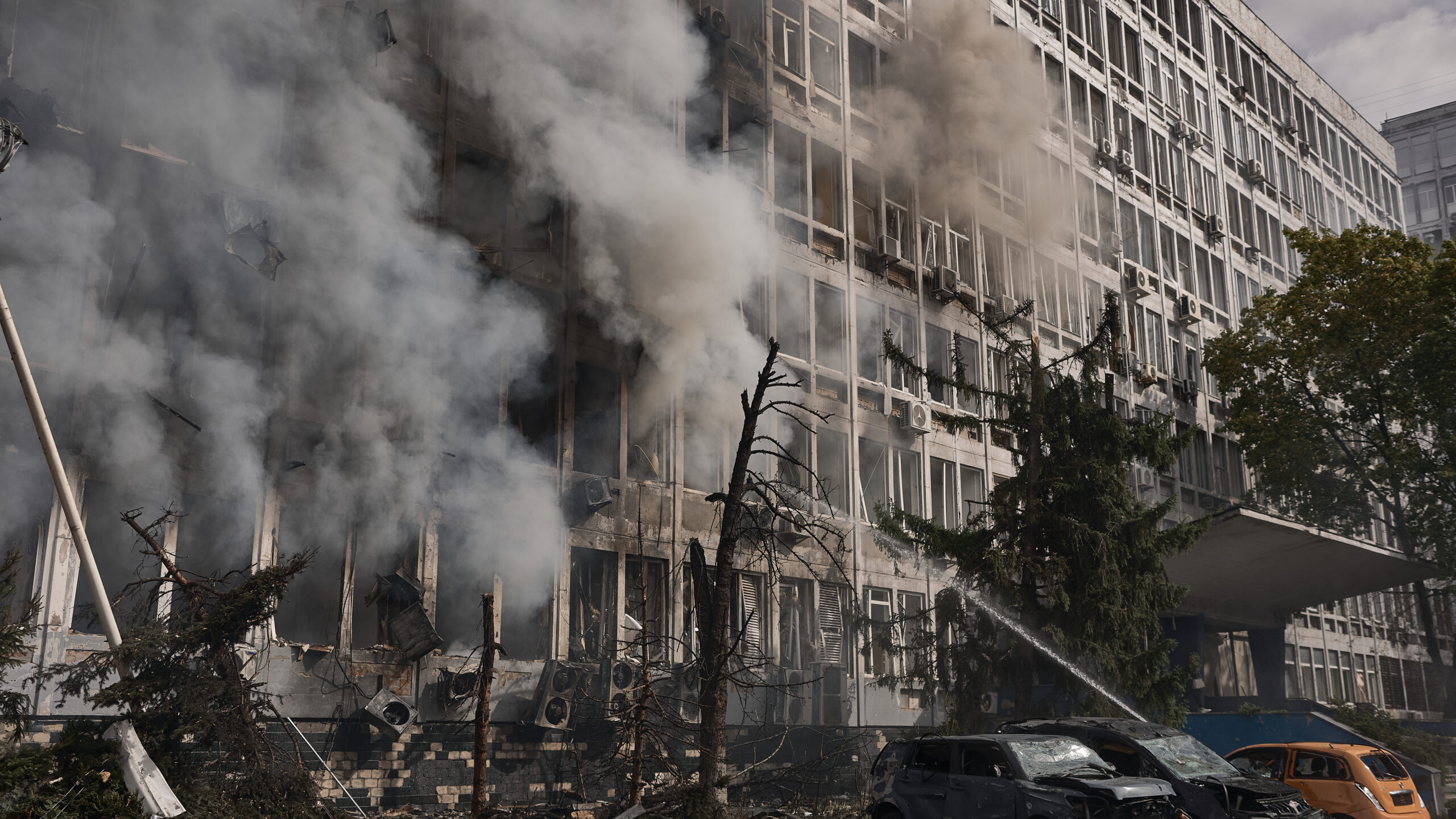
Russian Drone Attacks on Ukraine Data Centers Disrupt Internet and Mobile Services
A surge in Russian jet-powered drone attacks on data centers and communications infrastructure in Ukraine is disrupting mobile phone and internet services for thousands of people. Ukrainian President Volodymyr Zelensky and other government officials are warning that stronger air defenses are urgently needed, as repeated outages could threaten the country’s digital economy and undermine its continued resistance to Russian aggression.
According to the nonprofit Reporters Without Borders, Russian attacks on Ukraine’s communications infrastructure have focused on the capital, Kyiv, since September 23. Ukraine’s Ministry of Digital Transformation reported that the first strike caused temporary internet outages for 100,000 households in the Kyiv region.
Russia has continued to intensify attacks on major data centers and communications facilities in Ukraine, including infrastructure supporting the country’s mobile phone network.
“Russian attacks on Ukraine’s telecommunications infrastructure are not new; attacks and shelling have previously damaged fiber-optic lines, cell phone towers and the facilities of mobile network companies,” said Tetiana Gaviuk, an ACLED Europe analyst, in an October 1 analysis.
“However, the recent barrage of attacks on data centers and communications networks in Kyiv stands out, as multiple providers and facilities were attacked within days, indicating increased Russian pressure on Ukraine’s digital infrastructure,” Gaviuk said.
Officials and industry observers warn that repeated strikes could weaken Ukraine’s banks, payment systems and telecommunications networks, which support essential public services and the broader digital economy. The Guardian reported that the attacks are raising concerns about the resilience of Ukraine’s digital infrastructure.
Why Russia is targeting Ukraine’s digital infrastructure
Since the beginning of its full-scale invasion in 2022, Russia has launched large-scale missile and drone attacks against Ukraine’s power grid, railway stations, shipping ports and residential apartment buildings.
Long-range attacks have become more damaging this year as Ukraine’s supply of missile interceptors has declined. Russia has also upgraded some one-way attack drones into faster, jet-powered weapons that are more difficult to detect and shoot down, according to the Guardian.
Jet-powered Shahed drones challenge Ukraine’s air defenses
Ukraine’s air defense forces currently intercept more than 85% of conventional Shahed-type drones, which were developed by Iran and supplied to Russia. However, interception rates fall to between 50% and 60% when Ukrainian forces confront newer, faster jet-powered Shahed drones, according to remarks from President Zelensky on October 4.
The lower interception rate is increasing the risk to Ukraine’s data centers, internet providers and mobile networks. Ukrainian officials say stronger air defenses will be essential to protect the communications systems that support civilians, businesses, banks and government services.
Source: arstechnica.com