


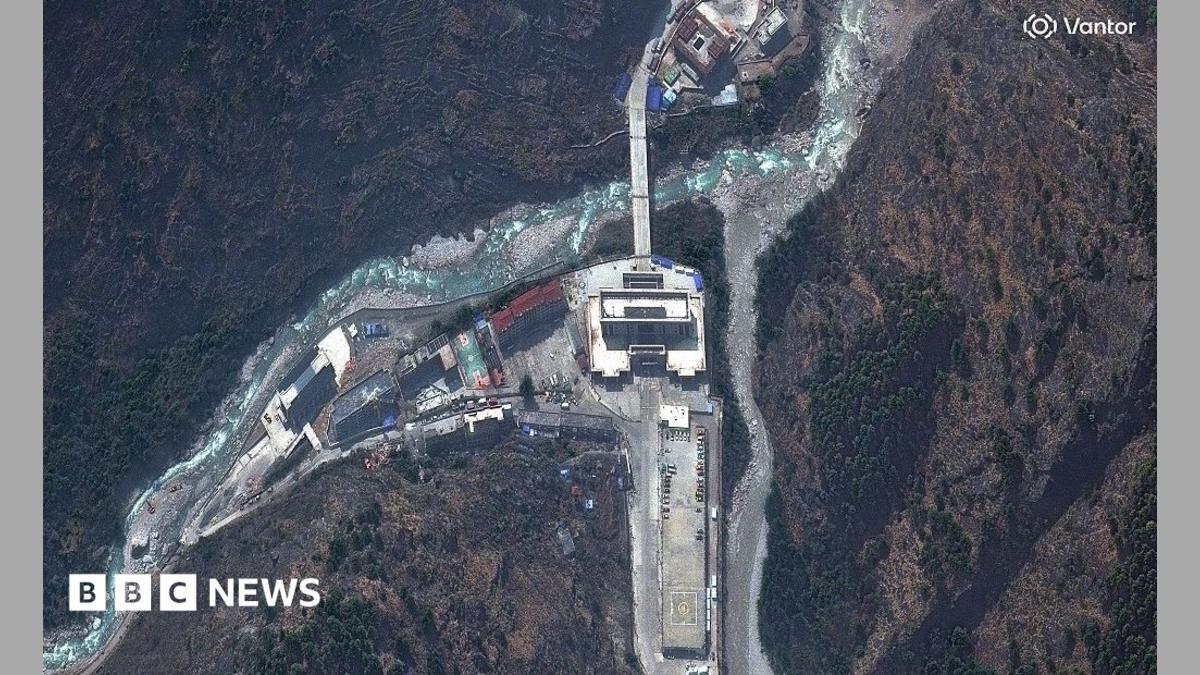
When a 21-member Chinese rescue team arrived in Girong on August 28, one rescuer told Reuters that the area was devastated, with “nothing but ruins” visible as far as the eye could see.
The border crossing had only recently recovered from another major flood. In July 2025, flooding forced the Rasuwagadhi border point to close for nearly six months. The crossing reopened on January 1 after China constructed a temporary bridge.
Cross-border traffic had since resumed. Chinese border authorities reported that more than 100,000 people passed through Girong by June, while Nepal’s immigration records showed that 53,742 people entered or exited through Rasuwagadhi in the year ending in mid-July. Because the figures cover different periods and use separate reporting systems, they cannot be compared directly.
Indians made up the largest group recorded at Nepal’s immigration checkpoints, followed by Nepali and Chinese nationals.
Girong has also served as a vital trade and transport corridor between Nepal and China.
Posh Kumar Pandey, honorary chairman of the Kathmandu-based South Asia Watch on Trade, Economy and Environment, said Rasuwagadhi is one of Nepal’s two major trade hubs with China, alongside Tatopani. The route accounts for approximately one-third of Nepal’s $2.95 billion trade with its northern neighbor.
Around 60 to 70 trucks traveled through the valley each day, transporting electronics, machinery, vehicles, fruit, clothing and other goods to Kathmandu. Pandey said the route also handled roughly 80% of Nepal’s electric vehicle imports from China.
The closure has increased Nepal’s reliance on the Tatopani border crossing, which Chinese authorities have also temporarily closed, external because of the risk of landslides on the Nepali side, according to The Kathmandu Post.
Rasuwagadhi is also included in Nepal and China’s plans to develop a trans-Himalayan railway network. The border crossing lies along the proposed railway route connecting the region with Kathmandu.
“Nepal should develop alternative trade routes with China and reconsider its wider development strategy, including hydropower projects concentrated along the same river systems,” Pandey said.
“We put all our eggs in one basket. Nepal needs to develop an alternative border port.”
As Pokharel crossed the border, he continued to think about the conversations he had shared with his missing colleagues.
Flooding the previous year had made staff at the Rasuwagadhi Immigration Department acutely aware of the danger. At night, Pokharel sometimes felt vibrations and went outside to check the river. He and his colleagues had also discussed escaping uphill if another flood struck.
“But my friends never got that chance,” he said.
Source: www.bbc.co.uk