


Close Menu
HitechubHitechub
    What's Hot
    Technology

    Growing Concerns About the AI Boom

    Science

    NASA Tests Experimental Mars Helicopter Blades for Long-Range Flights

    Science

    How Urban Trees Can Worsen Air Quality in Cities

    Important Pages:
    • About Us
    • Privacy Policy
    • Terms & Conditions
    Facebook X (Twitter) Instagram Pinterest
    Facebook X (Twitter) Instagram
    HitechubHitechub
    Sunday, November 29
    • Shop
      • Fashion
        • Mens
        • Womens
        • Accessories
          • Handbags
          • Keychain
          • Masks
          • Money clicps
          • Neck Pillow
          • Rings
          • Towels
          • Wallets
        • Jewelry
        • Watches
        • T-shirts
        • Hawaiian shirts
        • Vests
        • Swim trunks
        • Swimsuits
      • Fun
        • Magic cubes
        • Magnifiers
        • Misc
        • Photo books
        • Puzzles
        • Toys
      • Home
        • Cleaning/Care
        • Mailbox covers
        • Mugs
        • Pot Holders
        • Spoon
      • Office and Electronics
        • Chairs
        • Office Supplies
        • IPad cases
        • Laptop stickers
        • Mouse pads
        • Notebooks
        • Pencil bags
        • Pens
        • Phone cases
      • Personalized
      • Pets
      • Sports
        • Cycling
          • Balaclava Mask
          • Bike Bell
          • Bike Computer
          • Bike Fender
          • Bike Grips
          • Bike Kickstand
          • Bike Light
          • Bike Locks
          • Bike Mitts
          • Bike Pumps
          • Bike Repair Stand
          • Bike Seat
          • Bike Trainer
          • Bike Wheels
          • BIKES
            • Folding Bikes
            • Road Bikes
          • Carbon Fiber Bike Products
          • Cycling Mask
          • Kid’ Bike Helmets
          • Inner Tube
          • Motorcycle Bag
          • Nylon Pedals
          • Adult Helmets
          • Photochromic Sunglasses
          • Soft Coolers
          • Suction Cup Bike Rack
          • Tool accessories
          • Winter Cloth
          • Heart Rate Monitor
        • Outdoors/Camping
          • Outdoor Bags
        • Sweatband
    • Technology
      1. AI
      2. Gadgets
      3. View All

      This is the most popular CEO in the world

      Sectors in which “Chat-GPT” is most often used

      Artificial intelligence has begun to “swallow” professions

      The unusual robot conductor of a concert in Seoul

      Here’s how you can tell if your phone is being tapped

      PlayStation 5 becomes a completely silent console and gets more space

      This is the first phone that can be used to park a car

      Best Gaming Laptops 2023: Powerful Portables for PC Games

      University Board Confirms Data Breach After Unauthorized Password Change

      Q-Dir and DesktopOK Windows Utilities Compromised to Distribute Python RAT Malware

      2026 Kindle Paperwhite Review: Page-Turn Buttons Return at a New Price

      OpenAI Countersues Apple Over Alleged Trade Secret Theft Claims

    • Science
      1. Space
      2. Wheels
      3. View All

      Space Perspective: A Journey to the Edge of Space

      5 Fascinating Facts About Space

      Space Exploration: Unveiling the Wonders of the Universe

      Toyota wants to make a new generation battery with a range of up to 1,200 km

      Meet Toyota’s lunar “baby” that could make exploring the Moon easier

      What does a night drive look like with one of the most beautiful cars in the world: the Rolls-Royce Ghost

      Quantum Error Correction Breakthrough Brings Fault-Tolerant Quantum Computers Closer to Reality

      Uranus Opposition 2026: How to See the Solar System’s Strangest Planet This Week

      EPA Finds No Increase in Drinking Water Lead Levels After Iowa Explosion

      Unconventional Resistivity Reduction in Niobium Phosphide (NbP) Semimetal Nanoribbons

    HitechubHitechub
    Home » Quantum Error Correction Breakthrough Brings Fault-Tolerant Quantum Computers Closer to Reality
    Science

    Quantum Error Correction Breakthrough Brings Fault-Tolerant Quantum Computers Closer to Reality

    Share Facebook Twitter Pinterest WhatsApp
    Share
    Facebook Twitter LinkedIn Pinterest WhatsApp

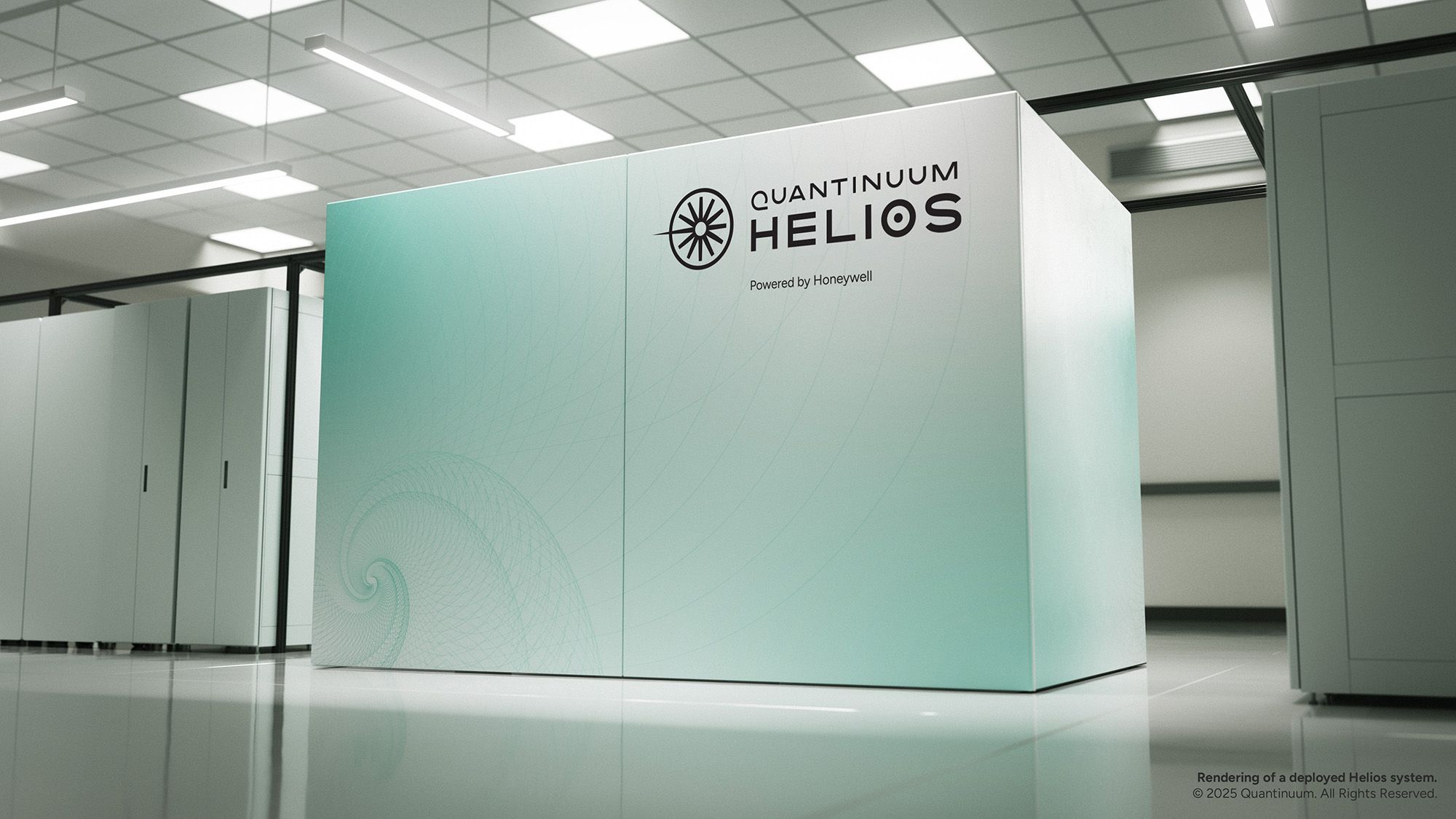
    Quantinuum scientists say they have achieved a new quantum error-correction record with a 98-qubit system called Helios, which demonstrated a failure rate of just 0.0005% in quantum-memory tests. The result, equivalent to about five uncorrectable errors per million error checks, could bring large-scale, fault-tolerant quantum computing closer to reality, although the study has not yet been peer-reviewed.

    The reported error rate is substantially lower than a previous benchmark set by Google’s 105-qubit Willow quantum chip, which demonstrated an estimated 772 uncorrectable errors per million rounds. In comparable tests, that corresponds to an error rate of 0.0772%.

    The researchers described their findings in an arXiv preprint published on October 16, 2026. Quantinuum also outlined the results in a statement.

    The result suggests that the researchers are approaching what they call a “mega-op regime,” in which the system could perform more than 1 million operations without an error.

    Robin Blume-Kohout, co-director of Sandia National Laboratories’ Quantum Performance Laboratory, called the result “an important milestone that quantum computing researchers have been working on for years.” Blume-Kohout was not involved in the research.

    “A scaled-up version of this system could achieve the reliability required for useful fault-tolerant computations at a feasible size of less than 1 million physical qubits, improving prospects for practical quantum computing,” he added.

    Why quantum computing is so error-prone

    Preserving the fragile information stored in qubits is one of the biggest challenges in quantum computing and a major barrier to making the technology practical.

    A quantum bit, or qubit, is the fundamental unit of quantum information. Its delicate quantum state can be disrupted by heat, vibrations and other forms of environmental “noise.” If that happens during a calculation, the result becomes less reliable.

    Quantum error correction addresses this problem by introducing redundancy into a quantum system, helping prevent small, potentially manageable errors from ruining an entire calculation.

    Researchers distribute quantum information across multiple physical qubits to create a “logical” qubit. If one physical qubit loses its quantum state because of interference, the redundancy across the logical qubit can help preserve the information stored collectively.

    However, building in enough redundancy for longer and more complex calculations requires adding more physical qubits. This creates a difficult trade-off: larger systems provide more redundancy but also create more opportunities for errors.

    Image credit: Quantinuum

    A flexible architecture and “leak re-pumping”

    Unlike Google’s Willow, Helios is based on superconducting circuits and uses charged barium ions that can be dynamically rearranged.

    By moving ions around the processor, scientists can connect different pairs of qubits and exchange information directly. This avoids routing information through multiple intermediate qubits, a process that can introduce additional errors.

    The team also developed a technique called “leak re-pumping.” It uses precisely timed laser pulses to return qubits that have fallen out of their information-storing quantum state to a usable state.

    To test how effectively Helios corrects errors as more physical qubits are added, the researchers used a color code. They tested three progressively larger versions, known as code distances 3, 5 and 7. These corrected errors affecting one, two and three physical qubits, respectively.

    Helios became significantly more reliable as the researchers added physical qubits. For each increase in code distance, the probability of an uncorrectable error fell by approximately a factor of 12. At the highest level tested, distance 7, Helios achieved a failure rate of approximately one uncorrectable error per 200,000 rounds.

    The path to practical fault tolerance

    Although the study has not yet been peer-reviewed, the scientists suggested that future quantum computers using Helios’ technology could achieve extremely low error rates without requiring an unrealistically large number of physical qubits.

    Quantinuum representatives estimate that future trapped-ion systems could use about 30,000 physical qubits to support 100 logical qubits, compared with competing superconducting systems that could support about 900,000 logical qubits.

    “Significant engineering is still required to scale to much larger systems and integrate all elements of fault-tolerant computation, but this work shows that our underlying hardware and error correction approach can deliver the exponential improvements in reliability that large-scale quantum computers rely on,” Dave Hayes, Quantinuum’s director of computational design and theory, told Live Science in an email.

    The researchers said they plan to apply the findings to Quantinuum’s next quantum technology.

    The preprint is listed as: Labasani, A., Reid, A.P., Dreyling, J.M., Park, A.J., Mills, M., Puviani, M., Matos, G., Allman, M.S., Berthosen, N., Brown, N.C., Coll. Essi, V.E., Estee, B., Foltz, C., Gresh, D., Hagshenas, R., Isanaka, A., Kotibhaskar, N., Lunsford, A., Ryan Anderson, C., . . Potter, A. C. (October 16, 2026). Quantum error correction well below color code thresholds. arXiv.org.

    Source: www.livescience.com

    Share. Facebook Twitter Pinterest LinkedIn WhatsApp
    Previous ArticleUranus Opposition 2026: How to See the Solar System’s Strangest Planet This Week

    Related Posts

    Science

    Uranus Opposition 2026: How to See the Solar System’s Strangest Planet This Week

    Science

    EPA Finds No Increase in Drinking Water Lead Levels After Iowa Explosion

    Science

    Unconventional Resistivity Reduction in Niobium Phosphide (NbP) Semimetal Nanoribbons

    Science

    Woman Suffers Artery Rupture After Drinking an Ice-Cold Beverage: A Diagnostic Dilemma

    Science

    100,000-Year-Old Tooth from China May Reveal a New Branch of the Human Family Tree

    Science

    Hot-Electron Transport in Manganese-Doped Quantum Dot Solids at Submillimeter-Wave Frequencies

    Science

    Hundreds of Thousands Still Without Power After Thanksgiving Storm Hits US

    Science

    Climate Campaigners Challenge Corporations in Environmental Documentary

    Add A Comment
    Leave A Reply Cancel Reply

    Stay In Touch
    • Facebook
    • Twitter
    • Instagram
    • Pinterest
    Top Picks
    Technology

    Microplastics in Water Generate Harmful Chemicals on Their Own

    Microplastics May Generate Reactive Oxygen at Water Interfaces, Study Finds Microplastics can generate reactive oxygen…

    Meta Muse Voice Transcribe Review: Real-Time Diarization for 20+ Speakers at $0.18 per Hour—Is It Worth It for Businesses?

    Quantum Vibrations Defy Expectations in Exotic Materials

    Ultrafast X-Ray Imaging Reveals Chemical Reactions Unfolding Atom by Atom

    30,000-Year-Old Bones Found in French Cave Reveal Genetic Links Between Stone Age Peoples Across Eastern and Western Europe

    Most Popular
    Technology

    Fake Security Alert Targets LastPass and Bitwarden Users: What You Need to Know

    Science

    Webb Telescope Uncovers Centaur A’s Hidden Core: A Stunning Discovery

    Categories
    • AI (9)
    • Gadgets (6)
    • Science (3,652)
    • Space (3)
    • Technology (3,064)
    • Wheels (3)
    Our Picks
    Science

    Broken Rib from the World’s Largest Tyrannosaurus Rex Reveals a 66-Million-Year-Old Secret

    Technology

    Why the iPod Was the Perfect Gadget: A Timeless Tech Classic

    © 2026 Hitechub.
    • Home
    • About Us
    • Privacy Policy
    • Terms & Conditions

    Type above and press Enter to search. Press Esc to cancel.

    GDPR Cookie Banner

    We are using cookies to give you the best experience on our website.

    You can find out more about which cookies we are using or switch them off in .

    Ad Blocker Enabled!
    Ad Blocker Enabled!
    Our website is made possible by displaying online advertisements to our visitors. Please support us by disabling your Ad Blocker.