


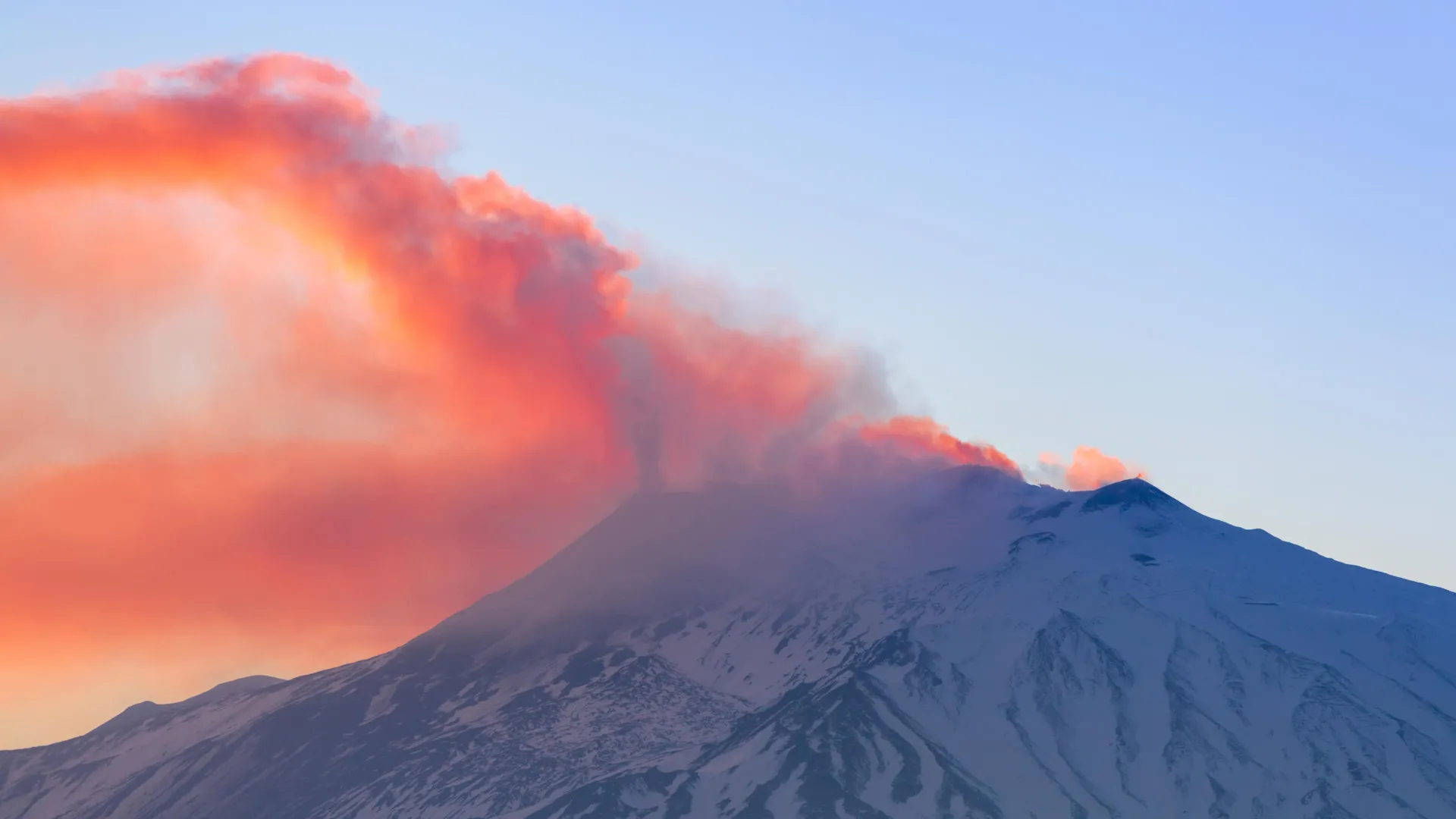
Mount Etna, located on the beautiful Italian island of Sicily, has intrigued geologists for decades. As Europe’s most active volcano, it erupts multiple times a year, yet its formation remains a mystery to scientists.
Recent research from the University of Lausanne (UNIL) offers a groundbreaking perspective that could reshape our understanding of volcanic formation. This study indicates that Mount Etna may have originated through a unique volcanic process, differentiating it from other major volcanoes globally, thus highlighting its potential uniqueness.
With a remarkable age of over 500,000 years and towering more than 3,000 meters (9,800 feet) above sea level, Mount Etna has defied existing volcanic models. The findings, published in the Journal of Geophysical Research — Solid Earth, were developed in partnership with Anna Rosa Corsaro from the National Geographical Institute in Catania. This research could also enhance volcanic hazard assessments conducted by researchers at INGV in Catania, Italy.
Why Mount Etna Differs from Other Volcanoes
Volcanoes form when molten rock, or magma, from the Earth’s mantle rises and solidifies. Traditionally, geologists classify volcanoes into three primary categories based on the magma formation process:
- At tectonic plate boundaries, plates separate, allowing mantle material to rise and melt, creating new ocean floors.
- A subduction zone, where one tectonic plate moves below another, causes water in the mantle to lower the melting point of surrounding rocks, leading to explosive volcanoes like Japan’s Mt. Fuji.
- In the center of tectonic plates, exceptionally hot mantle material rises in regions called hot spots, forming volcanic archipelagos such as Hawaii and La Réunion.
Interestingly, Mount Etna does not conform neatly to any of these classifications.
Even though this area is close to a subduction zone, its lava’s chemical composition is more comparable to that of hot spot volcanoes, despite the absence of a hot spot beneath.
The Hidden Magma Source Beneath Sicily
Researchers propose that Etna is sustained by a unique pocket of magma located in the upper mantle, approximately 80 kilometers (50 miles) below the Earth’s surface. This magma may have existed for an extended period before being pushed upwards, rather than forming just prior to an eruption, a pattern common in many volcanoes.
The study shows that the collision between the African and Eurasian tectonic plates causes these magma pockets to gradually migrate towards the surface. When a tectonic plate bends near a subduction zone, it fractures, allowing magma to rise through the Earth’s crust, similar to squeezing fluid out of a sponge.
This mechanism may explain both the unconventional chemistry of Mount Etna and its history of frequent eruptions.
The Case for a Fourth Type of Volcano
The research team suggests that Mount Etna may represent a lesser-known volcanic category termed “petit spot” volcanoes. First identified by Japanese geologists in 2006, petit spot volcanoes are small underwater formations that provide evidence of magma pockets existing near the Earth’s mantle’s upper region, an idea first posited in the 1960s.
Previously, this model was primarily applicable to smaller volcanic structures.
“Our study indicates that Etna may have developed through a mechanism akin to that of the petit spot submarine volcano,” states Sébastien Piret, a professor at the Department of Geosciences and Environment at the University of Lausanne and lead author of the study. “This finding was unexpected, as such processes were thought to be only relevant to much smaller volcanic features, typically under a few hundred meters above sea level. Etna, in contrast, is a massive stratovolcano that has been active for about 500,000 years and rises over 3,000 meters above sea level.”
If validated, this hypothesis could broaden the understanding of volcanic formation and prompt researchers to explore similar geological processes in other parts of the globe.
How Scientists Tested Their Theories
To unveil Mount Etna’s history, researchers analyzed rock samples from approximately 500,000 years of volcanic activity. By reconstructing the chemical evolution of Etna’s lava and comparing it with experimental data, they discovered that the magma composition remains consistently stable despite variations in the surrounding crustal environment.
These findings support the hypothesis that the magma fueling Etna is already present in the upper mantle and that its surface output is primarily influenced by the movements of tectonic plates. Collectively, these conclusions strengthen the notion that Etna’s volcanic activity is governed by the same principles that lead to the formation of petit spot volcanoes.
Source: www.sciencedaily.com