


How SpaceX Streamlined the Raptor Engine for Starship
A recent Construction Physics Newsletter analysis examines how SpaceX simplified the design of its Raptor engine, comparing the early Raptor 1 with the latest Raptor 3 version.
Using public documentation about SpaceX’s Raptor engine, the analysis explores how engineers have refined the powerplant intended to support Starship, a super-heavy-lift rocket designed for rapid reuse. It also emphasizes that Raptor 3 remains in development.
Raptor 3 is simpler on the outside—but highly complex inside
The evolution from Raptor 1 to Raptor 3 eliminated various individual parts and streamlined the engine’s visible design. However, that simplification did not make the engine easy to develop or operate.
“Although this streamlining made the Raptor engine simpler in the sense that various individual parts were eliminated, it was still a very complex task to make work. It also added a tremendous amount of internal complexity to the Raptor 3 that is not visible in these photos,” the newsletter states.
The development challenges have not been completely resolved. Starship Flight Test 13’s first launch attempt was automatically aborted by the flight software at T-0 in July of this year after several Raptor 3 engines failed to start.
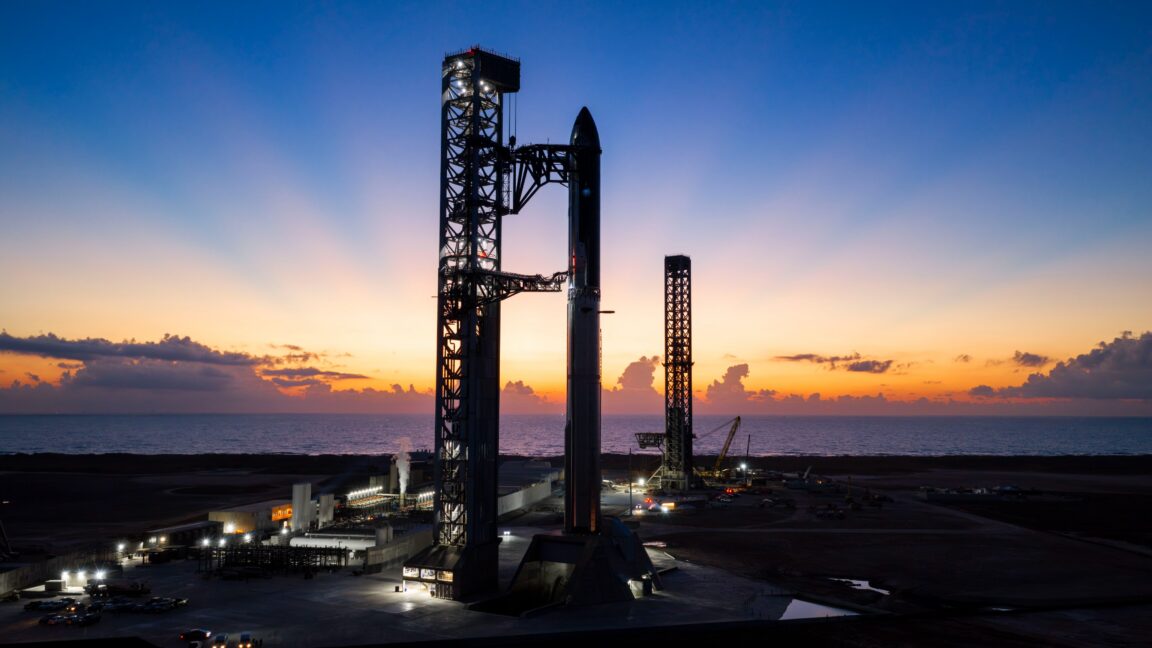
SpaceX stacks Starship for its next orbital flight
SpaceX assembled its Starship Super Heavy rocket at the company’s Starbase launch site in south Texas early Wednesday morning as it awaits approval for its first orbital flight, according to a Spaceflight Now report.
Starship Flight 14 could launch as early as Monday, September 28, but SpaceX must first receive regulatory approval from the Federal Aviation Administration.
Ship 41 lifted onto Super Heavy booster B21
The Starship upper stage, designated Ship 41 or S41, departed its production site approximately three miles west of the airfield at about 7:45 p.m. CDT on Tuesday night. Nearly five and a half hours later, the 52-meter (171-foot) spacecraft was lifted by the launch tower’s chopsticks and placed on top of Super Heavy booster B21.
If approved by the FAA, SpaceX could launch Flight 14 as early as September 28 for a nearly 10-hour mission involving the deployment of 26 next-generation Version 3 Starlink satellites. One stated launch target is 7:15 a.m. UTC, while the launch schedule below lists 12:15 UTC.
Next three launches
- September 26: Electronic | Owl Light, Owl Light, Owl Light | Mahia Peninsula, New Zealand | 00:15 UTC
- September 26: Falcon 9 | USSF-385 | Vandenberg Space Force Base, California | 11:56 UTC
- September 28: Starship | Flight 14 | Starbase, Texas | 12:15 UTC

Source: arstechnica.com