


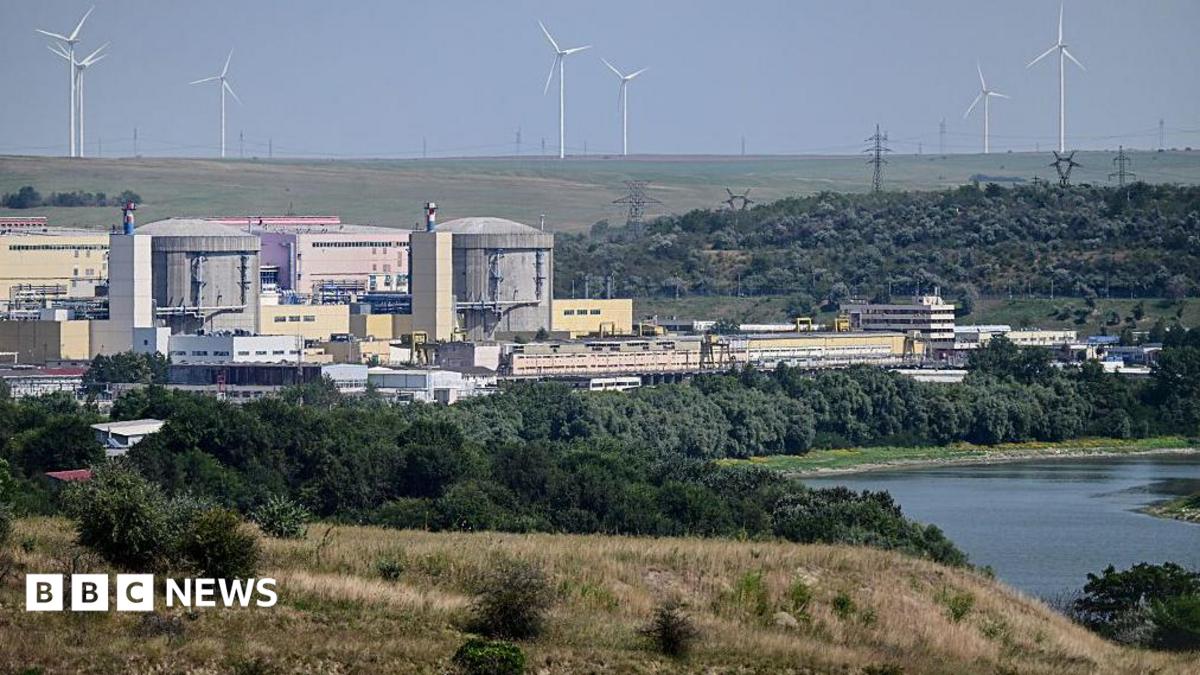
Romania has shut down its only nuclear power plant after extremely low Danube River water levels, caused by a prolonged European heatwave, made it difficult to cool the facility.
The Cernavoda nuclear power plant’s two reactors generate approximately 20% of Romania’s electricity. Officials do not expect the facility to resume full operations within the next 10 days.
Earlier this week, authorities attempted to sink a stone-filled barge in the Danube to help redirect water toward Cernavoda. The nuclear plant relies on the river for its cooling system.
Neighboring Hungary has not yet shut down its only nuclear facility, the Paks nuclear power plant, which also uses the Danube for cooling. However, water levels in the river have fallen to their lowest point in 30 years across several countries.
The second of Cernavoda’s two 706-megawatt reactors was disconnected from Romania’s electricity grid shortly before noon on Thursday.
“We do not anticipate restarting operations within the next 10 days,” plant manager Romeo Urjan told AFP.
The plant’s first reactor had already been taken offline in July.
Cernavoda has been fully closed only once previously, in 2003.
Romania typically meets increased electricity demand during hot, windy weather with solar and wind power. At night, however, the country must rely more heavily on coal- and gas-fired generation, along with electricity imports.
Romania also has significant hydropower capacity, but falling Danube water levels have reduced hydroelectric generation at the same time that they forced the nuclear reactors to shut down.
In Hungary, Prime Minister Péter Magyar warned last month that the Soviet-era Paks nuclear power plant, which has four reactors, could be forced to shut down entirely for the first time.
Plant officials said the Danube had fallen so low that the intake nozzles used to draw cooling water could no longer reach the river.
Source: www.bbc.co.uk