


How DNA Folding May Have Helped Octopuses Evolve Complex Nervous Systems
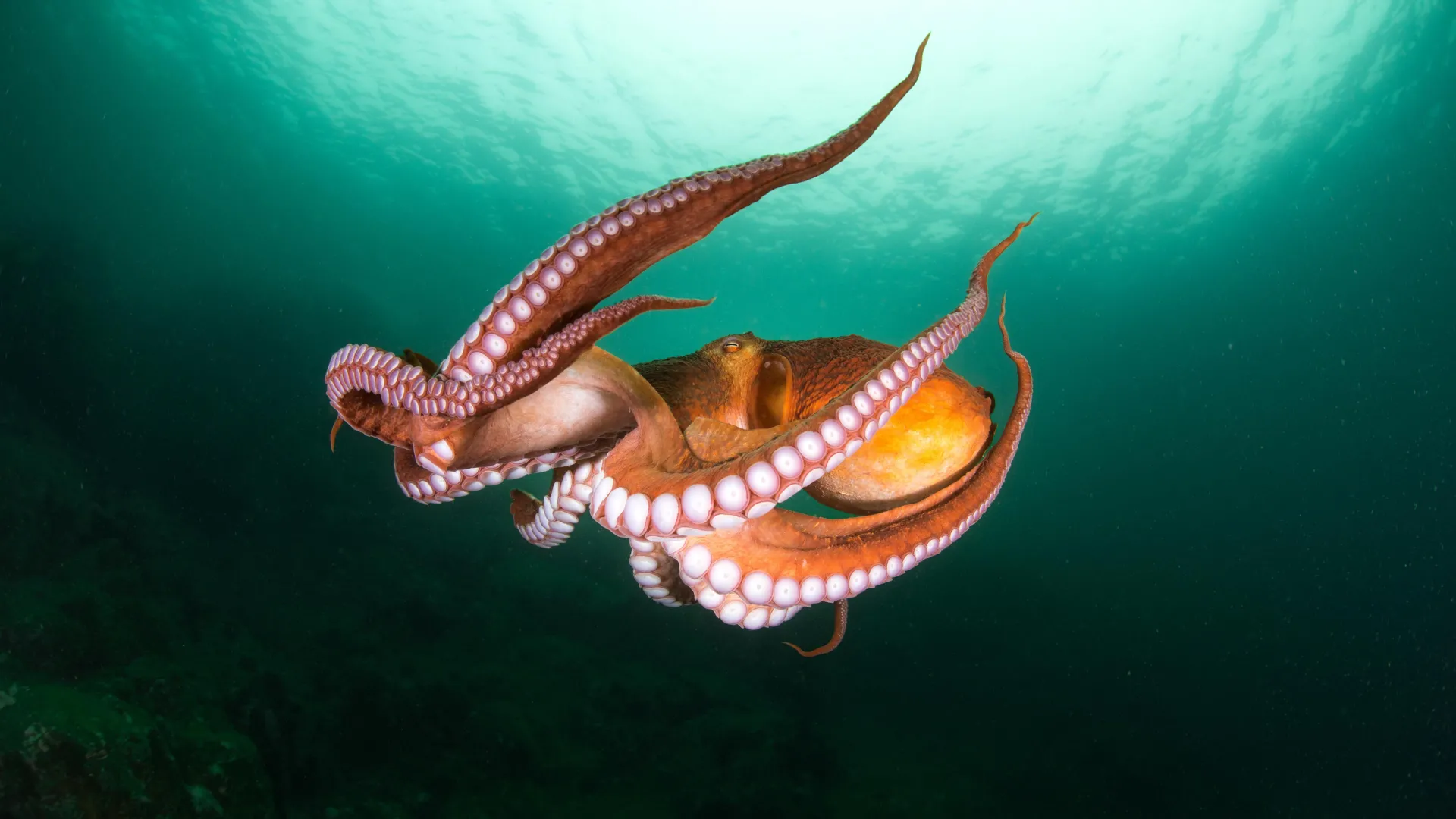
Octopuses, squid, and cuttlefish have some of the most sophisticated nervous systems in the animal kingdom. They can solve problems, learn from their surroundings, and rapidly change their appearance to blend in. But how did these extraordinary abilities evolve? Scientists have discovered a surprising clue: the answer may lie not only in the genes themselves, but also in the way DNA is folded and arranged inside cells.
Researchers at the University of Vienna found that a major rearrangement of DNA hundreds of millions of years ago brought previously separated genetic regions into contact. These newly formed connections changed how genes interacted and were regulated, potentially helping drive the evolution of the unusually complex nervous systems found in these animals, collectively known as coleoid cephalopods.
The study, published in Nature Communications, suggests that the physical structure of DNA may play a much more active role in evolution than scientists once thought.
How the 3D structure of DNA influences evolution
To investigate this possibility, the research team reconstructed the three-dimensional organization of the genomes of octopuses, squid, and cuttlefish. They then compared DNA arrangements and patterns of gene activity to understand how changes in genome structure could affect biological complexity.
“The genome is more than just a sequence of genes; it is folded into a complex three-dimensional structure,” said lead author Dr. Thea Rogers. “Understanding how that structure evolves is increasingly important for understanding how new forms of biological complexity arise.”
Although DNA is often depicted as a long, twisting ladder, it does not simply stretch out inside a cell. Instead, it folds into a complex three-dimensional arrangement. This folding allows parts of the DNA sequence that are far apart to come into close physical contact.
These connections can influence which genes are activated, when they are used, and how strongly they function. As a result, changes in the way DNA folds can alter gene activity without necessarily changing the underlying genetic instructions.
Ancient DNA reshuffling created new genetic links
The researchers found evidence that cephalopod genomes underwent a period of extensive reorganization hundreds of millions of years ago. During this evolutionary upheaval, much of the genetic material was rearranged, bringing previously separated regions of chromosomes closer together.
This reshuffling created opportunities for DNA regions to interact in ways that had previously been impossible. Once these connections formed, they could influence one another’s activity and establish increasingly complex networks of gene regulation.
Over the course of evolution, these interactions can become increasingly interconnected and difficult to separate, creating a process scientists describe as “regulatory entanglement.”
This mechanism offers a possible explanation for how evolution can produce new biological traits without disrupting essential functions. By establishing new connections between existing genetic elements, genomes can develop different patterns of gene activity while preserving important biological systems.
Stable DNA domains and flexible chromatin loops
One of the study’s most revealing findings was that different parts of the genome responded very differently to evolutionary rearrangements.
The researchers discovered that large structural regions called chromatin domains have remained remarkably stable over long periods of evolutionary history. These domains help organize DNA into broad sections within cells, and their persistence suggests that some features of genome structure are strongly conserved.
Smaller structures known as chromatin loops, however, told a different story.
Chromatin loops form when distant pieces of DNA are brought together in three-dimensional space. Unlike the relatively stable chromatin domains, these loops showed significant differences between cephalopod species, tissues, and developmental stages.
Many of these flexible DNA connections were located near genes associated with important cephalopod traits, including nervous system development and function.
This pattern suggests that smaller, more adaptable structures within the genome may be especially responsive to major genetic rearrangements. By changing which regions of DNA can communicate, these flexible connections may generate new patterns of gene activity and contribute to the evolution of complex traits.
New clues to the evolution of octopus intelligence
The discovery challenges the traditional view that evolutionary change depends mainly on alterations to the genetic sequence. Instead, it suggests that the physical organization of DNA can also influence how evolutionary changes unfold.
In octopuses, squid, and cuttlefish, ancient genome rearrangements may have helped establish new regulatory networks and contributed to the development of their highly sophisticated nervous systems.
The findings do not prove that these DNA changes directly caused the evolution of intelligence in cephalopods. However, they reveal a possible mechanism through which large-scale genetic rearrangements can create new biological possibilities while preserving essential functions.
More broadly, the study highlights an often-overlooked aspect of evolution. The emergence of extraordinary traits may depend not only on which genes an organism inherits, but also on how those genes are physically arranged and connected within cells.
Source: www.sciencedaily.com