


Close Menu
HitechubHitechub
    What's Hot
    Science

    Hurricane Isaias Causes Power Outages Along the Gulf Coast

    Science

    Physicist Explains Why a Neutrino Laser Is Fundamentally Impossible

    Science

    Bumblebees May Self-Heal to Protect Colonies From Fungal Pathogens

    Important Pages:
    • About Us
    • Privacy Policy
    • Terms & Conditions
    Facebook X (Twitter) Instagram Pinterest
    Facebook X (Twitter) Instagram
    HitechubHitechub
    Saturday, November 28
    • Shop
      • Fashion
        • Mens
        • Womens
        • Accessories
          • Handbags
          • Keychain
          • Masks
          • Money clicps
          • Neck Pillow
          • Rings
          • Towels
          • Wallets
        • Jewelry
        • Watches
        • T-shirts
        • Hawaiian shirts
        • Vests
        • Swim trunks
        • Swimsuits
      • Fun
        • Magic cubes
        • Magnifiers
        • Misc
        • Photo books
        • Puzzles
        • Toys
      • Home
        • Cleaning/Care
        • Mailbox covers
        • Mugs
        • Pot Holders
        • Spoon
      • Office and Electronics
        • Chairs
        • Office Supplies
        • IPad cases
        • Laptop stickers
        • Mouse pads
        • Notebooks
        • Pencil bags
        • Pens
        • Phone cases
      • Personalized
      • Pets
      • Sports
        • Cycling
          • Balaclava Mask
          • Bike Bell
          • Bike Computer
          • Bike Fender
          • Bike Grips
          • Bike Kickstand
          • Bike Light
          • Bike Locks
          • Bike Mitts
          • Bike Pumps
          • Bike Repair Stand
          • Bike Seat
          • Bike Trainer
          • Bike Wheels
          • BIKES
            • Folding Bikes
            • Road Bikes
          • Carbon Fiber Bike Products
          • Cycling Mask
          • Kid’ Bike Helmets
          • Inner Tube
          • Motorcycle Bag
          • Nylon Pedals
          • Adult Helmets
          • Photochromic Sunglasses
          • Soft Coolers
          • Suction Cup Bike Rack
          • Tool accessories
          • Winter Cloth
          • Heart Rate Monitor
        • Outdoors/Camping
          • Outdoor Bags
        • Sweatband
    • Technology
      1. AI
      2. Gadgets
      3. View All

      This is the most popular CEO in the world

      Sectors in which “Chat-GPT” is most often used

      Artificial intelligence has begun to “swallow” professions

      The unusual robot conductor of a concert in Seoul

      Here’s how you can tell if your phone is being tapped

      PlayStation 5 becomes a completely silent console and gets more space

      This is the first phone that can be used to park a car

      Best Gaming Laptops 2023: Powerful Portables for PC Games

      New Linux NFS2ROOT Flaw Could Let Attackers Gain Root Privileges

      GTA 6 PC: AI Race to Clone the World’s Biggest Video Game

      Microsoft Releases Emergency Hot Patch to Fix Windows Server Crashes

      Drupal Warns of New Site Takeover Vulnerability Exploited in Active Attacks

    • Science
      1. Space
      2. Wheels
      3. View All

      Space Perspective: A Journey to the Edge of Space

      5 Fascinating Facts About Space

      Space Exploration: Unveiling the Wonders of the Universe

      Toyota wants to make a new generation battery with a range of up to 1,200 km

      Meet Toyota’s lunar “baby” that could make exploring the Moon easier

      What does a night drive look like with one of the most beautiful cars in the world: the Rolls-Royce Ghost

      Scientists May Have Misunderstood How Brain Cells Work for Decades

      NASA’s NG-25 Mission Launches Pioneering Space Crop Research Experiment

      How Open Access Publishing Increases the Chances of Your Research Being Cited in a Patent

      Strange Prehistoric Mammals May Have Been Misunderstood for 150 Years

    HitechubHitechub
    Home » Scientists Discover Powerful New Antivenom in Rattlesnake Blood
    Science

    Scientists Discover Powerful New Antivenom in Rattlesnake Blood

    Share Facebook Twitter Pinterest WhatsApp
    Share
    Facebook Twitter LinkedIn Pinterest WhatsApp

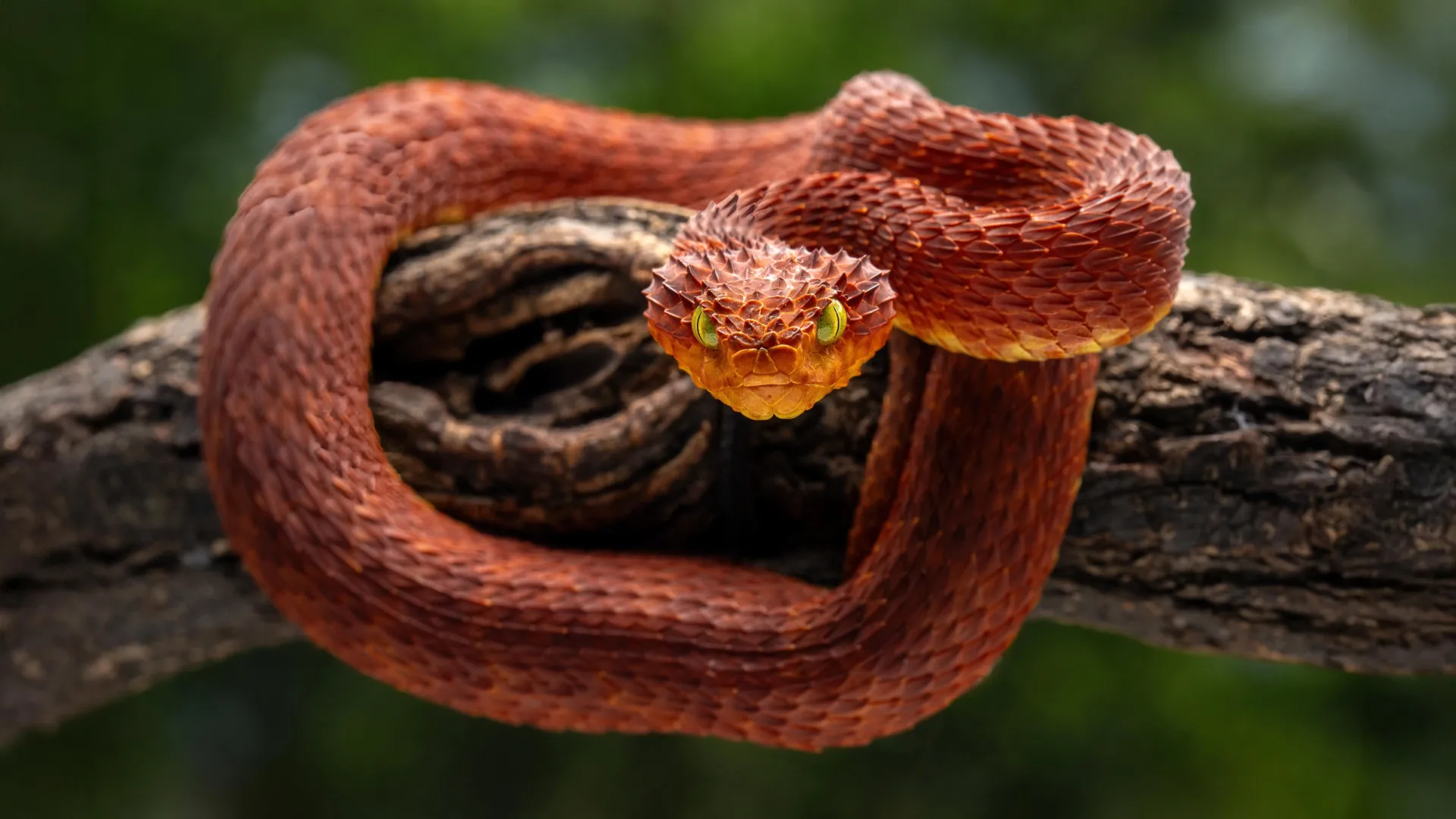
    Researchers at the University of Maryland have identified a promising new approach to developing safer, more effective snakebite antivenom. The method uses toxin-blocking proteins found naturally in western rattlesnake blood, where they help protect the snakes from the effects of their own venom.

    Scientists have discovered that combining specific proteins from rattlesnake blood can create a powerful defense against the venom of several dangerous snake species.

    The study, led by University of Maryland biology professor Sean B. Carroll and published in Proceedings of the National Academy of Sciences, could help advance a new generation of antivenoms for deadly snakebites. Snake envenoming remains a major global health threat, particularly in rural regions where effective treatment is often difficult to access.

    “This is one of those great stories where nature has already solved a problem we’ve been grappling with for decades,” said Carroll, who also holds UMD’s Andrew and Mary Barro and Nicholas and Susan Simon Endowed Chair.

    Snakebite remains a global health challenge

    Snakebite is considered one of the world’s most neglected tropical diseases. According to the World Health Organization, venomous snakes kill an estimated 80,000 to 140,000 people each year, while hundreds of thousands of survivors suffer permanent disabilities. Many victims live in rural communities where medical care and reliable antivenom supplies are limited.

    Current antivenoms save lives, but they also have significant limitations. Most are made by injecting large animals with snake venom and collecting the antibodies produced in response. These treatments can be costly to manufacture, vary in quality and effectiveness, and may not fully neutralize the wide range of toxins found in different snake species. They can also trigger serious immune reactions in some patients.

    These challenges have encouraged researchers to search for new ways to treat snake envenoming. In this study, scientists looked to venomous snakes themselves for clues.

    “We’ve known anecdotally for 100 years that venomous snakes tend to be resistant to their own venom,” Carroll said. “But for a long time, no one knew what was circulating in their blood to protect them.”

    Rattlesnake blood reveals natural venom defenses

    In 2022, Carroll’s laboratory identified part of the answer: a protein called FETUA-3. The protein can block the activity of several metalloproteinase toxins found in western rattlesnake venom and may also bind to and inhibit venom from other rattlesnake species.

    “This was an evolutionary way for snakes to protect themselves from accidental self-venom,” Carroll said. The discovery raised an important question: “Why rely on horse antibodies when nature has packed effective antidotes into snakes?”

    For the new study, co-authors including Elda Sanchez, director of the National Center for Natural Toxin Research at Texas A&M University-Kingsville, examined how different FETUA proteins contribute to resistance against snake venom.

    The researchers found that individual proteins can counteract specific effects of venom. One protein may help reduce bleeding, while another may interfere with toxin-driven enzyme activity. However, none of the FETUA proteins alone was enough to completely prevent death after venom exposure.

    Combining proteins creates a stronger antivenom

    When the researchers combined multiple FETUA proteins, the results improved dramatically. The protein mixtures were far more effective at blocking the harmful effects of venom than any single protein used on its own.

    Developing the right combination is challenging because snake venom is highly complex. A single venom can contain roughly 100 toxin proteins from several different protein families, and venom composition can vary substantially between snake species.

    “The ingredients are there,” Carroll said. “We need to keep testing different mixtures.”

    In laboratory experiments, the optimized protein combination was approximately 10 times more potent than a current sheep-derived rattlesnake antivenom. The mixture completely neutralized the lethal effects of rattlesnake venom and also protected against venom from several other venomous snake species, including species separated by millions of years of evolution.

    “The fact that some of these inhibitors have been completely conserved over 50 million years of snake evolution shows what a real risk this is to these animals,” Carroll said. Researchers are still investigating how snakes may expose themselves to venom—whether through mouth tissue during a bite, by consuming poisoned prey, through cannibalism, or through all of these routes.

    Toward a new generation of antivenom treatments

    The study focused on metalloproteinases, one of the major toxin families found in viper venom. Researchers are now applying the same strategy to target other venom components.

    “We are incredibly close to establishing effective solutions for the three major families of toxins found in vipers,” Carroll said. “What we’ve learned here and the work we’re doing now gives us real confidence that this is a natural recombinant technology. Lab-produced antitoxin is within reach.”

    Carroll believes the first commercial applications of these “natural antivenoms” could involve veterinary medicine before the technology is adapted for human snakebite treatment.

    Future antivenoms based on rattlesnake proteins could be safer, less expensive and easier to manufacture at scale than many existing treatments. They may also offer broader protection against toxins from multiple snake species.

    “We can create these valuable tools and help solve serious global health problems,” Carroll said. “Many of our most important medicines come from nature, and we are pleased that the ingredients for antivenoms that are better than commercially available products were in these snakes from the beginning.”

    In addition to Carroll, UMD co-authors include Fiona Ukken and Yetunde Ainuora, visiting faculty experts in the Department of Biology.

    This research was funded by the Howard Hughes Medical Institute and the Viper Resource Center (grant #P40OD01960-22). This article does not necessarily reflect the views of these organizations.

    Source: www.sciencedaily.com

    Share. Facebook Twitter Pinterest LinkedIn WhatsApp
    Previous ArticleAI Entrepreneur Develops Autonomous Agents That Plan for the Unexpected
    Next Article Founder Develops Cheaper, Cleaner Steel for Sustainable Manufacturing

    Related Posts

    Science

    Scientists May Have Misunderstood How Brain Cells Work for Decades

    Science

    NASA’s NG-25 Mission Launches Pioneering Space Crop Research Experiment

    Science

    How Open Access Publishing Increases the Chances of Your Research Being Cited in a Patent

    Science

    Strange Prehistoric Mammals May Have Been Misunderstood for 150 Years

    Science

    Eating Fruit and Fish in Childhood May Lower Crohn’s Disease Risk, Study Finds

    Science

    Scientists Discover Evidence of Extinction Deep Beneath the Ocean Floor

    Science

    Ancient Protein Links Chinese Fossil Remains to Denisovans

    Science

    DARPA Evaluates Microsoft’s Majorana 2 Quantum Computing Technology: What If It’s Proven Legitimate?

    Add A Comment
    Leave A Reply Cancel Reply

    Stay In Touch
    • Facebook
    • Twitter
    • Instagram
    • Pinterest
    Top Picks
    Science

    MIT Study Finds the Brain’s Nighttime Cleaning System Weakens With Age

    While we sleep, the brain carries out maintenance processes that help remove accumulated waste. New…

    AI and the Future of Mathematics: Is It the End of Mathematics as We Know It?

    Download: Inside OpenAI’s Hugging Face Hack and How New EVs Are Challenging the US Market

    Play, Build, and Create with NVIDIA Technology This Holiday Season

    150 Research Primates Develop Diarrhea, Affecting Vaccine Data

    Most Popular
    Technology

    Empowering Girls: Launching Africa’s First Private Space Satellite

    Science

    Ancient DNA Reveals the True Story of the Mysterious American Cheetah

    Categories
    • AI (9)
    • Gadgets (6)
    • Science (3,629)
    • Space (3)
    • Technology (3,059)
    • Wheels (3)
    Our Picks
    Technology

    How Long Do Mobile Phone Companies Keep Call Records?

    Science

    NASA SkyFall Helicopters at Work: Artist’s Concept

    © 2026 Hitechub.
    • Home
    • About Us
    • Privacy Policy
    • Terms & Conditions

    Type above and press Enter to search. Press Esc to cancel.

    GDPR Cookie Banner

    We are using cookies to give you the best experience on our website.

    You can find out more about which cookies we are using or switch them off in .

    Ad Blocker Enabled!
    Ad Blocker Enabled!
    Our website is made possible by displaying online advertisements to our visitors. Please support us by disabling your Ad Blocker.