


Fucoidan from Brown Seaweed May Help Target Oxidative Stress
Fucoidan, a sulfated polysaccharide found in the cell walls of wakame, kelp and other brown seaweeds, may eventually help treat diseases linked to oxidative stress. However, researchers say it remains far from drugstore shelves.
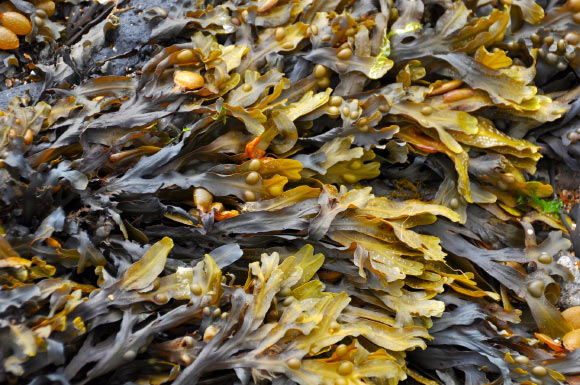
Fucoidans are structurally diverse, fucose-rich sulfated polysaccharides derived primarily from brown algae. Image credit: Ronil.
What is fucoidan?
Fucoidan is a fucose-rich, sulfated sugar-like molecule that seaweeds such as wakame and kelp have evolved as part of their defense against the harsh marine environment.
In a new review, Flinders University Professor Arduino Mangoni and colleagues examine a decade of research into fucoidan and oxidative stress. They conclude that the marine polysaccharide deserves serious consideration as a potential agent for inhibiting oxidative stress, a form of cellular damage associated with many chronic diseases.
Fucoidan and oxidative stress research
Previous studies suggest that fucoidan may have beneficial effects in several areas, including the liver, kidneys, intestines, skin and wound repair. Research has also examined its possible role in certain neurodegenerative diseases.
“Previous studies have shown that its positive effects may benefit the liver, kidneys, intestines, skin, wound repair, and even certain neurodegenerative diseases. However, we have a long way to go to unravel its potential,” said Professor Mangoni, the study’s lead author.
Wound dressings may provide an early testing opportunity
The researchers say that topical applications could offer one of the fastest routes to early human trials. Fucoidan-based wound dressings, for example, could allow scientists to measure local inflammation directly in a controlled area.
“One of the fastest paths to early human demonstration may be topical applications such as wound dressings that can directly measure local inflammatory conditions in a controlled location,” the researchers said.
Potential role as an add-on therapy
For liver and kidney diseases, fucoidan may be most useful as an additional or add-on therapy rather than as a standalone treatment.
“Future translational studies should focus on how fucoidan, as a positive oxidative biomarker, promotes healing or improves organ function, as fucoidan is likely to be used as an add-on therapy in systemic treatments such as liver and kidney diseases,” the researchers wrote.
More research, improved chemical understanding and better modeling will be needed to identify realistic disease targets and determine whether fucoidan can advance to human clinical trials.
“Although it will be years or even decades before new drugs come to market, or nutritional supplements or natural cosmetics appear on supermarket shelves, fucoidan is an abundant marine polysaccharide that is already being sustainably farmed around the world,” said study co-author Dr Jay Myers of Flinders University.
Fucoidan research is still in an early stage
The researchers emphasize that fucoidan-based medicines, supplements and natural cosmetics remain future possibilities rather than established treatments. Further studies will be needed to clarify how the compound works, identify appropriate disease targets and evaluate its safety and effectiveness in people.
The review was published in Toxicology Archives in October 2026.
_____
AA Mangoni et al. “Therapeutic role of fucoidan against oxidative stress: recent developments, translational challenges, and future directions.” Archives of Toxicology. Published online October 15, 2026. doi: 10.1007/s00204-026-04572-z
Source: www.sci.news