


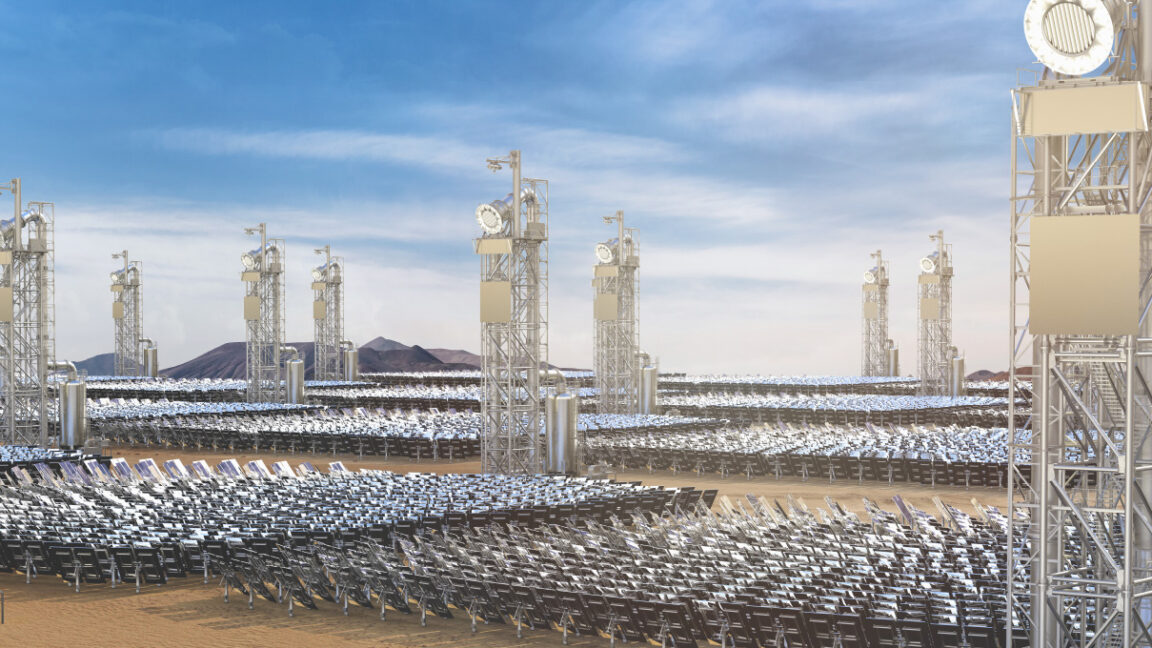
Concentrated solar power uses mirrors to turn sunlight into heat rather than converting photons directly into electricity. That heat can drive conventional power-generation turbines and, with thermal storage, potentially support electricity production after sunset. But the steep decline in the cost of photovoltaic solar panels has made concentrated solar power harder to justify, creating an opening for designs that share power-generation equipment between solar and fossil-fuel systems.
Why concentrated solar power lost ground
Until about a decade ago, concentrated solar power was widely viewed as having a promising future. Improvements in thermal storage offered a way to generate electricity around the clock, including when the sun was not shining.
That expectation did not materialize. Although the cost of concentrated solar power has fallen enough to compete with nuclear power, the price of photovoltaic solar has dropped far more sharply. In most locations, solar panels are now the least expensive source of electricity, provided that conditions are suitable for generating solar power.
Solar panels alone cannot meet demand at night or during periods of poor weather. As a result, power systems generally need additional capacity, often a combination of batteries and natural-gas facilities, to cover those shortages.
One small business is proposing a different approach: a concentrated solar power system in which the fossil-fuel backup shares most of its power-generation hardware with the solar side. The goal is to avoid building a separate facility to provide electricity when solar output is unavailable.
How concentrated solar heating works
Concentrated solar heating, also called solar heating, is straightforward in principle. Most of the site is covered with heliostats—devices that combine mirrors with motorized tracking systems to keep the sunlight focused as the Sun moves across the sky.
The mirrors direct the concentrated sunlight to a receiver inside a tower, where it heats a working fluid. That hot fluid can then drive a conventional steam turbine. Alternatively, the heat can be stored and used later to generate electricity at night.
Different designs, persistent challenges
Concentrated solar systems can use a range of working fluids and thermal-storage methods. Some designs use trough-shaped mirrors rather than towers, eliminating the need for a central tower.
These variations are intended to address challenges associated with solar heating, including the large number of moving parts and the potential for corrosive working fluids. However, those problems, along with a lack of standardization, have made it difficult for concentrated solar power plants to reduce costs as quickly as photovoltaic solar.
Source: arstechnica.com