


Powerful Pacific Storms Continue as the 2026 Tropical Cyclone Season Surpasses Average Activity
Hurricanes Polo and Nolo brought dangerous weather to Mexico and Hawaii as multiple tropical cyclones tracked across the northeast and central Pacific.
The 2026 tropical cyclone season has been unusually active in the northeast and central Pacific basins. By September 28, the region had recorded 20 named storms, including nine that reached hurricane strength. From 1991 to 2020, the average totals through that date were 13.5 named storms and 7.4 hurricanes.
NASA satellite image shows several Pacific storms
A September 27 image from NASA’s EPIC (Earth Polychromatic Imaging Camera) aboard the DSCOVR (Deep Space Climate Observatory) satellite shows several powerful storms across the Pacific.
Hurricane Nolo near Hawaii and Hurricane Polo off the Baja California Peninsula brought strong winds, storm surge and heavy rain. Tropical Storm Rachel and Post-Tropical Storm Odalis also threatened parts of the Mexican coast and the southwestern United States.
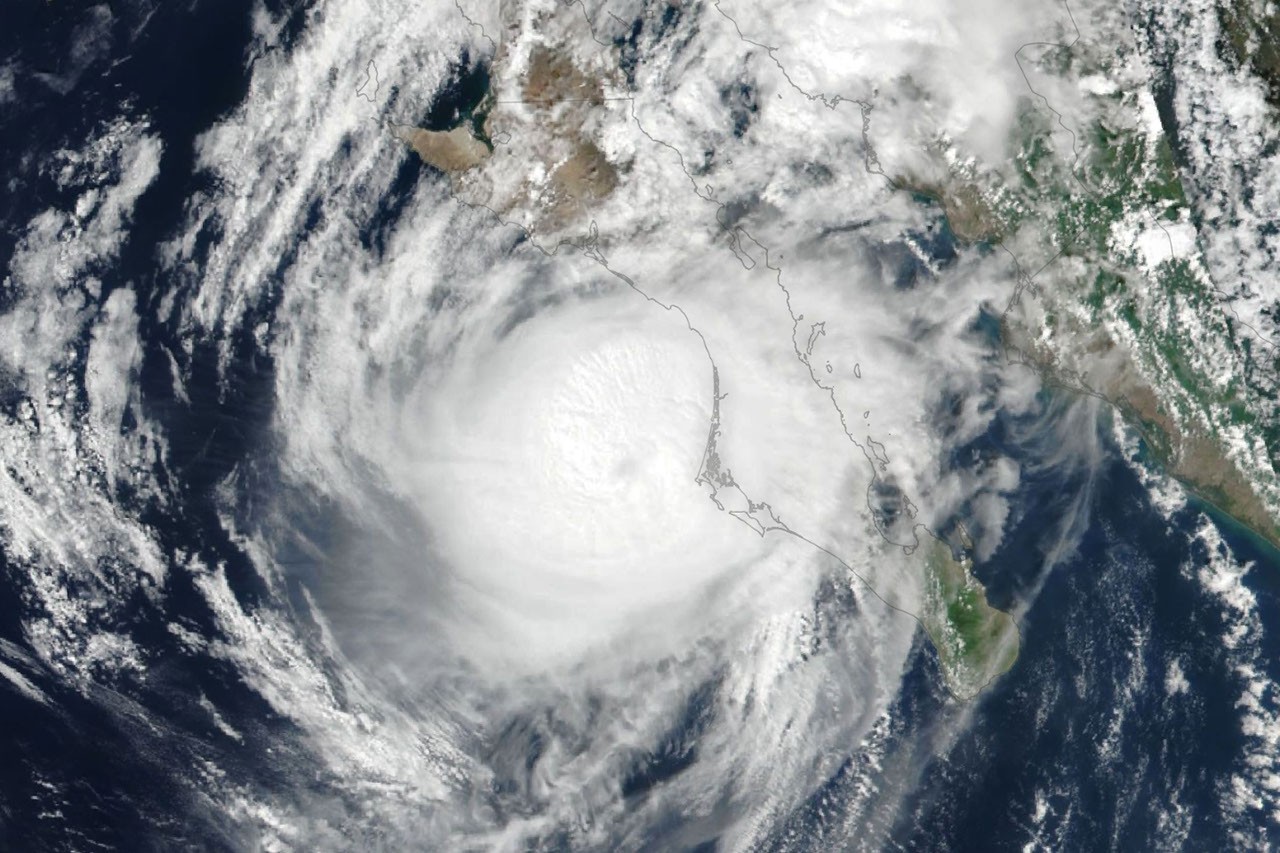
Hurricane Polo makes landfall in Baja California Sur
Hurricane Polo made landfall in Baja California Sur at approximately 11 p.m. local time on September 28, or 6 a.m. on September 29 in Coordinated Universal Time.
Before reaching land, Polo underwent extreme rapid intensification. The storm reached Category 5 strength on September 22 while moving over unusually warm waters. Polo weakened as it approached the coast and likely made landfall as a Category 2 hurricane, according to the National Hurricane Center (NHC).
Polo then crossed the peninsula and the Gulf of California before making a second landfall. The NHC warned of dangerous winds, storm surge and heavy rainfall capable of causing flooding and landslides in parts of Baja California Sur and Sonora.
Polo’s remnants could fuel flooding in the Southwest
The hurricane’s effects were expected to extend well beyond Mexico. The remnants of Polo, combined with moisture from Post-Tropical Cyclone Odalis, could move across the southwestern United States and southern Plains for several days.
That tropical moisture could help fuel heavy rain and increase the risk of flooding, according to forecasters.
Meanwhile, Tropical Storm Rachel was tracking parallel to the coast of southwestern Mexico. The NHC forecast warned of strong winds as well as dangerous waves and rip currents.
Hurricane Nolo brings flooding to Hawaii
Hurricane Nolo, the season’s third hurricane, passed near Hawaii and caused additional flooding across the islands. Although the storm did not make landfall, as much as 12 inches of rain fell on Maui and parts of Hawaii Island.
According to news coverage, the storm caused flooded roads, fallen trees and landslides. Hawaii Island avoided some of the more severe effects associated with Hurricane Lala in mid-August.
El Niño is contributing to elevated Pacific hurricane activity
As of September 28, accumulated cyclone energy in the northeast Pacific was about twice the normal level, according to Colorado State University data.
Scientists expect tropical cyclone activity to increase in the basin during the El Niño event that has been ongoing since June. Warm equatorial Pacific waters and reduced wind shear in the region are both typical El Niño conditions that support the development and strengthening of tropical cyclones.
NASA and FEMA support Hawaii’s storm response
The NASA Disaster Program is working with FEMA to support Hawaii’s response to Hurricane Nolo. The team plans to publish maps and data products through an open-access mapping portal as new information becomes available.
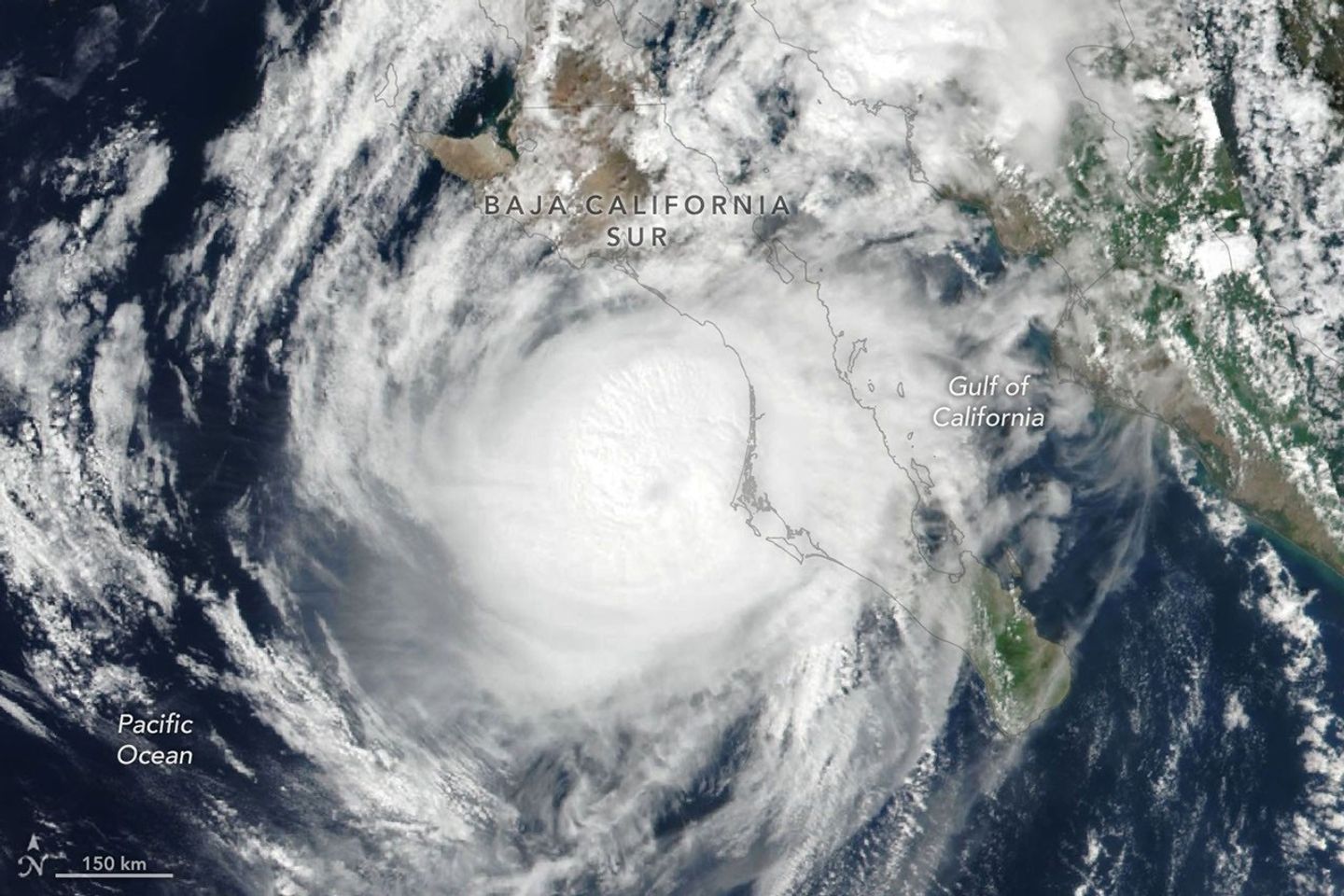
NASA Earth Observatory image by Lauren Dauphin, using data from DSCOVR EPIC, NASA EOSDIS LANCE, GIBS/Worldview and the Suomi National Polar-Orbiting Partnership. Story by Lindsay Dorman.
Sources
- Colorado State University (September 28, 2026), Real-time Northeast Pacific statistics by storm for 2026. Accessed September 29, 2026.
- Honolulu Civil Beat (September 28, 2026), Photo essay: Hurricane Nolo spares Hawaii from worst disaster. Accessed September 29, 2026.
- NASA Earth Observatory (September 25, 2026), Explosive intensification of Hurricane Polo. Accessed September 29, 2026.
- NASA Earth Observatory (September 4, 2026), A trio of tropical cyclones in the Pacific Ocean. Accessed September 29, 2026.
- National Hurricane Center (September 29, 2026), Hurricane Nolo Advisory Archive. Accessed September 29, 2026.
- National Hurricane Center (September 29, 2026), Hurricane Polo Advisory Archive. Accessed September 29, 2026.
- The Washington Post (September 28, 2026), Remnants of Hurricane Polo pose a severe flooding threat to the southwestern United States. Accessed September 29, 2026.
- Yale Climate Connections (September 28, 2026), Hurricane Nolo takes a new turn as Polo brings deep tropical moisture to the desert Southwest. Accessed September 29, 2026.
Source: science.nasa.gov