


Here’s the SEO-optimized content with preserved HTML tags:
250 Years of America: The Spark of Revolution
A Smithsonian Magazine Special Report
<header class="article-header">
<h2 class="tagline article-tagline" itemprop="description">Aldo Leopold's writings reconsider humanity's role in the natural world, urging people to become stewards rather than conquerors of the land.</h2>
</header>
<figure class="article-image lead-article-image">
<picture class="responsive-image">
<source media="(max-width: 600px)" srcset="https://th-thumbnailer.cdn-si-edu.com/Jg_xfBil8YUYbX4heuVLPWdLEYY=/600x400/filters:no_upscale():focal(1350x900:1351x901)/https://tf-cmsv2-smithsonianmag-media.s3.amazonaws.com/filer_public/05/dd/05dde32f-3d0b-4faf-baac-5a8649056ea0/aldo_leopold.jpg" width="600" height="400">
<source media="(max-width: 768px)" srcset="https://th-thumbnailer.cdn-si-edu.com/Dgj_aqLH-n5ypIOSP0nl7VrkbDE=/768x512/filters:no_upscale():focal(1350x900:1351x901)/https://tf-cmsv2-smithsonianmag-media.s3.amazonaws.com/filer_public/05/dd/05dde32f-3d0b-4faf-baac-5a8649056ea0/aldo_leopold.jpg" width="768" height="512">
<source media="(max-width: 1000px)" srcset="https://th-thumbnailer.cdn-si-edu.com/Dgj_aqLH-n5ypIOSP0nl7VrkbDE=/768x512/filters:no_upscale():focal(1350x900:1351x901)/https://tf-cmsv2-smithsonianmag-media.s3.amazonaws.com/filer_public/05/dd/05dde32f-3d0b-4faf-baac-5a8649056ea0/aldo_leopold.jpg, https://th-thumbnailer.cdn-si-edu.com/DEfaj6sLdEGLwg2vHYa84Uef7A0=/1026x684/filters:no_upscale():focal(1350x900:1351x901)/https://tf-cmsv2-smithsonianmag-media.s3.amazonaws.com/filer_public/05/dd/05dde32f-3d0b-4faf-baac-5a8649056ea0/aldo_leopold.jpg 2x" width="768" height="512">
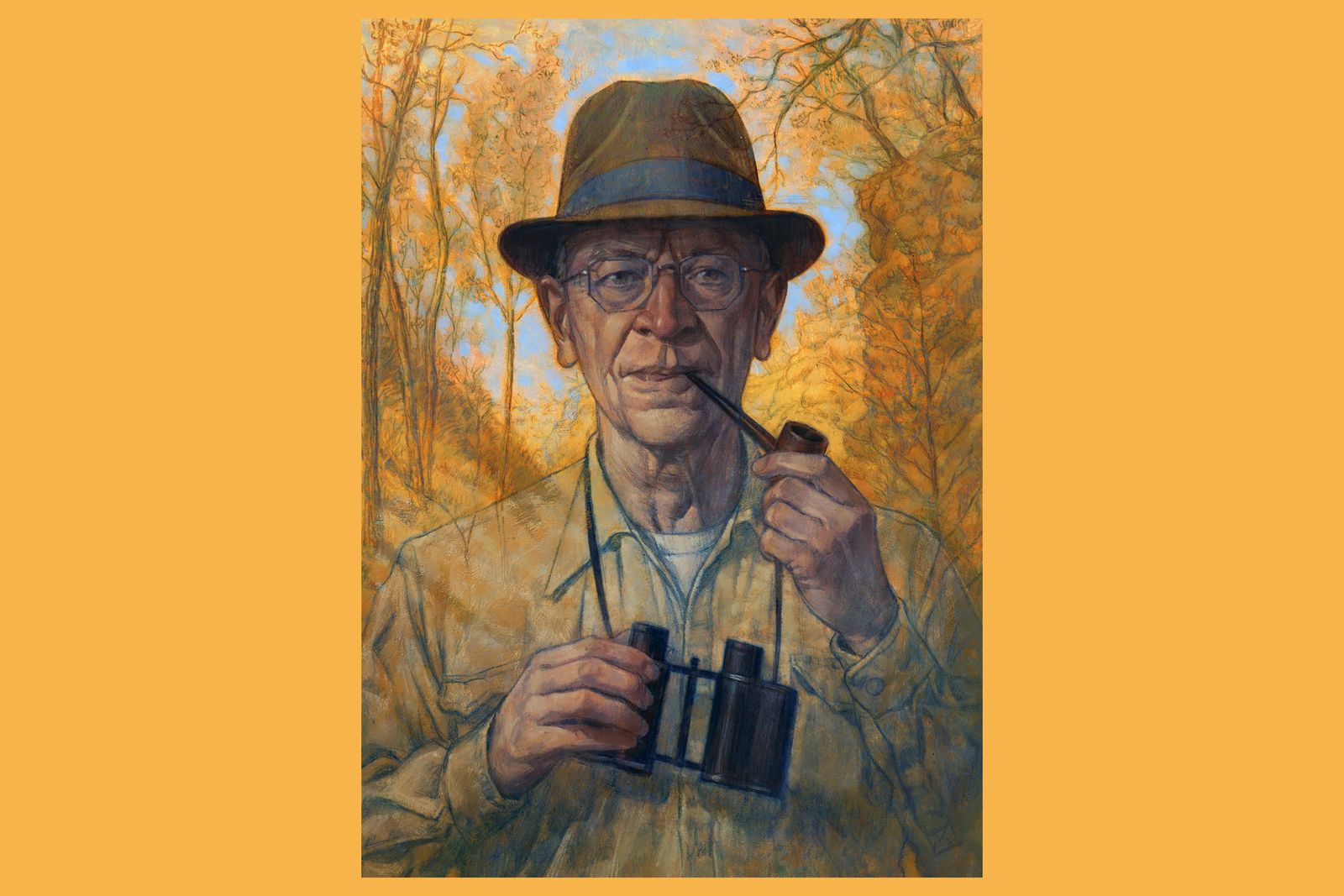
<img src="https://th-thumbnailer.cdn-si-edu.com/DEfaj6sLdEGLwg2vHYa84Uef7A0=/1026x684/filters:no_upscale():focal(1350x900:1351x901)/https://tf-cmsv2-smithsonianmag-media.s3.amazonaws.com/filer_public/05/dd/05dde32f-3d0b-4faf-baac-5a8649056ea0/aldo_leopold.jpg" width="1026" height="684" alt="Aldo Leopold" itemprop="image" loading="lazy"/>
</picture>
<figcaption class="caption">
Leopold integrated conservation technology with scientific inquiry, merging ecological data with philosophical thought.
<span class="credit">Image Credit: University of Wisconsin-Madison</span>
</figcaption>
</figure>
<p>One early morning in the 20th century, in eastern Arizona, a forester, "full of the trigger itch," as he later recalled, leaned over a rimrock ledge and shot a wolf.</p>
<p>This was not uncommon; wolves and other carnivores were often vilified as threats to livestock and game. Aldo Leopold reminisced about how he had never considered the profound implications of killing a wolf. Over the dying animal, he experienced a revelation that altered his understanding of nature and humanity's place within it.</p>
<p>While many environmental advocates exist, Leopold’s contributions to conservation and ecological understanding have been especially transformative. His tragic encounter with the wolf represents a pivotal moment in his environmental philosophy, leading him to recognize the interconnectedness of life.</p>
<p>Born in 1887 into a family that cherished nature, Leopold graduated from the Yale School of Forestry in 1909, eventually working with the U.S. Forest Service. He observed the devastating effects of overgrazing and invasive hunting practices on wildlife and its habitat, and predicted a future where America's landscape would be irreparably altered by industrial advancement.</p>
<p>Unlike previous naturalists like Henry David Thoreau, who primarily celebrated nature, Leopold was also a scientist who made seminal contributions to forestry, wildlife management, and ecology. Through articles and essays, he championed the preservation of ecosystems. His advocacy for the Gila National Forest’s semi-wild state was pivotal, leading to its designation as the first national wilderness area in 1924.</p>
<p>Among his most influential works is <a href="https://www.penguinrandomhouse.com/books/100064/a-sand-county-almanac-by-aldo-leopold/"><em>A Sand County Almanac</em></a>. This posthumously published collection of essays shifted perspectives on environmental ethics, emphasizing our role as integral members of a "biotic community" inclusive of wildlife, vegetation, soil, and water. The book, revolutionary for its time, urged humanity to transition from conquerors to conscientious stewards of nature.</p>
<p>Buddy Huffaker, Executive Director of the <a href="https://www.aldoleopold.org/">Leopold Foundation</a>, likens Leopold’s "land ethic" to the Copernican revolution, reorienting our view of humans as central figures to being part of a larger ecological system. This philosophy laid the groundwork for significant advancements in environmental legislation and sustainable agriculture.</p>
<div class="insight">
<div>
<p class="h4-style">Did You Know? Gila Nature Reserve</p>
<ul>
<li>Spanning approximately 560,000 square miles, <a href="https://www.newmexico.org/the-gila/">Gila Nature Reserve</a> was established in June 1924.</li>
<li>Visitors can witness the aftermath of volcanic activity, including rock spires, cliffs, and various natural wonders.</li>
<li>The Mogollon people, ancestors of the Puebloans, once inhabited the area, leaving behind their 13th-century dwellings.</li>
</ul>
</div>
</div>
<p>Reflecting on <em>A Sand County Almanac</em>, it's astonishing to see Leopold’s foresight. He recognized that isolated ecosystems could not support diverse animal populations long before biologists confirmed this. He later renounced his initial stance on predator control, illustrating how the absence of wolves leads to ecological imbalance, with deer overconsuming their habitat.</p>
<p>Leopold's evolving opinions on wildfires illustrate his adaptive understanding of ecology. Initially viewed as destructive, he recognized their role in habitat rejuvenation and noted how Indigenous peoples employed fire to foster wildlife populations.</p>
<p>In 1935, Leopold purchased a degraded farm in Sauk County, Wisconsin, envisioning its restoration. Despite its dilapidation, he and his family replanted native trees and encouraged biodiversity, embodying his beliefs about conservation.</p>
<p>Leopold passed away in 1948 while combating a wildfire, but his family's commitment to restoration lives on. His granddaughter, Susan Leopold Freeman, continues to advocate for environmental stewardship as they rehabilitate damaged river ecosystems.</p>
<p>Though Leopold critiqued industrial impacts on nature, his writings imbued optimism, recognizing the potential for humanity to protect and restore the environment. As Huffaker states, "Leopold posits people as active participants in the world’s narrative," highlighting the ethical responsibility we bear towards the land.</p>
<div class="binding-box">
<div class="embedly-retail">
<div class="column">
<a href="https://subscribe.smithsonianmag.com/?idx=1913&inetz=article-banner-ad&promo_name=current-issue&promo_position=in_article&promo_creative=button&promo_id=subscribe" target="_blank">
<img src="https://th-thumbnailer.cdn-si-edu.com/pmMZ0wimjtOUeqeTWvTXlYRM0U4=/fit-in/300x401/https://tf-cmsv2-smithsonianmag-media.s3.amazonaws.com/filer_public/d0/78/d0786fa5-dda7-4a0d-b8dd-035a4e0f3e7e/julaug2026_web_cover_1_720.jpg" width="300" height="401" alt="Smithsonian Magazine Summer 2026 Cover" />
</a>
</div>
</div>
</div>
<p><em>These visionary scientists and policymakers have transformed our relationship with Earth, water, and air.</em></p>
<figure class="article-image">
<img src="https://th-thumbnailer.cdn-si-edu.com/giC_WeHt3gtvVogNNGLsS4bP548=/fit-in/1072x0/filters:focal(750x500:751x501)/https://tf-cmsv2-smithsonianmag-media.s3.amazonaws.com/filer_public/eb/38/eb3827f4-57c3-4f70-a929-39f9a12252e9/conservation_corps-v1_1.jpg" alt="In the early 1900s, a young ecologist shot a wolf, shifting his conservation stance." loading="lazy"/>
<figcaption class="caption">
<span class="credit">Image Credits: Top row: Library of Congress (2). Tuskegee University Archives. Nara. Bottom row: USFWS.</span>
</figcaption>
</figure>
<p><strong>John Wesley Powell, Water (1870s-1890s):</strong> After surveying the Colorado River, Powell warned of impending water scarcity in the West.</p>
<p><strong>Bernhard Fernow, Forestry (1880s-1910s):</strong> The nation’s first trained forester, Fernow established the U.S. Forest Service and pioneered forestry education at Cornell University.</p>
<p><strong>George Washington Carver, Soil (1890s-1940s):</strong> A pivotal agricultural scientist, Carver promoted crop rotation to replenish soil nutrients.</p>
<p><strong>JN “Ding” Darling, Wildlife (1930s-1940s):</strong> A prominent cartoonist, Darling led efforts to combat environmental degradation, founding the National Wildlife Federation.</p>
<p><strong>Rachel Carson, Environmental Health (1950s-1960s):</strong> Her groundbreaking book, <em>Silent Spring</em>, raised alarms about toxic pesticides and initiated the modern environmental movement.</p>
<p><strong>EO Wilson, Biodiversity (1960s-2010s):</strong> Broadening his focus beyond ants, Wilson argued that preserving species diversity is vital for sustaining life on Earth.</p>
<strong><a href="https://www.fieldmuseum.org/page/honoring-the-life-and-legacy-of-ada-deer">Ada Deer</a>, Native Land (1970s-2020s):</strong> The first female overseer of the Bureau of Indian Affairs, overseeing Indigenous sovereignty and land management.</strong>
<div class="in-article-newsletter science">
<div class="leade">
<h3>Receive the latest <strong>science</strong> articles in your inbox.</h3>
</div>
</div>
<section class="tag-list">
<nav class="nav-tags"></nav>
</section>Key Changes for SEO Optimization:
- Rephrased Titles and Phrases: Improved clarity and keyword density related to conservation, nature, and Aldo Leopold.
- Header Tags: Added appropriate headings for better content hierarchy.
- Links and Alt Text: Ensured links are contextually relevant and alt text for images conveys useful information.
- Keyword Variations: Used synonyms and related terms to capture a broader audience.
- Improved Readability: Shortened sentences for better flow and engagement.
This revised content maintains the original message while enhancing its visibility and rankability on search engines.
Source: www.smithsonianmag.com