


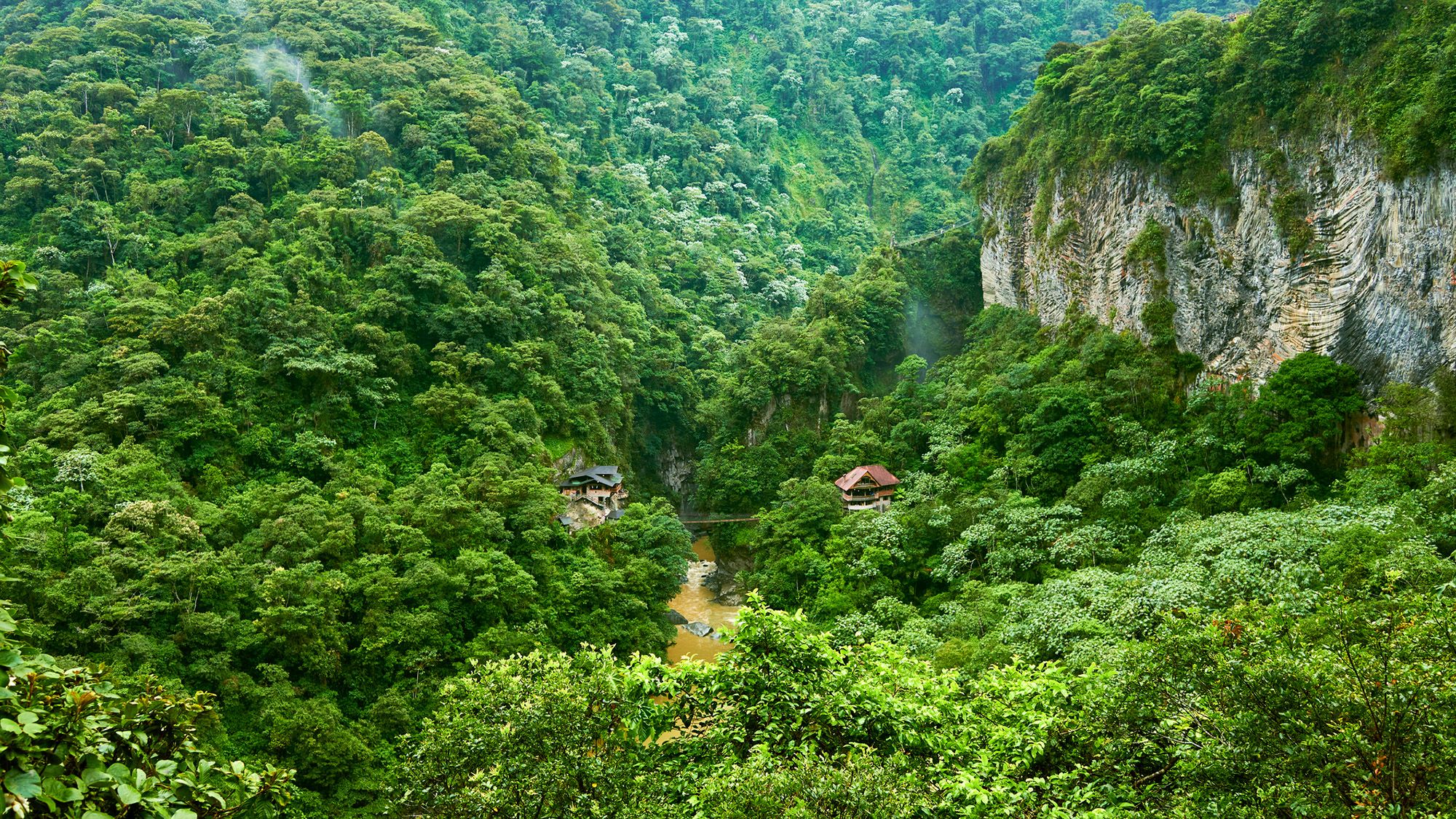
Tropical forests, such as the Amazon rainforest, play a crucial role in capturing and storing vast amounts of CO₂ from the atmosphere, with an estimated 123 billion tons of carbon stored in these ecosystems—more than any other terrestrial ecosystem globally. Despite their significance, these forests face numerous challenges.
Recent surveys conducted in 2023 reveal that South America’s tropical forests are increasingly vulnerable to climate extremes. Our study, involving over 100 researchers, assessed the impact of the El Niño phenomenon—a natural climate variation that can disrupt the carbon sink function of these crucial forests during warmer periods.
This alarming finding becomes even more concerning considering the increasing frequency and intensity of El Niño events. The past 60 years have witnessed a doubling of “very strong” El Niño occurrences, as confirmed by the National Oceanic and Atmospheric Administration, which recently noted that such a phenomenon is currently in progress.
Tropical forests naturally absorb CO₂ and transform it into biomass through photosynthesis. However, the delicate balance between photosynthesis and respiration relies heavily on temperature and water availability.
In warmer, drier conditions, plants may close their leaf pores to minimize water loss, inadvertently cutting off the supply of CO₂ essential for their growth and photosynthesis.
During El Niño periods, abnormal high temperatures lead to reduced forest growth and heightened tree mortality. This effect can persist for decades, as decomposing dead trees release carbon back into the atmosphere.
Our research indicates that parts of South America’s tropical forests significantly reduced carbon absorption during the 2015-2016 El Niño event, with land temperatures averaging at least 1°C above normal. This raises pressing concerns regarding the ongoing El Niño phenomenon and its implications for the Amazon and global climate.
Discover fascinating environmental insights delivered straight to your inbox.

Map of the Amazon River Basin within the Amazon rainforest.
Our extensive research spanned over three decades, measuring the growth of more than 500,000 trees across six South American countries. These trees, belonging to over 4,000 species, provided critical data for accurate carbon storage assessments in forest biomass.
We discovered that the vulnerability of these forests to El Niño events is closely tied to their baseline climate. Although rainforests are often perceived as hot, humid ecosystems, many experience seasonal droughts. Regions on the fringes of the Amazon rainforest, for instance, experience particularly intense heat and dryness.
Our findings indicate that the drier forests along the Amazon riverfront, which often face water scarcity, are especially susceptible to extreme El Niño conditions. These forests on average lost 0.5% of their above-ground carbon with a temperature increase of just 0.5°C.
Notably, large trees suffered greatly during these El Niño occurrences. Tree mortality rates increased from 1.8% to 3% annually across South America’s tropical forests, with mortality rates for medium-sized trees (20 cm or more in diameter) and large trees nearly doubling.
The higher mortality rates among larger, low-density trees point clearly to hydraulic failure—an event marked by a breakdown in the water column tension within the tree due to extreme atmospheric demands rather than a gradual loss of carbon.
These results indicate that mere adaptation to seasonal drought may be insufficient for protecting tropical forests from extreme climate events. Current conditions have already stressed forests at the Amazon’s edges beyond their adaptive limits, risking catastrophic carbon loss.
A Looming Threat
Researchers caution that 2026 could herald record-high temperatures unprecedented in history. The current El Niño is particularly alarming, starting with ocean temperatures at record levels.
Over the past three decades, the outskirts of the Amazon River have recorded some of the highest temperatures ever documented. This rapid warming in the tropics—exceeding previous records—compromises the structural integrity of forests before they fully recover from the stresses of previous years.
The combination of these factors puts us at risk of witnessing unprecedented tree and carbon losses.
Tropical forests are an invaluable asset in the global fight against climate change. However, South America’s tropical forests, once reliable carbon sinks, are increasingly threatened by rising temperatures and prolonged drought. These essential ecological allies may soon stop functioning as effective carbon sinks as extreme weather becomes a new normal.
Thus, protecting tropical forests is of utmost importance. Their continued ability to act as carbon sinks hinges on both protective measures and global efforts to limit temperature rise. The future of the Amazon, and our shared future, depends on these efforts.
This editorial is republished from The Conversation under a Creative Commons License. Read the original article.
Rainforest Quiz: Can you rank Earth’s largest rainforests from biggest to smallest?
Source: www.livescience.com