


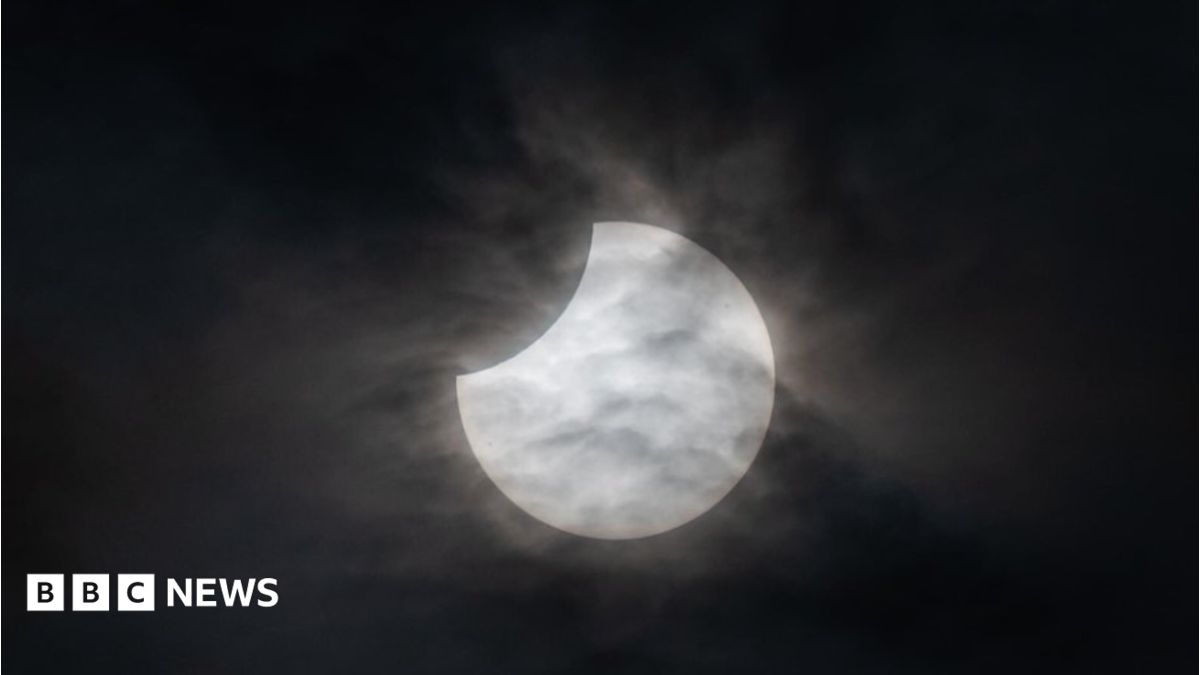
Astronomers are urging the public never to look directly at the Sun during a partial solar eclipse, as doing so can cause permanent eye damage.
Even when most of the Sun is obscured by the Moon, the remaining visible sunlight is still intense enough to harm the retina.
“The problem is that our retinas do not have pain receptors, so you will not know that you are damaging your eyes,” Nežič added.
For safe naked-eye viewing, people should use certified solar eclipse glasses. However, eclipse glasses must never be used while looking through binoculars or a telescope, unless the optical equipment has an appropriate solar filter fitted.
Further information about safe solar eclipse viewing can be found here.
Another safe option is to project an image of the Sun onto a white card using a telescope, a cereal-box pinhole viewer or even a kitchen colander. This allows people to observe the eclipse without looking directly at the Sun.
Astronomers also advise against pointing an unfiltered smartphone or digital camera directly at the Sun, as the intense light may damage the camera sensor.
“The only thing you can look at with the naked eye is a total solar eclipse, and there has not been one on Irish soil since 1724. Another total solar eclipse will not be visible from Ireland until September 2090,” added Astronomy Ireland’s David Moore.
Source: www.bbc.co.uk