


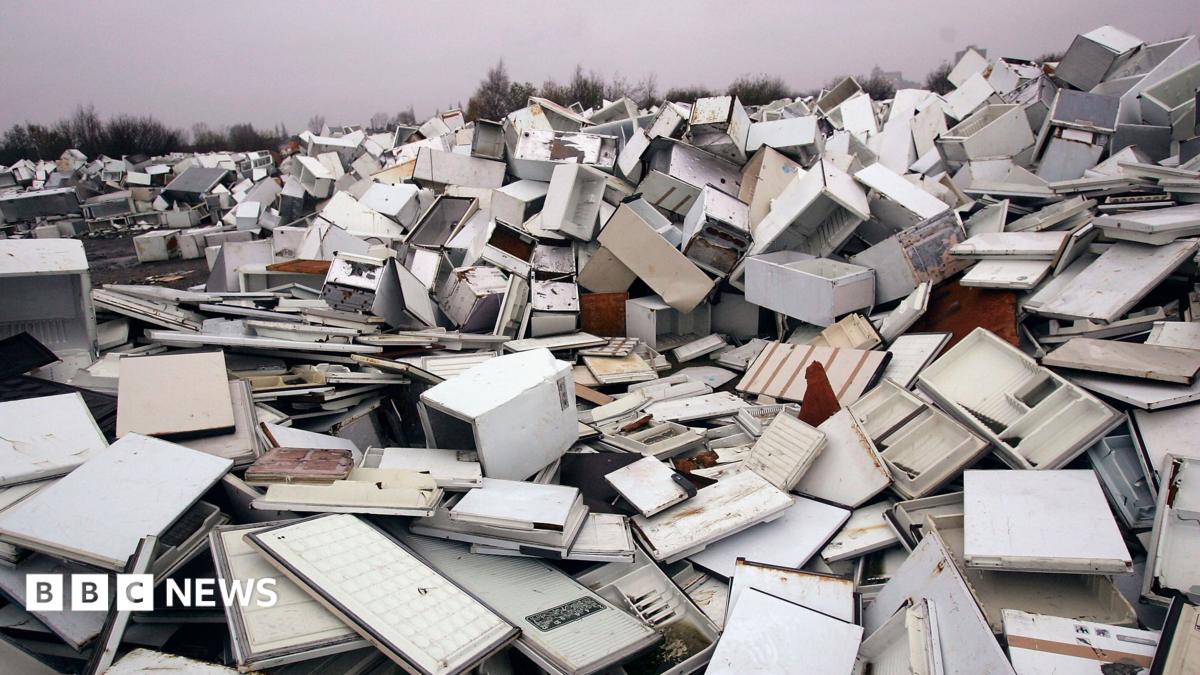
The UK is facing a growing fridge and freezer recycling crisis, with three of the country’s 10 full-scale treatment plants closing in the past 12 months. Refrigerators and freezers contain gases that can damage the environment, making professional dismantling and safe disposal essential.
The closures, caused by a fire, bankruptcy and the repurposing of one facility, have been worsened by this year’s heatwave. The remaining recycling plants cannot operate safely when temperatures rise above 30 degrees Celsius.
The Environmental Services Association, an industry body, said the closures had created a “sudden blowout in production capacity”. Its executive director, Jacob Hayler, said the UK’s fridge recycling infrastructure was under significant pressure.
“As a result, capacity has been limited nationwide until facilities are brought back online or new capacity is permitted and developed,” he said.
To meet demand, unwanted refrigerators from the UK are currently being exported to recycling facilities in Europe. Only one additional UK fridge processing plant is scheduled to open next year.
Funding for appliance recycling comes from manufacturers of white goods. These companies must register with a producer compliance system, report the annual tonnage of household appliances they sell and arrange for an equivalent weight of material to be collected and processed.
White goods recycling is managed by 15 producer compliance schemes. These organisations coordinate the collection, recycling and disposal of old appliances across the UK, increasingly relying on specialist processing plants in Europe.
The largest compliance scheme, not-for-profit organisation EcoGenesis, works with around 85 councils across the UK. It is supporting efforts to develop additional refrigeration recycling capacity and new treatment infrastructure.
EcoGenesis chief executive Graham Milne said European recycling facilities were only a temporary solution and that the UK needed greater long-term capacity. “The UK fridge recycling sector is facing extraordinary pressure this summer, but we expect the situation to start to ease once the seasonal peak has passed,” he said.
John Redmayne, managing director of the European Recycling Platform, said the UK was facing a “real capacity gap” in the recycling of old fridges. He added that industry estimates suggested the system could take six to 12 months to recover.
The capacity shortage comes as the Government launches a major crackdown on illegal waste dumping. Industry leaders fear that delays in white goods disposal could create a bottleneck and increase the risk of fridge and freezer fly-tipping.
Gavin Lane, chairman of the Country Land and Business Association, said finding an illegally dumped refrigerator in a field was a “nightmare for farmers”.
“It will cause hours of disruption, stress and potentially thousands in clean-up costs,” he said, urging the Government to improve the appliance collection and recycling system.
Kidlington landfill in Oxfordshire, one of England’s 11 recognised illegal waste “supersites”, was demolished this week at a cost of £6 million in public funds. The site had been used to dispose of approximately 22,000 tonnes of waste.
The Government is also targeting organised crime groups linked to hundreds of illegal dumping operations across the UK. Authorities are seizing assets purchased with criminal proceeds and increasing fines for illegal waste offences from £300 to £5,000.
Source: www.bbc.co.uk