


SpaceX and Amazon Leo Push for Satellite Data Sharing to Improve Space Safety
SpaceX and Amazon Leo are calling for broader satellite data sharing to help prevent collisions and promote a safer driving environment in orbit. The discussion includes sharing information among satellite operators and across national borders.
“My basic question here is, we need to move forward here and start sharing data across all our vehicles, with us and with other countries, wherever they are, to promote a safe driving environment,” Nichols said.
Almost all satellite operators in China refuse to publicly share their satellite ephemeris data.
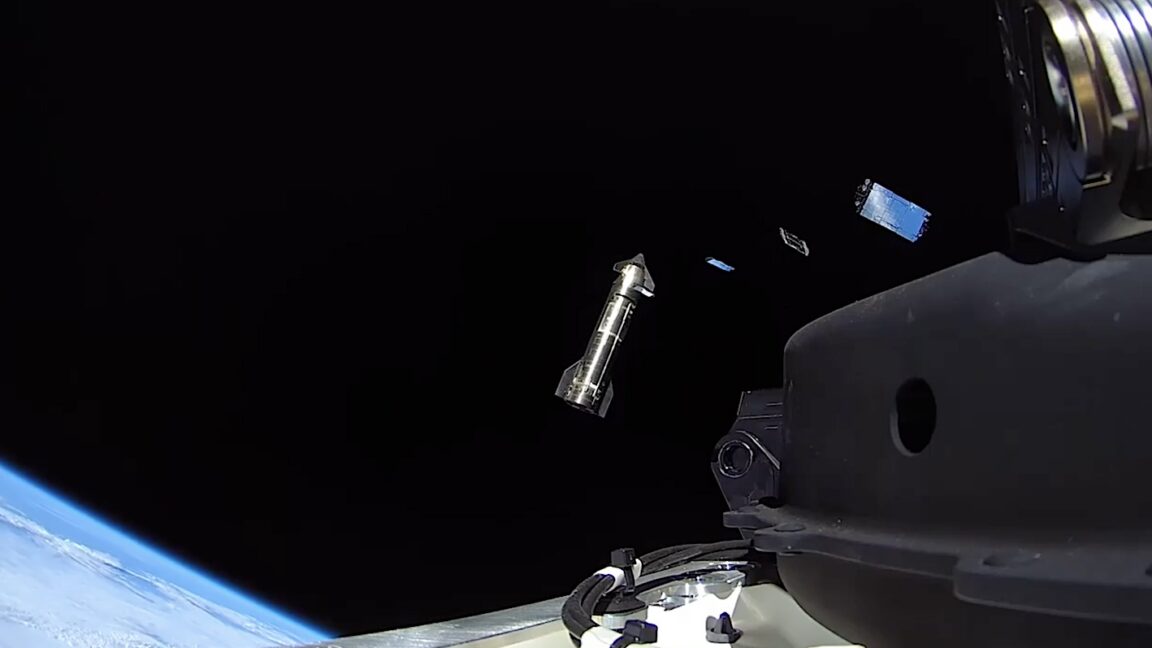
Credit: SpaceX
Amazon Leo coordinates with SpaceX on satellite safety
Amazon Leo is SpaceX’s main competitor in the satellite broadband market. The company currently has 396 satellites in orbit, with hundreds more awaiting rocket launches.
Ars asked Rajeev Badyal, head of Amazon Leo, about coordination between the two companies.
“Space safety is a top priority for us,” Badyal said. “Every time we do a launch, we’re actually coordinating with SpaceX. We’re coordinating with other companies that have satellites. We tell them where we’re going to drop them off, how we’re going to raise them into orbit, etc. So we meet regularly with companies like SpaceX to exchange data.”
“So for us, sharing ephemerides and sharing information necessary for space security is not an issue,” Badyal said. “We are strong proponents of allowing everyone to work together in this area of space. The consequences of not doing so are significant for everyone, and there is no reason not to do so.”
Amazon plans a much larger satellite constellation
Amazon Leo’s first-generation constellation consists of 3,232 satellites. In February, the Federal Communications Commission approved Amazon’s request for a second-generation network of 4,504 satellites.
Amazon has also applied for FCC approval for an additional 5,105 satellites designed to provide direct connectivity to devices. The company, however, remains far from matching the size of SpaceX’s Starlink fleet.
Satellite operators face growing coordination challenges
“Clearly SpaceX is the largest group of companies in the world,” Badyal said. “We are working hand in hand with them. Regarding China and adversaries, I cannot comment at this time. At some point we will have to adjust, otherwise it will be negative for everyone, especially at scale.”
The companies’ comments highlight the growing importance of sharing satellite ephemeris data—information about an object’s position and movement—as satellite constellations expand and more operators compete for space in orbit.
Source: arstechnica.com