


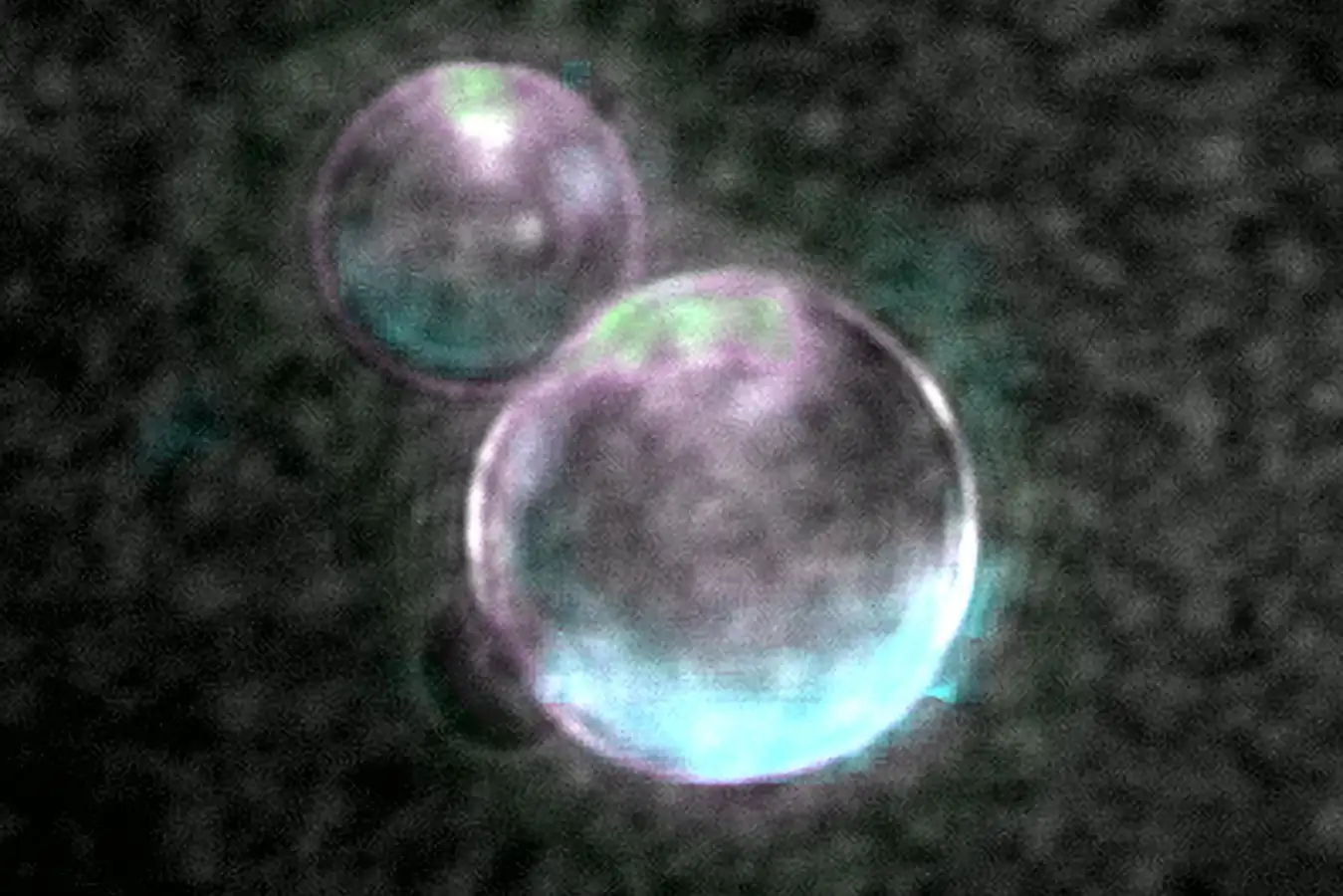

Discover SpudCell: The First Synthetic Cell System that Completes a Full Cell Cycle
Credit: Orion Venero, Adamara Institute
‘SpudCell’ represents a significant breakthrough in the field of synthetic biology. The excitement around this innovation is largely justified. While it is a cell by definition, it may not fit the typical criteria of a living cell. SpudCell possesses 36 genes that enable basic DNA replication, but it relies heavily on external factors for sustenance and viability, typically failing after approximately five divisions. This achievement, however, surpasses previous attempts by other teams, marking it as a monumental success in bioengineering.
Creator Kate Adamara and her team at the University of Missouri are open-sourcing the SpudCell project, inviting further development and exploration. Here’s everything you need to know:
What is a SpudCell?
The creation of SpudCell is a significant step toward generating microscopic life forms with fully understood functions. Previous efforts in this realm focused on stripping genes from existing bacterial cells—which already have limited genomes. For instance, a 2016 project reduced the genes in a bacterium from 901 to just 493. Contrarily, Adamara’s team initiated their work with only 36 genes derived mainly from Escherichia coli, supplemented by genes from phage viruses and fluorescent proteins from jellyfish for cell visualization.
Is it a Life Form?
While SpudCell exhibits some characteristics of living cells—such as gene replication and division—it does so imperfectly and requires substantial external assistance. Researchers have observed evolutionary principles at play, with beneficial mutations improving functionality. However, these mutations must be introduced artificially. “If it could reproduce indefinitely and undergo Darwinian evolution, I might accept that it’s living,” Adamara states.
Are These Synthetic Cells?
The classification depends on one’s definitions. In one sense, SpudCell qualifies as a synthetic cell because it is laboratory-assembled and performs some cellular functions. However, rather than being created entirely from scratch, it builds upon existing cellular components, primarily featuring 36 genes along with a few added viral and jellyfish components, making it akin to a streamlined version of Escherichia coli.
Assembly Process
The assembly process involved engineering 36 genes into seven circular DNA segments. These were replicated and placed in a solution containing essential building blocks such as DNA, protein precursors, and lipids that naturally formed cell-like structures. Ultimately, some of these structures encapsulated all seven genomic components.
Two genes within SpudCell facilitate its survival by coding for proteins that create pores in its membrane, enabling selective molecule entry. Larger molecules are delivered via small bubbles that merge with the cells, supplying all necessary biological building blocks, as SpudCells cannot synthesize these independently.
Cell Division Mechanism
Researchers incorporated a large protein into the solution that adheres to a specific protein pore in the membrane. Collisions for spatial occupancy lead the membrane to bend, prompting certain SpudCells to bud off and form independent bubbles. This process does not yield equal partitions, often resulting in daughter cells that lack complete genetic sets.
Why Not Use a Single DNA Strand for All Genes?
Opting for individual DNA segments, while complex, facilitates easier management of the synthetic cell. “Using a single extensive genome certainly has its benefits, but the challenges in manipulation are significant,” Adamara explains.

SpudCell Stained with Lipid Dye, Showcasing Its Red Membrane
Credit: Orion Venero, Adamara Institute
Why Does SpudCell Cease Activity After Approximately Five Divisions?
The exact reasons remain elusive; however, it is apparent that SpudCell cannot manufacture its own protein-producing machinery, or ribosomes, and thus must rely on external sources. “We hypothesize that a malfunction in ribosomes might be responsible for the cessation of cell division,” Adamara speculates, adding that a solution could be achievable in the near future.
What Was the Motivation Behind Creating SpudCell?
“Our vision is to harness living biology to produce all petrochemicals, thereby reducing our dependency on oil, with significant climate and social benefits in mind,” Adamara explains. Virtually every chemical we depend on, from plastics to pesticides, is derived from petroleum. Many of these substances are toxic and detrimental to the cells that produce them. However, synthetic cells like SpudCell could be engineered to tolerate these chemicals.
Is There Any Danger Involved?
No, SpudCell is akin to a benign Frankenstein’s monster that requires constant sustenance to function. There’s minimal risk of it spiraling out of control. Even in a hypothetical scenario where it could function autonomously, its survival outside laboratory conditions seems improbable, especially since wild bacteria pose a far greater risk.
Topics:
Source: www.newscientist.com