


Stone Age Burial Found in Roman Cemetery in Poland With Human Skulls, Animal-Tooth Necklace and Battle Axe
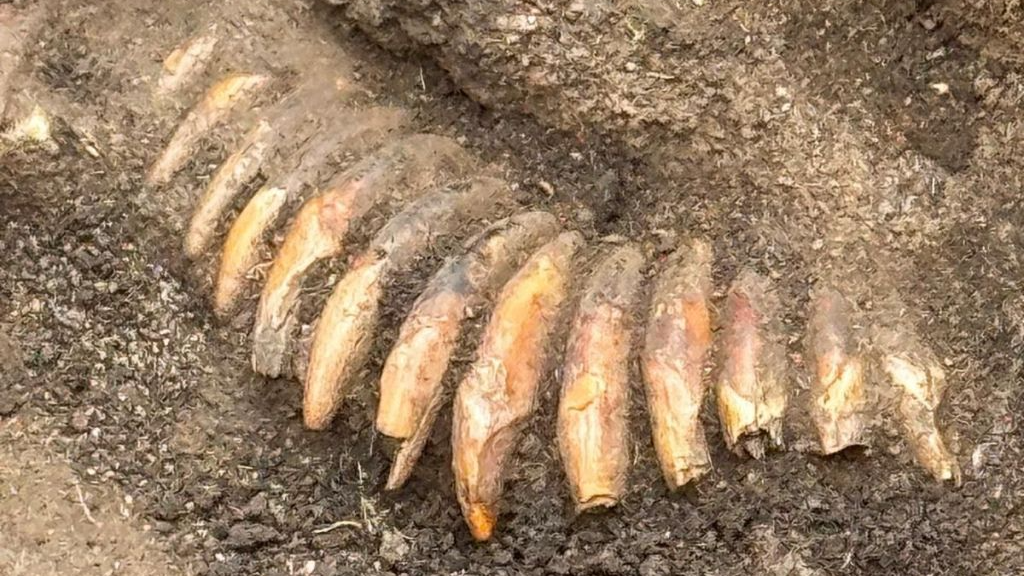
Archaeologists excavating a Roman cemetery near Wrocław, southwestern Poland, have uncovered an extraordinary Stone Age burial. The grave contained the nearly complete skeleton of an adult man, two human skulls believed to have been decapitated, a necklace made from 42 mammal teeth, amber beads, a flint blade and a serpentine battle axe.
“We were almost packing up when we spotted a circular shape in the ground and started digging,” Paweł Dębrowski, a biological anthropologist at Wrocław Medical University, said in a translated September 2 statement. “We found a necklace made from very well-preserved animal teeth.”
The Stone Age grave was located close to a Roman cemetery, but the burial is approximately 3,000 years older. The shape of the serpentine axe indicates that the man was buried during the mid-Neolithic period, around 2900 B.C., according to researchers.
Latest videos fromLive Science
Although Stone Age burials containing tools and ornaments have been found in the region before, this grave is particularly unusual because of the rare combination of human remains, animal teeth and weapons.
Archaeologists found a stone axe beneath the skeleton’s right elbow, along with a tooth from another human skull.
(Image source: Wrocław Medical University)
Researchers found that the 42 teeth had been carefully arranged and drilled through their roots, suggesting that they once formed a necklace or other ceremonial ornament.
The necklace included incisors and canine teeth from large mammals, including wolves, deer and bears. Some of the teeth may also have come from humans, according to Dębrowski in a translated September 4 statement.
“It is possible that we found the grave of a warrior or hunter,” Dębrowski said. “However, the necklace suggests that this individual may have held an important position, such as a clan leader.”
The burial also contained the remains of two human skulls. Archaeologists suspect that the skulls may represent severed heads placed in the grave as offerings, although additional analysis is needed to confirm whether decapitation occurred.
The discovery resembles other elite Stone Age burials found near Wrocław. Those graves contained axes, flint tools and amber beads. In one nearby burial, the bones of a calf suggested that the animal may have been sacrificed as part of the funeral ceremony.
Only two burials of this type have been identified in the area so far. Researchers believe they may be connected to the Corded Ware culture, a prehistoric society that spread across much of Europe and Asia and is associated with the movement of early Indo-European languages.
Researchers will next analyze the remains from both Stone Age burials to determine whether the individuals were related and to learn more about their health, origins and daily lives approximately 5,000 years ago. The first results are expected later this year.
How much do you know about the Paleolithic, Mesolithic and Neolithic periods? Test your knowledge with our Stone Age quiz.
Source: www.livescience.com