


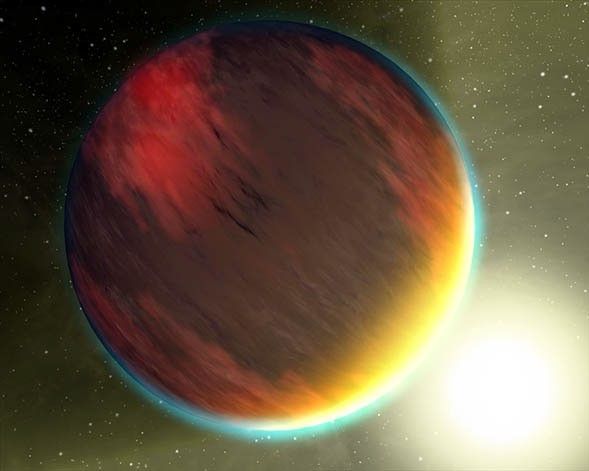
Most of the gas in the universe consists of a mixture of hydrogen and helium. It’s believed that the early atmospheres of most planets also originated in a similar fashion. However, over billions of years, planets undergo evolution, leading to changes in their atmospheric composition. Hydrogen can react with other elements, and both hydrogen and helium may escape into space. Notably, Venus, Earth, and Mars are considered to have developed second atmospheres, having lost or altered their initial hydrogen/helium envelopes.
The mechanisms behind atmospheric loss are intricate. Lighter elements tend to be more susceptible to escape, yet hydrogen can find protection by forming compounds like methane and ammonia. The gravitational pull of a planet can assist in retaining certain molecules, while magnetic fields can restrict radiation from stripping matter away from the atmosphere. Additionally, proximity to the star plays a crucial role, as the radiation emitted can heat the atmosphere to the extent that gravity becomes less effective at holding it in place.
Given these complexities, predicting atmospheric conditions on exoplanets is challenging. However, a recent study published in Nature reveals observations of helium loss from the atmosphere of an exoplanet orbiting the star LHS 1140, located approximately 50 light-years away. Analyzing the rate of helium loss allows us to infer certain characteristics about the remaining atmosphere.
Exploring the Atmosphere
LHS 1140a is a red dwarf star with two known planets in its orbit. One of these, LHS 1140c, is positioned close to the star and completes an orbit in less than four days, receiving about five times the radiation that Earth receives from the Sun. The second planet, LHS 1140b, orbits much further away, taking nearly 25 days to complete its orbit, making it much closer to its host star than Mercury is to the Sun. Notably, since LHS 1140a is a dim star, LHS 1140c receives less than half the amount of light that Earth does from our Sun.
Source: arstechnica.com