


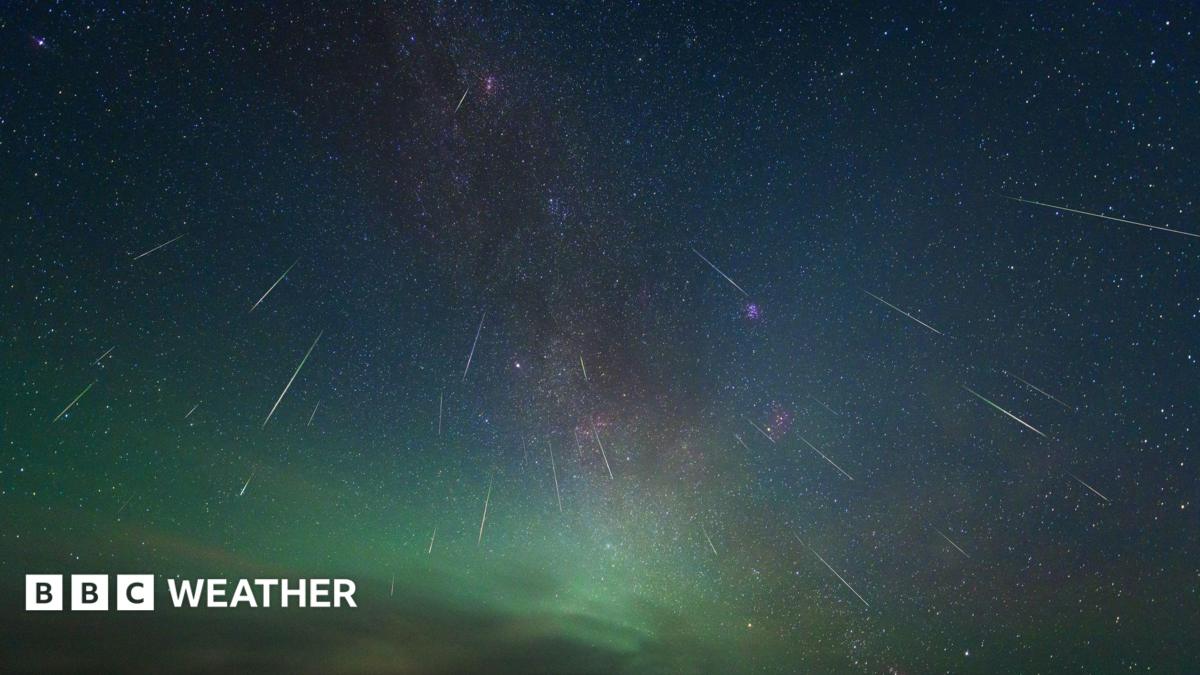
Meteor showers take place when debris from a comet or asteroid enters Earth’s atmosphere, creating a spectacular display in the night sky.
These tiny particles, roughly the size of a grain of sand, incinerate upon atmospheric entry, producing dazzling streaks of light known as meteors.
The densest regions of the dust trail yield the most meteors, resulting in a breathtaking visual experience for skywatchers.
One of the most renowned meteor showers is the Perseid meteor shower, where enthusiasts can witness up to 150 meteors per hour during its peak occurrence.
This celestial event is especially noted for its stunning “fireball” meteors, which captivate observers.
To catch the best views, stargazers should identify the radiant point in the sky, where the meteors appear to emanate.
For the Perseids, this radiant is located in the constellation Perseus.
Source: www.bbc.co.uk