



Vikings Were More Than Raiders: What Archaeology Reveals About Life in the Viking Age
From female warriors and merchants to enslaved people, Sámi hunters and Scandinavian mercenaries in Byzantium, the Viking Age was shaped by far more than violence and plunder.
In the early medieval period, the Vikings were only one part of a vast and diverse Scandinavian world. People from the region ruled, sailed, traded and fought across an area stretching from North America to Asia.
In his new book, The Sea-King and the Sorceress: Life and Death in the Viking Age (Basic Books, 2026), Neil Price, professor and chair of archaeology at Uppsala University in Sweden, explores the people behind the familiar Viking stereotype.
Price examines more than 20 Viking Age burials, focusing on the details that reveal how individuals lived and died. His subjects include enslaved people known as thralls, a woman buried with war-grade weapons in Sweden, a powerful sorceress in Denmark and an elderly matriarch whose children created a local empire in Sweden.
The Viking Age is often dated from A.D. 793 to 1066, but Price argues that the era cannot be reduced to a single raid or a simple story of male warriors. In an interview with Live Science, he discussed what archaeology reveals about Viking Age women, children, religion, slavery, the Sámi, the Rus’ and the Scandinavian mercenaries who served in Byzantium.
Were all Scandinavians in the Viking Age actually Vikings?
Laura Geggel: The Vikings are often portrayed as brutish and bloodthirsty pillagers. Why did you want to focus on the wider diversity of people who lived during the Viking Age?
Neil Price: The cliché of the Vikings as barbarian raiders who burned churches and frightened the English is very persistent. Those raiders certainly existed, but they were only a tiny minority of the Scandinavian population.
I wanted to bring out all the different kinds of Viking lives. The book is divided into chapters, each focusing on a different kind of person: a farmer, an ambassador, someone who uses magic or a hunter. The raiding and pillaging Viking takes a while to appear.
The word “Viking” itself comes from the Old Norse word víkingr. It was essentially a job description, meaning something like “pirate.” It described maritime robbery involving violence, rather than a particular people.
If we could go back in time and tell people in Scandinavia that they were all Vikings, they would be astonished. “Viking” is a collective name that we applied to them later. It really began to be used in this broader sense in the 19th century.
“It was a job description. It means something like pirate — not necessarily negatively.”
— Neil Price, archaeologist
The Viking Age may have started before the raid on Lindisfarne
LG: Your book begins with a sea-king and his crew, who were buried with swords and shields in boats in Estonia. The Viking Age is traditionally said to have begun with the A.D. 793 raid on Lindisfarne in the United Kingdom. Why does the Estonian burial suggest an earlier beginning?
NP: When I began studying the Vikings in the early 1980s, the Viking Age was said to have started on June 8, 793, with the raid on Lindisfarne.
Obviously, it is absurd to say that an entire historical period began on one afternoon. We are really talking about social processes that developed over a long period.
The remains from Salme, on the Estonian coast, are particularly interesting because they appear to preserve evidence of a raid. They date to around A.D. 750, decades before Lindisfarne, and they point east rather than west.
That pushes raiding behavior earlier and changes our understanding of its direction. Even then, the Scandinavians buried at Salme should not be viewed as the first Vikings. Scandinavians had been raiding in different places for generations.
Women held powerful roles in Viking society
LG: The Viking Age is often associated with male warriors. What roles did women hold that many people might not know about?
NP: When people think about Norse religion, they usually think about the gods: Thor, Odin and Freya. But local spirits, creatures and elves were probably much more present in everyday life.
People needed to negotiate with these supernatural forces. If they failed, their cattle might die, their crops might fail or they could become ill. The practice we might call sorcery or magic was therefore a powerful and prominent role in society, and it was very much associated with women.
Women could also take on many roles conventionally assigned to men. Some women conducted trade, owned property and invested in business ventures. There were also some female Vikings in the literal sense: women who took part in raiding or other activities associated with the word víkingr.
When Price began studying the Vikings, women were often treated as a single display case in museum exhibitions. That has changed. Researchers are increasingly examining Viking Age women as half of the population rather than assuming that the people being studied were male by default.
“Getting in contact with that world of supernatural creatures and forces and powers — or whatever we call them — was something that was very much in the domain of women.”
— Neil Price, archaeologist
The merchant and warrior women of Birka
LG: Your book discusses two remarkable women from Birka: a merchant and a possible warrior. What can their burials tell us?
NP: Birka was Sweden’s first urban center, a large settlement surrounded by burial mounds. Its cemetery contains around 5,000 mounds.
The merchant woman was buried around the 840s, when urban identity was still emerging. Most people had been raised in rural communities, but towns created a new way of life. This woman appears to have been one of the people who identified with that new urban world.
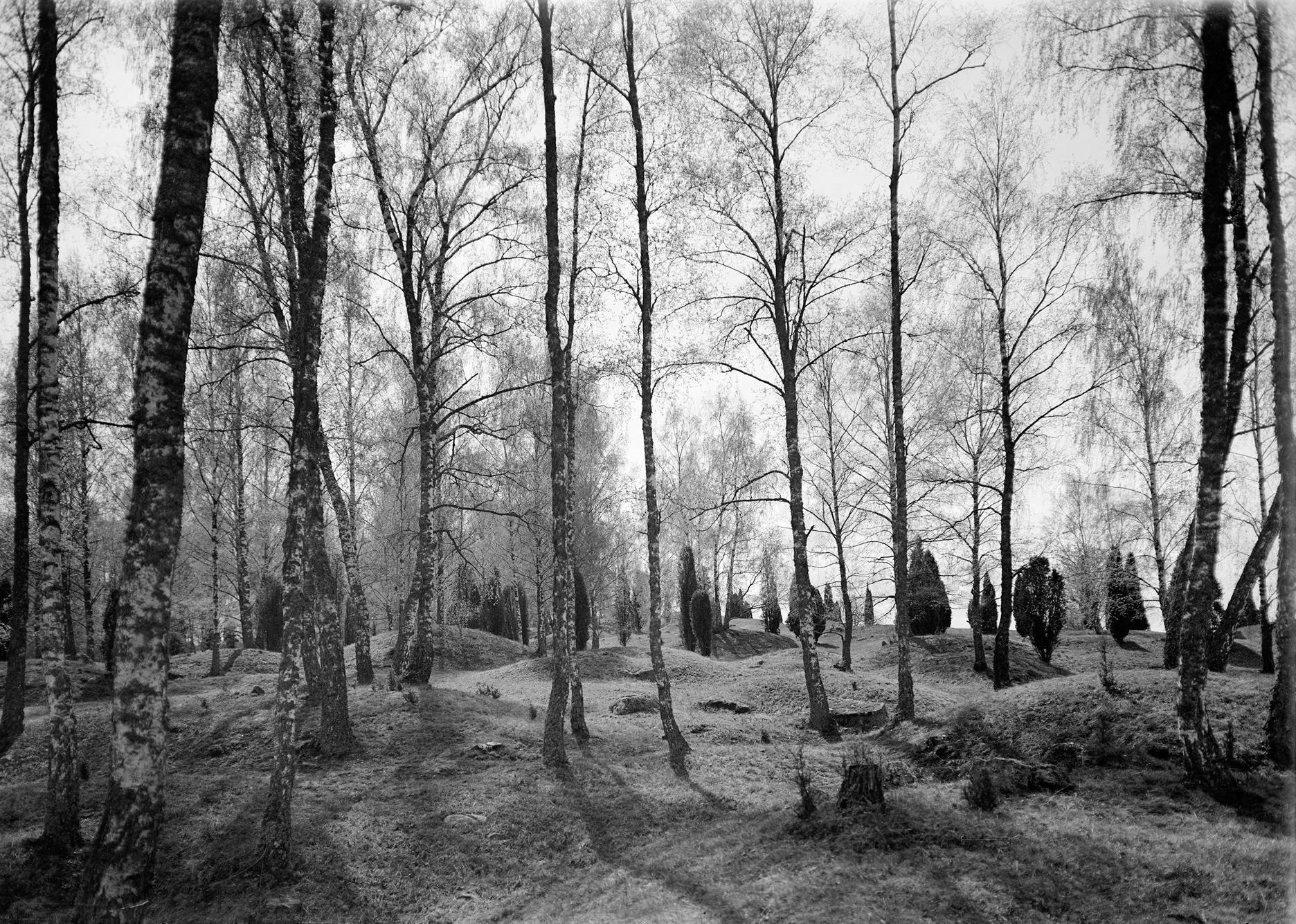
Objects in her grave came from across the western Viking world, possibly as loot from raids. The contents also suggest that she may have been a merchant in her own right, perhaps dealing in textiles. She may have run a business in Birka, importing textiles or arranging for them to be made.
The warrior burial dates from about a century later, when Birka had grown into a powerful and highly militarized settlement. The town had a defensive wall, a fortress and a garrison building partly made from weapons. Nearby graves contained many weapons.
It is tempting to assume that a burial containing weapons belonged to a warrior. However, that is an interpretation. We cannot always be certain that the objects buried with someone were their possessions.
This particular grave is unusually rich in weapons. Of the approximately 1,100 excavated burials at Birka, only two contained a complete set of weapons. Excavated in the 1870s, the grave was repeatedly presented as the burial of the “ultimate Viking.” Because of assumptions about gender, the person was long believed to be male.
Between 2011 and 2017, osteological studies of the bones followed by DNA analysis confirmed that the person was female. The findings supported the interpretation that she may have been a warrior, although the burial record does not provide absolute certainty about every aspect of her life.
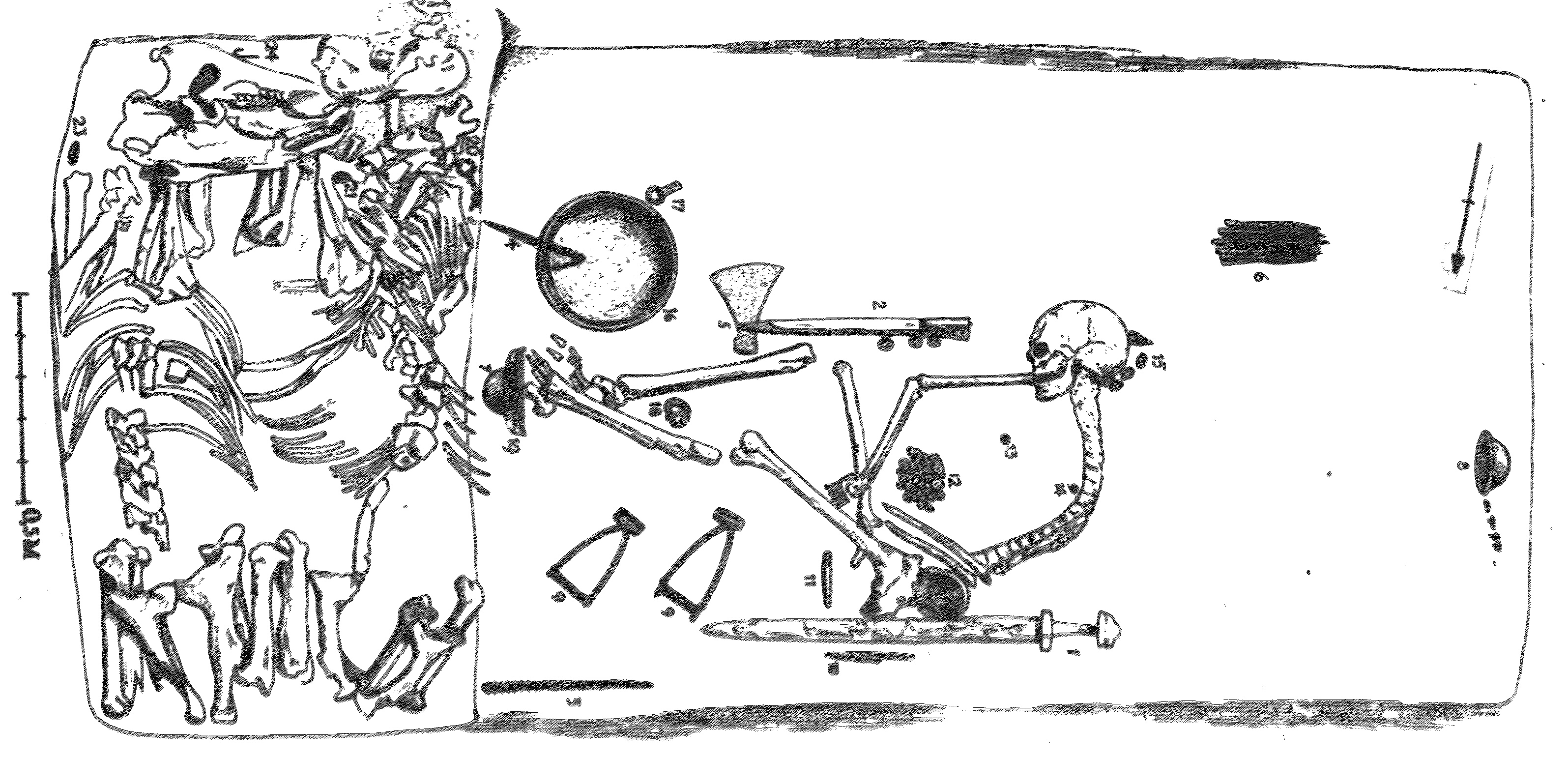
The discovery prompted an intense backlash. It also demonstrated the importance of treating archaeological interpretations carefully. A person may have been a warrior at 18 and lived until 70. The weapons in a grave might represent an earlier period of life, a reputation or someone else’s decision about how they should be remembered.
Burials rarely provide an unquestionable record of a person’s entire life. They do, however, show that Viking Age society included many different kinds of people.
What bear burials reveal about the Sámi
LG: You also describe a Sámi burial of a bear that had been killed and eaten. What do we know about these burials?
NP: The Sámi regarded the bear as a sacred animal, even though it was also an important source of meat, fur and other useful materials.
The bear burial raises questions about personhood. In the Viking Age, not every human was necessarily regarded as a person, but not every person was human. Animals could be understood as sentient beings with personalities. People might converse with them, respect them and recognize their place in the world.
The Sámi buried hunted bears with tremendous respect, partly to ensure that the bear would return from the spirit world as another bear. In this way, the cycle of hunting and life could continue.
Thralls and the difficult archaeology of Viking Age slavery
LG: What archaeological evidence exists for thralls, the people enslaved by the Norse?
NP: We do not always know whether enslaved people received burials of their own. Slavery, or thralldom, was central to the Norse economy, yet enslaved people have been neglected in many studies.
It is extremely difficult to identify an enslaved person in the archaeological record. Unless someone was buried in chains or with other unmistakable evidence, status is hard to determine.
In some burials, an additional body appears to have been treated very differently from the primary occupant. The person may have had their hands tied or may have been decapitated, suggesting that they were killed during the funeral. Such individuals were not necessarily enslaved; they could also have been prisoners or criminals.
More recent research has examined the diets of people killed during funerals using isotopes. Isotopes are variations of chemical elements that can be incorporated into bones and teeth through food and water. In some cases, these individuals had a much poorer diet than other people, suggesting lower status and inadequate nutrition.
The evidence therefore indicates that some of these people may have been enslaved, although archaeology cannot identify every case with certainty.
Childhood and child mortality in Scandinavia
LG: What was it like to grow up during the Viking Age?
NP: The first thing to remember is that many people did not survive childhood. Estimates are difficult, but probably fewer than half the population lived past the age of 10. Child mortality was extremely high.
Almost every family would have lost children. That must have had enormous psychological and emotional effects, although it is difficult to know how people coped with such widespread loss.
There are fewer child burials than might be expected. Some written sources suggest that dead children were effectively discarded. This may have been connected with the idea that children did not become “full people” until they reached a certain age, but the reason remains uncertain.
When children were buried, they were often accompanied by scaled-down versions of adult possessions. Girls might be buried with smaller versions of women’s jewelry. Settlement sites have also produced toys, including dolls, wooden animals, a horse on wheels and many small wooden boats.
Children seem to have reached maturity between approximately 14 and 16. After that, they were considered adults. Skeletal evidence also shows that many adults had suffered malnutrition during childhood. The proportion of adult women showing signs of childhood malnutrition is much higher than the proportion of men in a small but significant sample, suggesting that when food was scarce, boys were given priority.
“When we imagine the Viking Age or think back to it, remember that almost every single family will have lost children.”
— Neil Price, archaeologist
The Rus’ were traders, warriors and settlers
LG: Scandinavians settled in the Rus’, in what is now Ukraine. Were they traders, warriors or something else?
NP: They were a mixture of all those things. The identity of the Rus’ is one of the major questions of the Viking Age. They were once viewed simply as Vikings who traveled east, and there is some truth in that description.
At first, probably in the eighth or early ninth century, they seem to have been culturally Scandinavian. As they traveled along the eastern rivers, however, the Rus’ became increasingly diverse. The culture grew around an activity rather than belonging to one particular place or ethnic group.
They were armed traders who established settlements alongside local people and other newcomers. Over time, they were no longer simply outsiders; they lived in the region. Later in the Viking Age and into the Middle Ages, the Rus’ state developed with its capital at Kiev. Their reach extended across much of Eastern Europe and farther east.
What Viking runes on a Greek lion reveal about mercenaries
The Varangians were a subgroup of the Rus’: Scandinavians who entered the armies of Byzantium, the Eastern Roman Empire. They served as sought-after mercenaries and appear frequently in written sources.
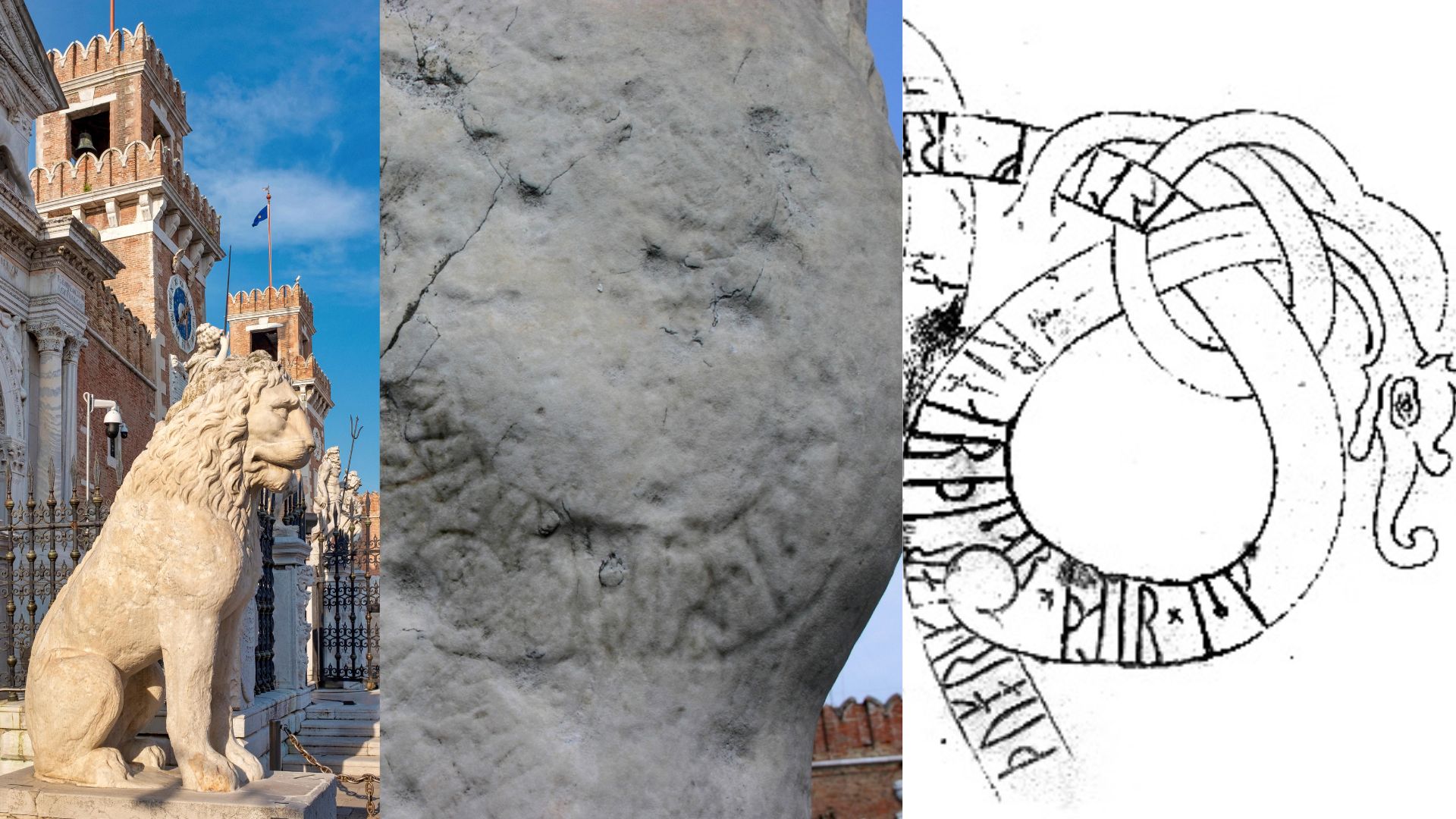
LG: You discuss Varangians who carved graffiti into a marble lion that is now in Venice. What do the runes say?
NP: The lion is much older than the Viking Age. It comes from classical antiquity and once stood in the harbor of Athens, at a place called Piraeus. It is now outside the Venetian Arsenal.
Three runic inscriptions were carved into the lion’s shoulders, legs and other areas. Two are fragmentary, but the largest is a memorial to a man called Haursi. The inscription calls him “Haursi the farmer,” emphasizing that someone could be a farmer while also serving for a time in an army in Greece.
The inscription was written by his friends or comrades. It says that Haursi was killed before he was paid, effectively telling his employers to pay what they owed him or his family.
Carving the message into the lion was a significant undertaking. It was not casual graffiti; the people making it needed time and control of the harbor. The inscription offers a vivid glimpse of Varangians stationed in Athens or waiting for a ship.
Viking Age people were individuals, not stereotypes
LG: What do you hope readers take away from your book?
NP: That the people of the Viking Age were more than the “actual Vikings.” They were individuals, every bit as varied and complicated as people today.
This interview has been condensed and edited lightly for clarity.
Read Neil Price’s book
The Sea-King and the Sorceress: Life and Death in the Viking Age draws on archaeological research and scientific analysis to explore the lives of people who lived during the Viking Age.
Source: www.livescience.com