


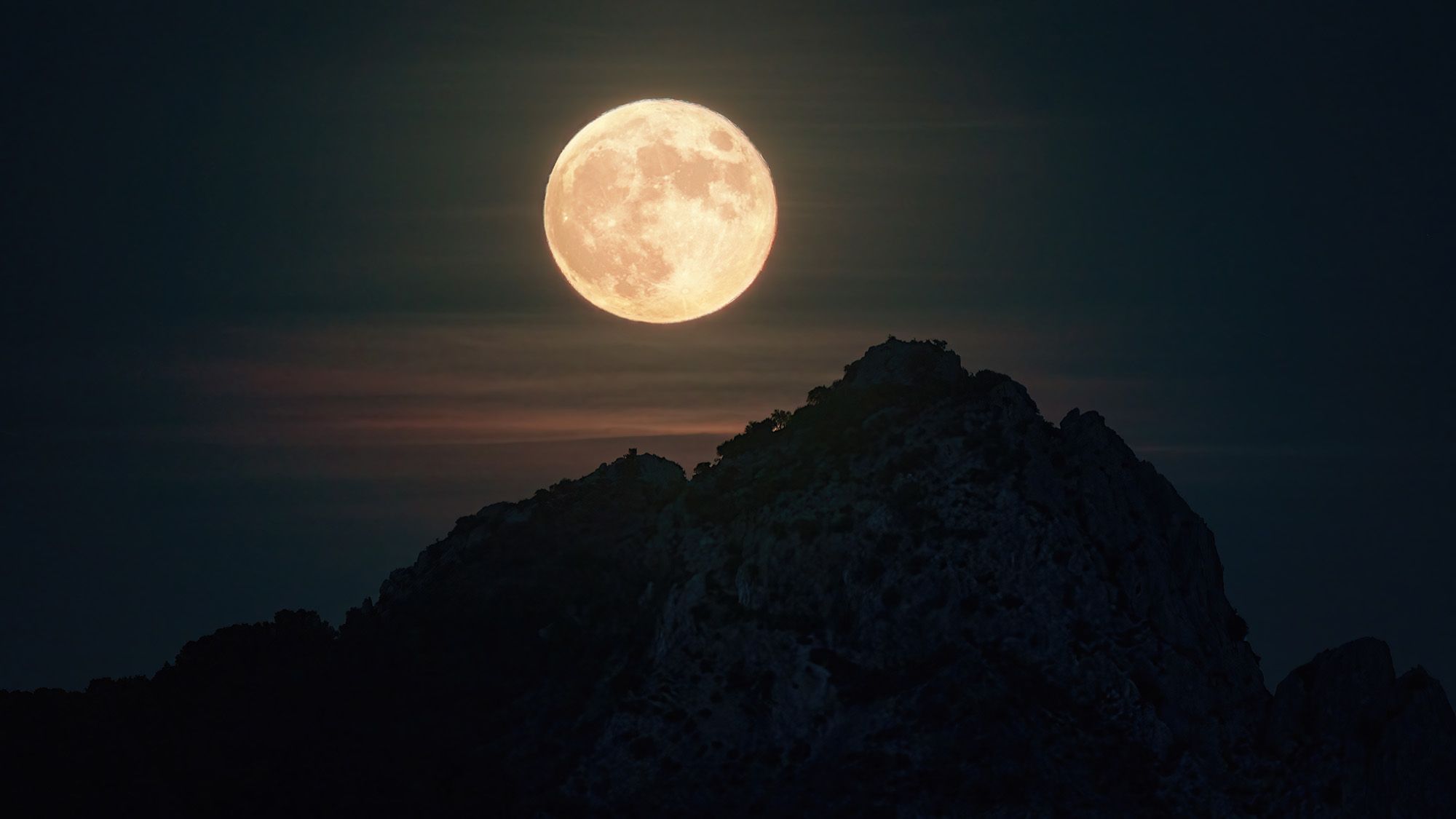
October’s full moon, known as the Hunter’s Moon, will offer skywatchers two good opportunities to see it rise above the eastern horizon around sunset. The Moon will be officially full at 12:11 a.m. EDT on Monday, October 26, but it will appear almost completely full on both Sunday, October 25, and Monday night.
When to see the Hunter’s Moon
The first opportunity will come shortly before sunset on Sunday, when an almost full Moon rises in the east. It will rise again just after sunset on Monday, when the sky is likely to be slightly darker and the view may be more dramatic.
On Sunday, the Moon will appear in Aries, with Saturn visible to its upper right. On Monday, it will rise above the Pleiades open star cluster, also known as M45.
For the best view on either evening, find a location with a clear, unobstructed view low on the eastern horizon and check the moonrise time where you are. Buildings, trees and hills can delay the moment the Moon becomes visible, so a high viewpoint, open field or coastline may provide better conditions.
Why it is called the Hunter’s Moon
October’s full Moon is called the Hunter’s Moon because it traditionally signaled that hunters should prepare for the coming cold winter by hunting, slaughtering and preserving meat, according to Time and Date. The name is Anglo-Saxon. Native American names for October’s full Moon include “Drying Rice Moon,” “Falling Leaves Moon” and “Freezing Moon.”
The full Moon is easy to appreciate with the naked eye. A backyard telescope or good stargazing binoculars can provide a closer view of lunar features.
Is the Hunter’s Moon a supermoon?
October’s Hunter’s Moon is not a supermoon, although it occurs shortly before four consecutive notable supermoons. The first of those full Moons will be the Beaver Moon on November 24, followed by full Moons in December, January and February.
A supermoon occurs when the Moon is relatively close to Earth in its slightly elliptical orbit, making it appear somewhat larger and brighter than average.
The Hunter’s Moon may also appear unusually large because of the “moon illusion,” a visual effect caused by a mistaken idea of how the brain uses distance to perceive size.
How much do you know about the Moon? Test your lunar knowledge with our monthly quiz.
Source: www.livescience.com