


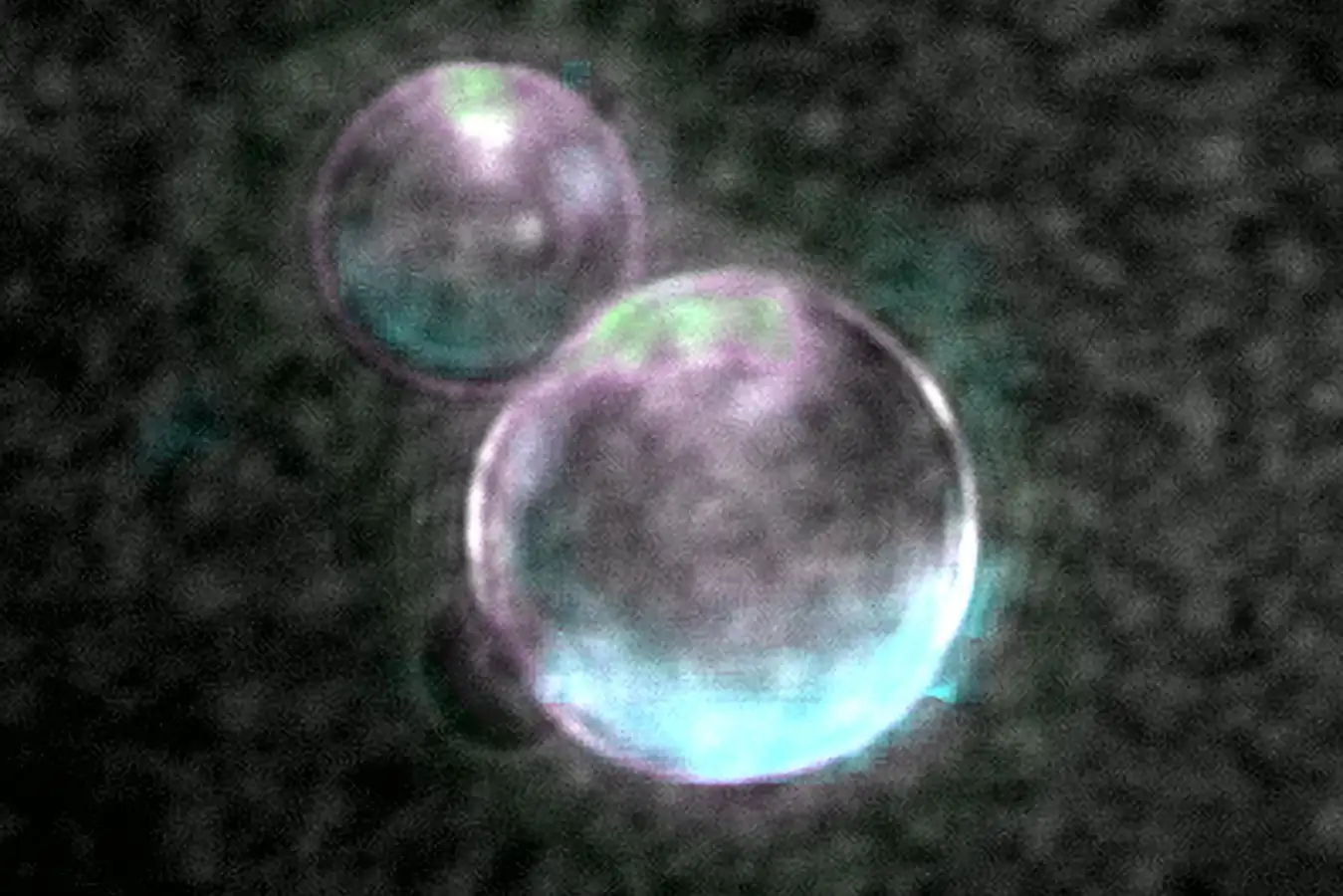
SpudCell: Pioneering Synthetic Biology
Orion Venero, Adamara Institute
‘SpudCell’ has been heralded by its creators as a significant breakthrough in the field of synthetic biology. While some of this acclaim is warranted, it is essential to note that while it constitutes a cell, it may not yet qualify as a living organism. The cell possesses 36 genes that facilitate a primitive form of DNA replication; however, it depends heavily on external support and ceases functioning after approximately five divisions. This achievement exceeds past capabilities, marking a paramount accomplishment in bioengineering.
Creator Kate Adamala and a team from the University of Minnesota have made the SpudCell project open-source, inviting further development and iteration. Here’s what you need to understand:
What is a Spud Cell?
The SpudCell project represents a significant leap toward designing microscopic life forms with fully understood functions. Previous endeavors included genetically reducing bacterial cells with diminutive genomes; for instance, in 2016, researchers stripped a bacterium of 901 genes, reducing it to only 493. In contrast, Adamala’s team began with a mere 36 genes, primarily sourced from Escherichia coli, along with segments derived from phage viruses and jellyfish proteins, which are beneficial for cell visualization.
Are Spud Cells Alive?
While SpudCells can perform some functions characteristic of living cells, such as gene replication and division, their efficiency is limited and heavily reliant on external inputs. Research has demonstrated the potential for evolution through deliberate mutations that enhance cell performance, yet these mutations were induced intentionally, not spontaneously. “If it could reproduce indefinitely and exhibit Darwinian evolution, I would consider it a living organism,” asserts Adamala.
Are They Truly Synthetic Cells?
The classification of SpudCells as synthetic cells hinges on definitions. They are synthesized in a laboratory and can perform certain cellular functions; however, they are constructed from existing cell parts rather than being entirely novel creations. Essentially, they can be viewed as a streamlined version of Escherichia coli integrated with additional viral and jellyfish components.
How Were They Assembled?
The researchers engineered the 36 genes into seven circular DNA fragments and produced multiple copies. These were placed in a solution containing essential elements for cellular function, such as DNA building blocks and fatty molecules that form cell-like structures. Some bubbles contained all seven genomic components.
The survival of the cell is maintained by two genes coding for proteins that create membrane pores, allowing the entry of various small molecules. Larger molecules are provided through tiny bubbles fusing with the cells. Consequently, the cells are dependent on external supplies for their fundamental building blocks.
How Do Cells Divide?
The research team introduced a large protein into the solution that binds to one of the protein pores protruding from the cell membrane. As these proteins collide, they induce the membrane to bend, leading to the budding of some SpudCells, forming new bubbles. However, this division does not evenly split, resulting in “daughter” cells that inherit randomly selected genes, resulting in many cells lacking a complete gene set.
Why Not Consolidate All Genes into One DNA Strand?
Although assembling all genes into a single DNA piece would ensure that daughter cells receive a complete genome, working with large DNA strains can be problematic. Once a suitable genome is created, following a singular large piece becomes essential, explains Adamala.

SpudCell with its membrane stained red with lipid dye
Orion Venero, Adamara Institute
Why Do Cells Cease Functioning After Approximately Five Divisions?
The precise reason remains uncertain; however, it is suggested that the cells lack the ability to create their own ribosomes or protein factories, necessitating external supplies for their sustenance. Adamala speculates that malfunctioning ribosomes could be the underlying cause for the cessation of cell division. “If they could manufacture their own ribosomes, indefinite division might be feasible, and I believe this is an achievable goal,” she states.
What is the Purpose of SpudCell?
“Our aim is to harness biological systems for sustainable production of petrochemicals, thereby reducing our reliance on fossil fuels while addressing climate and social issues,” reveals Adamala. The vast majority of chemicals we depend on, ranging from plastics to pesticides, stem from oil and gas, many of which are harmful and toxic. By engineering synthetic cells, we could create resilient systems capable of withstanding these substances.
Is There Any Danger?
There’s little to worry about; SpudCells resemble immobile creations that require external support for survival. The risk of them becoming uncontrollable is negligible, and should they fully develop, they would likely struggle to thrive outside laboratory conditions. Established bacteria pose a far greater risk in the environment.
Topics:
Source: www.newscientist.com