



How Ancient Sri Lankan Furnaces Created Legendary Wootz Steel
More than 2,500 years ago, metalworkers in India and Sri Lanka developed an exceptionally strong, sharp form of high-carbon steel known as Wootz steel. Exported across Asia and the Middle East, this remarkable material was used to forge the patterned blades later associated with legendary Damascus steel.
Wootz steel production disappeared around A.D. 1100, taking with it the knowledge of how ancient metalworkers produced such high-quality steel. In this excerpt from “The Age of Alchemy: How Early Innovators Shaped Modern Chemistry” (Profile Books, 2026), science journalist and Falmouth University honorary researcher Kit Chapman explores how archaeologist Gill Juleff solved the mystery of the ancient steel furnaces powered by Sri Lanka’s monsoon winds.
The Industrial Revolution and the Rise of Modern Steel
During the Industrial Revolution, engineers needed a material stronger and more reliable than iron. Victorian builders were constructing bridges, railways and other large structures, but cast iron often proved too fragile. In 1847, a cast-iron railway bridge over the River Dee collapsed less than a year after opening.
Modernisation required a better material: steel. The challenge was controlling the amount of carbon in molten pig iron. British inventor Henry Bessemer developed a practical solution while working on inexpensive steel for guns. His process forced large quantities of air — between 85,000 and 550,000 litres per minute — through molten iron.
The oxygen caused chemical reactions that raised the temperature of the metal and removed impurities. These unwanted materials formed a layer of waste known as slag. Once the pig iron had been sufficiently decarbonised, the molten steel could be poured into moulds and shaped for construction.
Bessemer became one of the most important figures of the Second Industrial Revolution. He was knighted by Queen Victoria, and his steelworks helped make Sheffield synonymous with steel production. His process made possible the widespread construction of skyscrapers, railway tracks, suspension bridges and other defining structures of the modern world.
Ancient Asian Metallurgy Challenges the Western Narrative
However, the traditional history of steelmaking often overlooks advanced metallurgical techniques developed in Asia.
“The story you’ve been told about metallurgy is from a Western viewpoint,” Juleff explains. “It comes from colonialism, and the dominance of Europe. In Asia, there were technologies that were making very good-quality steel.”
Archaeological evidence suggests that metalworkers in the Indian subcontinent understood how to produce hardened steel long before the Industrial Revolution. During the Iron Age, for example, steel chisels were strong enough to carve granite — a task that could not have been completed using ordinary iron.
A Damascus blade forged from Wootz steel.
(Image credit: HDesert via Getty Images)
What Made Wootz Steel So Special?
By approximately 500 B.C., steel from the Indian subcontinent had gained a reputation for outstanding quality. Wootz blades displayed intricate patterns and bands resembling the marbling of premium meat. They were harder, sharper and more expensive than most other blades of the ancient world.
Arabian, Greek, Roman and Chinese writers described this unusual material. Its reputation became so strong that a Persian expression for killing someone with a sword was an “Indian answer.” Like pepper and other valuable goods from southern India, Wootz steel travelled west along trade routes connected to the Silk Road.
Wootz was not an easy material for ordinary blacksmiths to use. Its high carbon content made it difficult to forge, so it was mainly handled by specialist swordsmiths rather than used for everyday tools, arrowheads or kitchen knives.
Then, around A.D. 1100, the distinctive Wootz blades vanished. Later Damascus steel blades displayed similar patterns, but the original Wootz-making tradition disappeared. For centuries, no one knew how ancient metalworkers had created such sophisticated high-carbon steel.
The Mystery of Sri Lanka’s Unusual Furnaces
Juleff’s research revealed that archaeologists had been searching for the answer using European models of iron production. In Sri Lanka, she discovered hundreds of unusual furnaces positioned on hilltops. Slag scattered around the sites confirmed that they had been used for metalworking.
Unlike the tall, chimney-like furnaces common in Europe, these Sri Lankan structures were low and elongated. They stood approximately half a metre high and 2 metres long, with numerous holes across their front and back. Their unusual shape made them look more like oversized musical instruments than conventional furnaces.
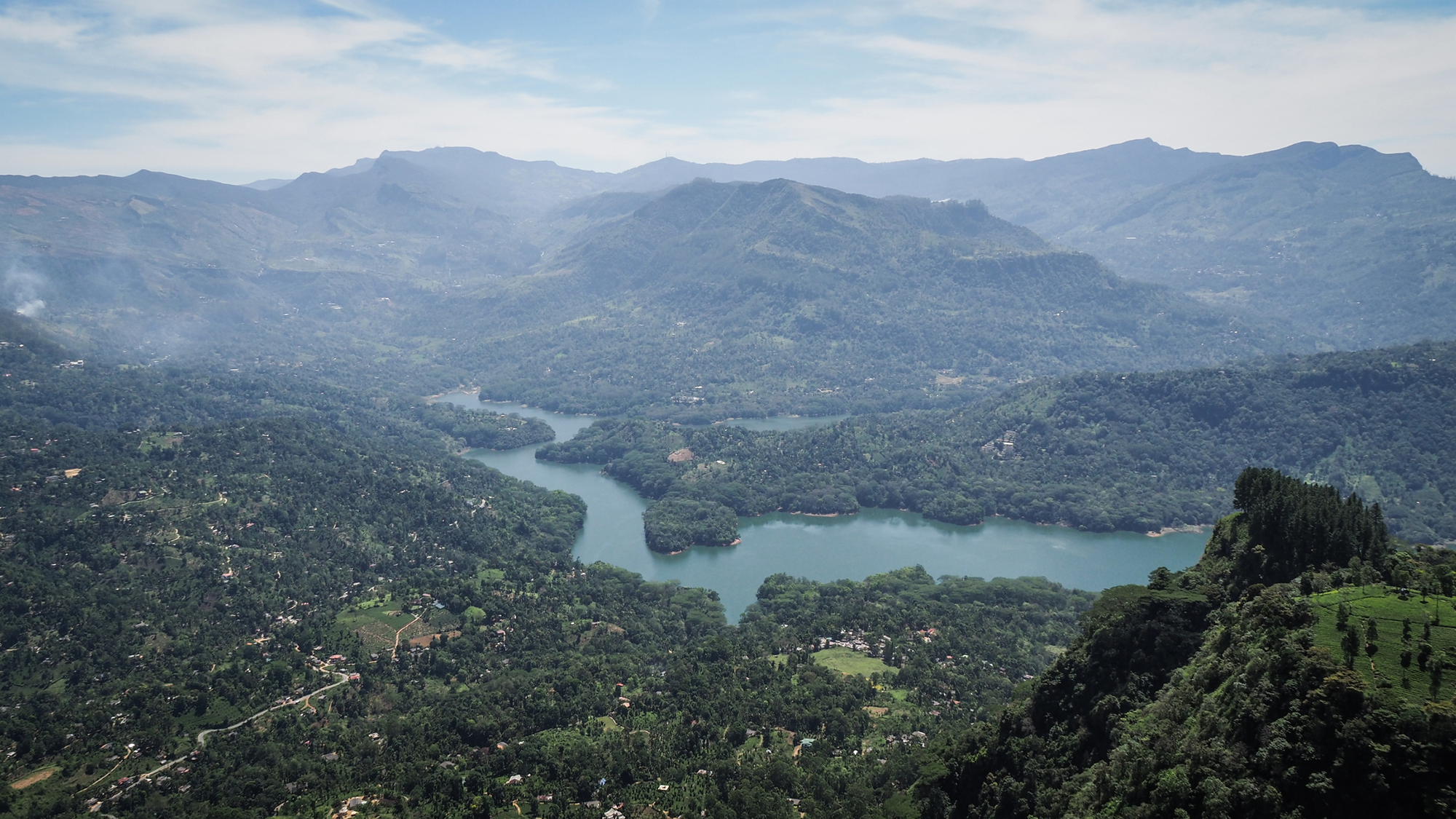
Ancient metalworkers built Wootz steel furnaces on hilltops to harness Sri Lanka’s powerful monsoon winds.
(Image credit: Jakub Specjalski via Getty Images)
How Monsoon Winds Powered Ancient Steelmaking
The location of the furnaces provided the key clue. Each one faced into the prevailing wind. Sri Lanka experiences two annual wet seasons: the southwest monsoon from May to September and the northwest monsoon from December to February.
Monsoon winds can reach speeds of up to 90 kilometres per hour. On a hilltop, the terrain channels the air upward and creates strong aerodynamic effects. Juleff wondered whether the ancient furnaces had been designed to use wind rather than bellows.
To test the theory, she built a furnace modeled on the Sri Lankan archaeological remains. She used charcoal and locally sourced iron deposits, replicating the materials that would have been available to ancient villagers.
At first, the experiment appeared to fail. Flames formed along the front wall of the furnace, but the rear section did not seem to burn. It seemed that the monsoon winds were too irregular to produce the heat needed for smelting.
Juleff eventually realised that the wind was not meant to enter the furnace through the holes. Instead, it flowed over the top. This created an area of low pressure, similar to the airflow over an aeroplane wing.
This phenomenon is related to the Bernoulli effect, the same principle that helps keep a race car on the road and influences the movement of fluids through pipes. The smooth, fast-moving air generated a powerful draft inside the furnace, producing conditions that conventional European metallurgy had not anticipated.
The Experiment Recreates Wootz Steel
After the furnace was filled with iron ore and charcoal, the team allowed it to cool. The next day, they found a familiar bloom of relatively pure iron at the top. Beneath it, attached to the slag, was another layer of metal: high-carbon steel.
“The wind did it,” Juleff says. “We had created a furnace that could make the best steel anywhere in the world.”
The experiment demonstrated how Sri Lankan metalworkers could produce high-carbon steel without relying on conventional bellows. Their furnace design transformed seasonal monsoon winds into a natural source of airflow and heat control.
Why Wootz Steel Production Disappeared
The discovery also helped explain why this technology did not spread widely. Wootz steel production depended on Sri Lanka’s specific geography, including hilltop locations and powerful seasonal winds. Traders who encountered the finished metal may not have understood the precise environmental conditions or furnace design that made it possible.
The metalworkers themselves remained in the island’s interior, producing steel season after season. They were not travelling scholars or engineers who could easily transfer the technology elsewhere. Instead, the knowledge remained closely tied to local communities and their landscape.
Wootz steel production likely ended during the political upheaval of the 12th century, when Sri Lanka was invaded by the Pandya dynasty of southern India. The resulting social disruption may have interrupted the trade networks that carried the steel from inland workshops to coastal ports.
Without local traders and ships to transport their products, the villagers may have stopped making Wootz steel. The technology was not necessarily forgotten in a single moment; it may simply have become economically unsustainable as the trade system around it collapsed.
The story of Wootz steel shows that major advances in metallurgy existed outside the traditional Western account of scientific history. Long before Bessemer’s industrial process, Sri Lankan metalworkers had developed a sophisticated furnace that used the power of the monsoon to create exceptional high-carbon steel.
Excerpted from “The Age of Alchemy: How Early Innovators Shaped Modern Chemistry,” Profile Books, 2026.
Profile Books
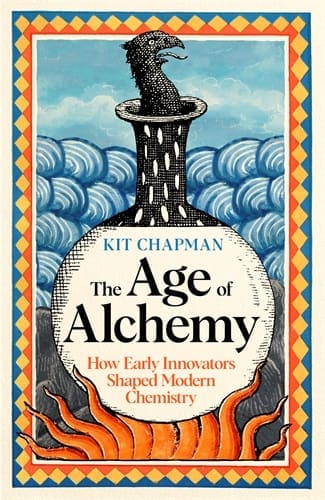
The Age of Alchemy: How Early Innovators Shaped Modern Chemistry
The Age of Alchemy explores the ingenuity of early innovators across cultures and centuries, revealing how their discoveries helped shape the foundations of modern chemistry.
Source: www.livescience.com