


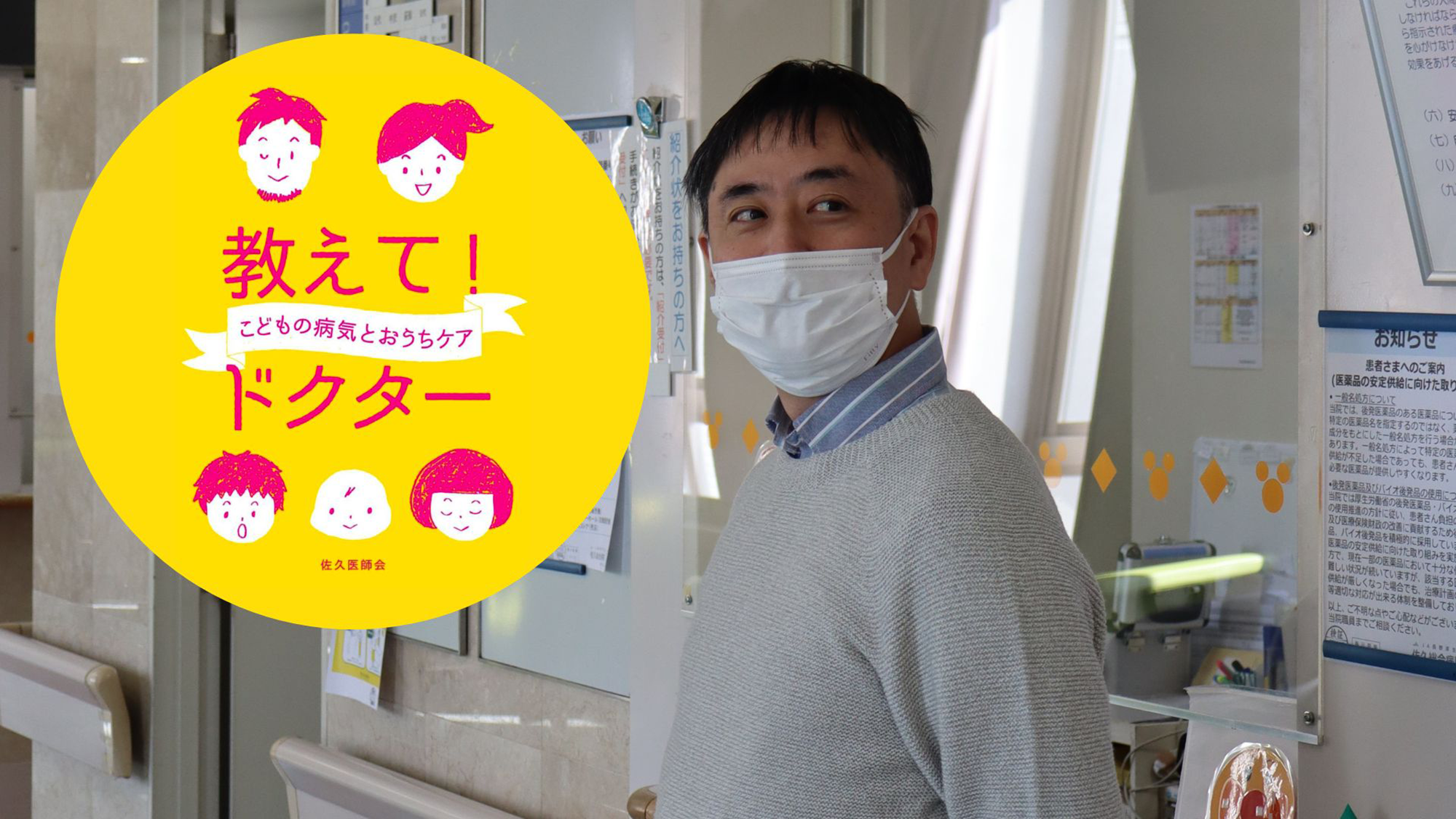
How a Pediatrician Helps Parents Decide When a Child Needs Medical Care
One snowy winter night in 2011, pediatrician Dr. Masahiko Sakamoto met a family whose anxious journey to the hospital changed the direction of his career. The experience inspired him to create clearer, more accessible health information for parents and caregivers.
Sakamoto was working at a rural hospital in Fukushima prefecture, Japan, about 160 miles (260 kilometers) northeast of Tokyo. Around midnight, during heavy snowfall, two parents arrived with their feverish infant. After examining the child, Sakamoto determined that the baby had a mild fever, was otherwise well and showed no signs of a medical emergency.
Then Sakamoto learned that the parents had driven for 1.5 hours from a remote mountain village to reach the hospital.
“Driving a car with so much snow on the road is very risky,” Sakamoto said. He was struck by the contrast between the infant’s mild symptoms and the family’s dangerous, three-hour round trip. The parents had made the journey because they were unsure whether their child needed emergency medical attention.
The encounter revealed a broader challenge in pediatric care: When parents have limited information about common childhood illnesses, even mild symptoms can cause intense anxiety and lead to unnecessary emergency visits.
Pediatricians in Japan and the United States have described a similar pattern when it comes to antibiotics. Some parents request antibiotics for their children even when the medications are unlikely to help, partly because they believe antibiotics will quickly relieve their child’s discomfort. However, most childhood infections are viral, and antibiotics do not treat viruses.
Doctors often explain childhood illnesses, warning signs and appropriate antibiotic use during appointments. But physicians are under significant time pressure, and these conversations can be difficult. Sakamoto believes parents should have reliable, easy-to-understand information before they arrive at a clinic or hospital.
Since that snowy night, he has focused on improving health education for parents and guardians.
“What I am currently most interested in as a pediatrician,” he said, “is how to provide accurate medical information to the parents or guardians of children.”
From Pediatric Health Guides to a Parent-Friendly App
By the time parents reach a doctor’s office or emergency department, it may already be too late to prevent an unnecessary visit. Sakamoto wanted to give caregivers the tools they need to make informed decisions at home.
His goal was to explain which symptoms may signal a serious illness, when a child should receive medical attention and how parents can safely manage mild symptoms at home.
He began by giving public lectures about common childhood illnesses. He later created illustrated manuals that used plain language to explain pediatric symptoms and treatments. In 2016, those manuals became the free “Oshiete! Doctor” app, which translates as “Teach me! Doctor.”
Sakamoto said the app has been downloaded more than 500,000 times in Japan and has approximately 100,000 active users. He now works in the pediatric department at Saku Central Hospital, and the city helps fund the app and promote it through health centers and family-focused community events.
“It’s quite famous around here,” said Risa*, a mother of two in Saku, Japan.
Rie Shinohara, another mother of two in Saku, said the app provides valuable health information in a convenient format.
“As a parent, I’m really grateful to have something like that — a resource that makes it easy to access information — right at my fingertips.”
Rie Shinohara, Saku-based mother of two
The app is updated annually and covers children and teenagers up to approximately age 15. Its topics include hygiene, vaccination schedules, common childhood illnesses, injuries and disaster preparedness.
The development team also translated the disaster-preparedness information for caregivers affected by the war in Ukraine.
“Oshiete! Doctor” also explains when a child may need to visit a hospital and which symptoms can usually be monitored at home. The app provides guidance on common treatments, medication use and the appropriate management of mild illness.
Parents in Japan can find additional guidance through online resources from the Japan Pediatric Society. They can also call #8000, a national hotline that helps caregivers decide whether a child should receive medical care.
Japan’s Ministry of Health, Labour and Welfare has recognized the app as a helpful complement to the national #8000 hotline and has honored its developers for the app’s design and impact.
Research Suggests the App Improves Pediatric Care Decisions
Sakamoto and his colleagues have studied how the app affects caregivers’ decisions. Their research found evidence that app users use emergency departments more appropriately than people who do not use the app.
In that study, 87% of users said the app made it easier to decide whether to visit a hospital, while 94% said they would recommend it to other caregivers.
Why Parents Often Fear Childhood Fevers
The team has also examined parents’ understanding of fever, the symptom that prompted the family’s risky drive through the snow.
“The phenomenon known as ‘fever phobia’ among parents has long been recognized, and it is not unique to Japan,” Sakamoto said.
The American Academy of Pediatrics offers similar advice about childhood fever. Its guidance emphasizes that a fever does not automatically require emergency care and explains when parents should contact a doctor.
Most fevers in children are caused by viral infections that improve on their own, Sakamoto said. Still, caregivers may worry that a fever could cause seizures or brain damage. These fears can be especially strong among first-time parents or families whose children have experienced febrile seizures.
“With the first child, you just don’t know. Why does he have a fever?” Shinohara said. She recalled taking her first child to the doctor more often than necessary, but felt more confident about recognizing when medical care was needed after having her second child.
Sakamoto hopes that reliable digital resources can help parents gain that confidence sooner.
What the App Says About Fever and Emergency Symptoms
The “Oshiete! Doctor” app provides caregivers with symptom-based checklists and information about childhood fever. Its guidance identifies warning signs that may require immediate medical attention.
For example, the app advises caregivers to seek prompt medical care if a child is difficult to wake, cannot drink enough fluids or is younger than 3 months and has a temperature of 100.4 degrees Fahrenheit (38 degrees Celsius) or higher. If a fever does not meet emergency criteria but continues for three or more days, the app advises families to contact a clinic during regular hours.
The app also explains that parents do not always need to reduce a fever with medication, such as acetaminophen. Many childhood fevers are linked to infections that resolve within several days. However, fever accompanied by repeated vomiting, extreme lethargy or poor responsiveness may indicate a more serious infection and requires prompt medical evaluation.
The resource includes information about convulsions, which can occur in some young children with fever. Caregivers should seek emergency help when a child has severe or rapidly worsening symptoms.
Parent Education Can Improve Antibiotic Awareness
In a survey-based study, Sakamoto and his colleagues asked hundreds of caregivers in Saku about their understanding of fever and compared responses from people who had downloaded “Oshiete! Doctor” with those who had not.
Between 2017 and 2024, more parents recognized that fever alone does not necessarily mean a child needs medical care. A smaller percentage also believed that antibiotics are always required to treat fever. App users were most likely to understand that antibiotics are not appropriate for every fever, although knowledge improved among nonusers as well.
Sakamoto credits some of this progress to initiatives that encourage pediatricians to avoid unnecessary antibiotic prescriptions and explain appropriate antibiotic use to caregivers. He believes the message may be especially effective when it comes directly from a child’s doctor rather than from a government campaign.
At the same time, educational tools can reinforce those conversations and give parents a trusted reference to consult at home.
Despite improvements in medical knowledge, parental anxiety about fever complications increased between the two survey periods. The COVID-19 pandemic occurred during that time and may have influenced families’ concerns about illness and infection.
“Their knowledge about fever, how to manage fever and the appropriate use of antibiotics was enhanced, whereas fear about children’s fevers worsened,” Sakamoto said. “Even when knowledge improves, emotional anxiety does not easily disappear. This is one of the challenges of public education.”
The Risks of Relying on Inaccurate Health Information
Another challenge is the growing use of AI chatbots for health questions. Sakamoto has encountered parents whose anxiety was intensified by inaccurate chatbot responses that made a child’s prognosis appear worse than it was.
“It is rather rare to see that parents have holistically accurate information from AI,” he said.
AI tools may provide general information, but they cannot replace an examination by a qualified medical professional. Parents should use trusted pediatric resources and contact a doctor or emergency service when a child’s symptoms are severe, unusual or worsening.
A Future of Accessible Pediatric Health Information
If additional funding becomes available, Sakamoto hopes to make “Oshiete! Doctor” multilingual so more families can access its pediatric health guidance.
His long-term goal is to provide parents with evidence-based information that reduces unnecessary worry while helping families use medical services appropriately.
“We have the responsibility to check how the information is delivered to parents or guardians and how it leads to behavioral changes,” Sakamoto said. “It is not just about disseminating information, but whether or not it is truly received.”
Editor’s note: Risa, marked with an asterisk, asked that only her first name be used for privacy.
This article is for informational purposes only and is not intended to provide medical advice. Contact a qualified healthcare professional or emergency service for concerns about a child’s health.
Source: www.livescience.com